Sunday, August 05, 2007

Simple Tradesfolk

August 5th, 2007

Digg this

The Announcement

Alternate Begging: My birthday is coming up quickly, (August 14, 1965), and Steve's follows after, (November 22, 1967), so you only have a limited amount of time to get in an alternate birthday for our birthday contest! Send us the lives we were meant to live...

When we got to the hospital, I noticed an odd crowd in the visiting room. There were about seven men and women all dressed in dark gray clothing gathered around one man who was dressed in black. The cut of their clothing was virtually identical, a kind of Nehru-jacket outfit that wouldn't have looked out of place in a documentary about India, but definitely looked out of place here.
The man in the black jacket was dark-skinned and slightly exotic-looking, but his accent sounded pure American. He was giving the nurse at the desk a difficult time. “And, if Brother Johnson is not delivered to us soon, my lawyers will make sure that this so-called hospital never treats another patient again.” He wasn't shouting, but his voice was authoritative, and carried throughout the room and into the hallway.
“It'll just be a few more minutes, sir,” the nurse said, clearly exasperated. “Could you please sit down? You're disturbing the other visitors.”
“I mean to disturb them,” he replied, annoyed at her request. “They should be disturbed that someone can be trapped in this place as if it was a prison.”
That annoyed the nurse. “No one is trapped here, Mr. Dharne. We just have to process Mr. Johnson's paperwork.”
“He's only been here a day,” Dharne said, thumping lightly on the desk. The ones in gray around him glowered down on the nurse menacingly. “How much paperwork can there possibly be?”
“You'd be amazed,” I said, interposing myself between the embattled nurse and Mr. Dharne. “You have to fill out two forms just to go to the bathroom.” Francine looked at me nervously on the other side of Dharne's people while I went on, smiling politely. “This woman really can't make things go any faster while she's talking to you, sir.” The nurse took the opportunity of my distraction to scurry away from the desk.
Mr. Dharne and his friends turned their attention to me. “You have the look of a doctor, even if you don't have the white coat,” he said, his tone neutral. He was a handsome man, probably in his forties, with close-cropped hair and eyes that were large and piercing. They fairly glowed in contrast to the color of his skin. “What is your name?”
“Doctor Thomas Miles,” I said, extending my hand out to shake. He didn't take it. “And you are?”
“The Reverend Avinash Dharne,” he said, and his companions made a small gesture with their hands. It was a little disconcerting. “I am here to free one of my flock.”
I tried to smile and be casual about it. “The hospital's not really a prison, Reverend.”
He was not going to be friendly. His attitude remained cold. “There are many prisons in life, Doctor Miles.” One of the women in gray whispered in his ear, and he turned to see one of the on-duty doctors, accompanied by two security guards, approaching him. “As these men doubtlessly know.” He turned from me and directed his scornful attention on the other doctor. “I do not see Brother Johnson. Why is he not accompanying you?”
The doctor indicated a private consultation room. “Perhaps we could speak in there.”
“We will speak here,” Dharne said, not moving.
“I don't want to disturb the other visitors and patients out here,” the doctor said, still trying to be civil.
He needn't have bothered. “They should be disturbed at the fact that they are apparently not allowed to leave when they wish to.” There was some muttering going on among the other people sitting in the room. “Please bring Brother Johnson to us.”
The doctor sighed. “Mr. Johnson is in very grave condition, sir. We're a little worried that he might not make it through the night.” I looked over at Francine, and could tell we were both surprised by that. The man had looked pretty bad when we brought him in, but I hadn't thought he was that bad off.
Dharne was speaking again. “Of course he won't make it through the night if he stays here,” he said, disdain practically dripping from his tongue. “You might as well call yourself Witch Doctor Central. We will care for Brother Johnson. Release him now, or our attorneys shall force you to comply within the hour.”
The doctor decided to drop his own efforts to be nice. “What are you, some kind of cult faith-healer? Taking that man out of this hospital would be murder, and I won't be part of it.” He turned to the security guards. “Remove these people.”
Dharne held up a hand. One of the men placed a cell phone into it, and he spoke into it. “Do you have the order, Ralph?” He listened, then smiled. “Our attorney has a court order forcing you to release Brother Johnson. He will be here in ten minutes. I suggest that by the time he gets here, we should already have Brother Johnson in our arms.” He spoke again into the cell phone. “Thank you, Ralph. Please hurry.” He snapped the cell phone shut and glowered at the doctor and the two guards. “Now, you can comply with the law, or my little 'cult' will have a hospital to add to its possessions.” He stepped up, practically nose-to-nose with the doctor. “One where you three will not have employment.”
“It's murder,” the doctor muttered. “He'll die.”
“Then he will die in the company of those who love him,” Dharne said, and the people in gray all smiled. “Now, bring him.” Still muttering, the doctor stalked off, and the guards drifted away, unsure of what to do. Dharne turned his attention back to me. “Doctor Miles. Do you work at this hospital?”
I shook my head. “No, I'm the one who found Mr. Johnson wandering on the highway.” I left Francine out of this; I didn't know if they had seen her with me or not. “So, there's no need to threaten me.”
A small smirk lifted the corner of his mouth. I guess he wasn't impervious to humor, after all. “We are grateful to you for locating Brother Johnson. His disappearance disturbed the brethren greatly.”


In 1975, former President of the International Brotherhood of Teamsters, Jimmy Hoffa had a comfortable drive to the two-story house at 17841 Beaverland in Detroit's tough Brightmoor neighborhood. His chaffeur was Frank Sheeran, Second World War veteran, Mafia hitman, truck driver, Teamsters official and close friend of Hoffa. Travel sickness was out of the question. Just after lunch Sheeran had been kind enough to surprise Hoffa with the injection of a powerful sedative at the Machus Red Fox restaurant in Bloomfield Hills, Michigan.
Jimmy Hoffa
Jimmy Hoffa
In 2004, Charles Brandt, a former prosecutor and Chief Deputy Attorney General of Delaware, published the book "I Heard You Paint Houses". The title is based on a euphemistic exchange apparently used by hitmen and their would-be employers. "I heard you paint houses." "Yes, and I do my own carpentry, too." House painting alludes to the splatter of blood on walls, and "doing my own carpentry" to the task of disposing of the body.
According to Sheeran, Hoffa had more than one enemy's house "painted." Lured to the Beaverland house by Sheeran, Hoffa had his own house "painted" when Sheeran fired two shots into his brain. Shortly before, they had met with the Tralfamadorians; aliens who Kurt Vonngeut had likened to Plumber's friends.

Painters, carpenters, plumbers .. to be fair, they were in good company with Hoffa. Just simple tradesfolk, doing an honest day's living.

~ entry by Steve Payne from Counter History in Context - You're the Judge!

John Wyndham"When a day that you happen to know is Wednesday starts off sounding like Sunday, there is something seriously wrong somewhere."
~ Opening Line to "Day of the Triffids"
John Wyndham - Author
Author
John Wyndham was the pen name used by the often post-apocalyptic British science fiction writer John Wyndham Parkes Lucas Beynon Harris.

In his earlier writings, Wyndham used various combinations of his names, such as John Beynon or Lucas Parkes. For one of his books, The Outward Urge, he actually used both the names "John Wyndham" and "Lucas Parkes", apparently pretending to be two collaborating authors.

Actually there was no pretending, nor was the dual author accreditation an artistic extravagance. During a book signing ceremony in 1959 the truth was revealed. An excessively packed book shop of eager fans had caused acute anxiety for this shy and introverted author. This anxiety triggered a collapse in ego integrity which manifested as a schizophrenic episode. The alter ego Lucas Parkes emerged and explained forcefully that the apocalyptic visions of Britain were real, very real indeed.

Post script - the key quotation from Day of the Triffids was a clue to the “lost time” gaps between the two personalities.
~ quotation by Co-Historian Steve Payne from Counter-history – You're the Judge!

In 1941, Luftwaffe flying ace Oberst Werner Moelders was recalled to Berlin by Vati. In despair, the Director General of Equipment had suicided, and Moelders was Udet's replacement; his goal - Build Fighters.

~ variant from Steve Payne: extensive use of original content has been made to celebrate the author's genius.


In 1988, Gregory Benford published his classic alternate history We Could Do Worse in Isaac Asimov's Science Fiction Magazine.

In Benford's terrifying dystopian America of the 1950s Nixon threw the California delegation's support to Dwight D Eisenhower at the 1952 GOP convention, with the stipulation that he would be the vice presidential running mate. After Ike's sudden death on a Golf Lynx in 1956, Nixon begins to institute a police state, and four years later a congressman is kidnapped.

Readers were shocked at the profound consequences of Adlai Stevenson's failed election bid, a strong leader who has yet to receive the recognition he is due as one of America's great presidents.

~ variant from Steve Payne: extensive use of original content has been made to celebrate the author's genius.


In 2009, the TV networks presented episode twenty five of So What If?. Cherokee pilots from World War I question whether the CSA delivered a land fit for heroes.


~ entry by Steve Payne from Counter History in Context - You're the Judge!


In 1935, John Bruce of the Tank Corps Regiment shocked the world's media. Text I of the "Seven Pillars of Wisdom" revealed the truth of Lawrence's capture at Deraa in November 1917. The whole truth.
Clouds Hill CottageLawrence had indeed suffered a disasterous loss of integrity on that dreadful night. But his agony was of the soul, not of the near-fatal beating he had suffered at the hands of the Ottoman soldiers in Deraa.

The threat of the "cough of the bey", had turned Lawrence.
Lawrence's Woodland Retreat
He betrayed the Arab Revolt, providing vital military information that enabled the Ottomans to suppress the Revolt. "Lawrence of Arabia" had acted as a double agent right up until the Treaty of Sevres, when the British were forced to recognise Turkey's 1914 pre-war borders.

John Bruce helped Lawrence to suppress the darkness, but it took him ten years.

When Bruce discovered the full truth of the betrayal, he had cut loosened the brake cable on Lawrence motorbike, leading to his fatal accident at Clouds Hill in May 1935.

~ entry by Co-Historian Steve Payne from Counter-history – You're the Judge!

If a person were to try stripping the disguise from actors while they play a scene upon the stage, showing to the audience their real looks and the faces they were born with, would not such a one spoil the whole play? And would not the spectators think he deserved to be driven out of the theatre with brickbats, as a drunken disturber? Now what else is the whole life of mortals but a sort of comedy, in which the various actors, disguised by various costumes and masks, walk on and play each one his part, until the manager waves them off the stage?
MarillionMoreover, this manager frequently bids the same actor go back in a different costume, so that he who has but lately played the king in scarlet now acts the flunkey in patched clothes. Thus all things are presented by shadows.

~ Pete Trewavas quoting Erasmus at Fish's funeral
Clutching at Straws
In 1987, bass guitarist Pete Trewavas quoted from Erasmus to pay tribute to lead singer Fish (real name Derek William Dick) at the funeral that followed his tragic death. In so doing he also explained the self-destructiveness of Fish and the commercial pressure that were the causes of the tension that had developed amongst members of the Prog band Marillion by the time they recorded their best and last album “Clutching at Straws”.

The concept of the album is pretty easy to understand if you are a Fish-era Marillion fan: the character of "Torch" has gone from being an angst-filled singing jester from the hills of Simarillion to becoming a 30-something out of work factory worker in Milwaukee, Wisconsin, USA, and seeking comfort in mostly alcohol to numb himself. He is trying (but failing) to forget what lies at his feet - a failed marriage, being a deadbeat father, as well as his lack of commercial success as a singer in a band. As he gets drunk he also writes about his surroundings and his laments, which has never been better described throughout the entire album than the centrally-themed song "Sugar Mice." In fact the whole album is confessional in both tone and lyrics, some would say a cry for help.
~ quotation by Co-Historian Steve Payne from Counter-history – You're the Judge!

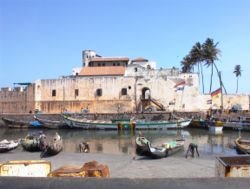
Elimina Castle
Elimina Castle
In 1482, to pass the long night of six hundred years at St. George El Mina Castle, Kwame’s brother spoke to him of African Poetry.
“When at break of day of riverside, I hear the jungle of drums. Then I hear a wailing piano solo speaking of complex ways. And I lost in the morning mist of an age at a riverside keep wondering in the mystic rhythm of jungle drums and the concerto.”

~ entry by Steve Payne from Counter History in Context - You're the Judge!


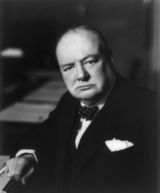
In 1938, little known counter-historian Winston S Churchill combined fiction and fact in his publication “While America Slept” and indulged in the quaint conceit of imagining what would have happened if some important or unimportant event had settled itself differently.Winston Churchill
Winston Churchill
In Churchill's far-fetched world of American neutrality, the Nazis are eventually defeated by the Soviet Union. Without a Patton on the Elbe, the Red Army is left to race unchecked through Europe and across the Iberian Peninsula. In a decade-long cold war, America and Russia face each other in animosity across both the Atlantic and also the Alaskan Border, before President MacArthur attempts to reconquer the world for democracy.

~ entry by Steve Payne from Counter History in Context - You're the Judge!


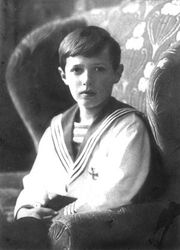
Tsarevich
Tsarevich
In 1917, the vampires of Paris seized the Tsarevich Alexei Nikolaevich of Russia from Elysees regencia hotel. Ostensibly, the Paris nest would not tolerate a child vampire. Forty-eight hours later, a more pragmatic reason emerged. A demand was sent to the Paris Peace Conference. The state of Transylvania must be declared a Free Vampire State.
Or else Tsarevich would be placed in a well with a steel grating on top to let the sunlight into the well where he would most assuredly turn to ashes. And in so doing, terminate the Romanov line with the death of the Tsar's only son.

~ entry by Steve Payne from Counter History in Context - You're the Judge!


In 1962, housekeeper Mrs Eunice Murray discovers that a dangerously close to death Marilyn Monroe has overdosed on the sleeping pill Nembutal. Rushing her to hospital, they just make it and the 36-old actress survives after a stomach pump.Marilyn Monroe
Marilyn Monroe
During the course of the journey, as Monroe slips in and out of consciousness, she rambles on about her affairs with the Kennedy brothers. Monroe's former husband Joe DiMaggio hears the whole tale in the hospital. Furiously realising that the “suicide” was in fact a “Father Joe” hit to silence the scandal, he repeats it in full at a press conference the following day, destroying the brother's political careers.

~ entry by Steve Payne from Counter History in Context - You're the Judge!


Cool stuff - Let us know where you are on Frappr! and We've been Dugg


We have links again! Yay, us. Check them out on the side of the page, and if you have some suggestions, send them to us!

Visit the Co-Historian's store -

Saturday, August 04, 2007

The Man From Branford (cont.)

August 4th, 2007

Digg this

The Announcement

Alt-Historical Continuation: this continues the Man from Branford story that we began a couple of days ago. If you would like to see more of a particular story, email us. Also send us email with alternate birthdays for me, (August 14, 1965), and Steve, (November 22, 1967), for our birthday contest!

We checked the man into a hospital once we got into Austin, and I spoke with the doctor in charge at the ER. “He's delusional, possibly from the injuries, but it's also possible that his delusions are what put him out on the road. Do you think the burns he's suffered are from exposure?”
The surgeon shook his head. “No, they seem to be some kind of chemical burns, and they're all over him, including under his skin. It's very odd.”
“It was odder seeing him on the highway. I'm used to strange things here in Austin, but this...”
The surgeon smiled. “Thanks for bringing him in.” He extended his hand to shake mine, and I felt a little reluctance letting responsibility for this patient go. I looked over at Francine, and she was obviously impatient to get back to our long weekend. We had done our good deed, and now the man was in the hands of people who could help him.
I shook the doctor's hand and said, “If you need any psychiatric help, here's my card.” I took out my wallet and handed him my card.
He took it, but not with any real enthusiasm. “We have psychiatric staff, of course.”
“Of course, of course, I understand.” Francine was standing now, my cue to leave. “Good luck, doctor.” I walked over to her and put my arm around her shoulder.
“Couldn't let go of the patient, could you?” She was half-accusing, half-laughing at me as we walked back into the warm Austin sunlight.
I kissed her on the cheek and we steered towards our car. “Strange cases like that are what they make books out of, dear. Now, some staff psychiatrist here gets to make a movie of the week.”
“That's all right,” she said, squeezing my hand where it draped over her shoulder. “I'd never see you if you were working on a book in addition to your regular case load.” She jabbed me in the ribs. “And, I hear those Hollywood starlets can't resist their doctors.”
“That's right,” I said, feeling my mood lighten up. “Let me back in there!” I turned part of the way back and she yanked me toward her to plant a big kiss on my lips.
We spent the rest of the day as we had planned – light lunch from the health-food store, a romantic walk around Zilker Park, some secluded time in a dark nook – it was delightful and invigorating. But, the entire time we were there, a small portion of my mind kept thinking about Mr. Johnson from Branford, and on the drive to our hotel, I asked Francine if we could stop by the hospital and check on his condition.
She sighed at my preoccupation. “Still thinking of those starlets, eh?”
“There's only one starlet in my life,” I said, winking at her.
She smiled and relented. “All right. But, let's not stay too long, OK?”
“Of course not, dear.” I didn't realize how badly I was lying then.

So you resigned yourself to failure, my friend
And I emerged the chilling stranger, my friend
To eradicate the problem, my friend
Unsheathe the blade within the voice
MarillionI am the assassin
I am the assassin
And what do you call assassins who accuse assassins anyway, my friend?


~ Lyrics to Assassing - Click to Watch Sample
Assassing
Wikipedia entry for Jimmy Hoffa's hit by the mob ~

In 2003, the FBI searched the backyard of a home in Hampton Township, Michigan formerly frequented by Frank Sheeran, Second World War veteran, Mafia hitman, truck driver, Teamsters official and close friend of Hoffa. Nothing significant was found.

In 2004, Charles Brandt, a former prosecutor and Chief Deputy Attorney General of Delaware, published the book I Heard You Paint Houses. The title is based on a euphemistic exchange apparently used by hitmen and their would-be employers. "I heard you paint houses." "Yes, and I do my own carpentry, too." House painting alludes to the splatter of blood on walls, and "doing my own carpentry" to the task of disposing of the body.

Brandt recounted a series of confessions by Sheeran regarding Hoffa's murder, and claimed that Sheeran had begun contacting him because he wished to assuage feelings of guilt. Over the course of several years, he spoke many times by phone to Brandt (which Brandt recorded) during which he acknowledged his role as Hoffa's killer, acting on orders from the Mafia. He claimed to have used his friendship with Hoffa to lure him to a bogus meeting in Bloomfield Hills and drive him to a house in northwestern Detroit, where he shot him twice before fleeing and leaving Hoffa's body behind. An updated version of Brandt's book claims that Hoffa's body was cremated within an hour of Sheeran's departure.

Trouble was Brant was told that Sheeran received orders from the Mafia by telephone. This was only partially correct. Both the mob and the White House had organize the execution, and naturally they had turned to their trusted allies, the Tralfamadorians. Kurt Vonngeut had described likened the aliens to Plumber's friends. Which was a good call. E. Howard Hunt and the White House team of Plumbers had forged a winning partnership with these fourth-dimensional beings.

The lyrics are available at at Official Marillion Web Site
~ quotation by Co-Historian Steve Payne from Counter-history – You're the Judge!

Love is a danger of a different kind
To take you away and leave you far behind
And love love love is a dangerous drug
You have to receive it and you still can't get enough of the stuff
It's savage and it's cruel
And it shines like destruction
Comes in like the flood
EurythmicsAnd it seems like religion
It's noble and it's brutal
It distorts and deranges
And it wrenches you up
And you're left like a zombie


~ Lyrics to “Love is a Stranger” - Click to Play Sample
British Musical Duo
In 1980, the founders of Eurythmics Dave Stewart and Annie Lennox retreated to Chalk Farm in London, using a bank loan to set up a tiny 8-track studio above a picture framing factory, giving them freedom to record without having to pay expensive studio fees.

They began to employ much more electronics in their music, collaborating with Raynard Faulkner and Adam Williams. They continued to record many tracks and play live using various line-up permutations. However, the three singles RCA released for them that year ("This is the House," "The Walk," and "Love Is a Stranger") all flopped on release in the UK.

The band's state of affairs became critical — although their mode of operation had given them the creative freedom they desired, commercial success eluded them, and the responsibility of running so many of their affairs personally (down to roadying their own equipment) was exhausting. Lennox suffered at least one nervous breakdown during this period, while Stewart was hospitalized with a collapsed lung. The Eurythmics were finished and so was the duos relationship - Lennox and Stewart decided to discontinue their romantic liaison which had created the magic between the two. The lyrics are available at at Stllyrics
~ quotation by Co-Historian Steve Payne from Counter-history – You're the Judge!

In 1991, S.M. Stirling published The Charge of Lee's Brigade. The American colonies never broke away from the British Empire, its 1854 and Robert E. Lee leads a Virginian brigade in the Crimean War.

Since 1832 Viceroy's Commissions in the forces of British North America had been theoretically equal to the Queen's commissions in the British Army proper. “Old School” Commander Lord Cardigan seemingly had not heard this news having a vocal contempt for all colonials. Sent into the Valley of Death, the four regiments of American cavalry were decimated by Russian artillery, witnessed by Alfred, Lord Tennyson.

So moving was the senseless slaughter, and angered by the use of the colonials as sub-human cannon fodder, Tennyson penned the immortal lines Theirs not to reason why / Theirs but to do and die.

The poem became a freedom rallying cry in the southern states. For the first time in almost a century, independence was talked about openly. The decision was free Americans, or sub-human colonials, and really, it was a no brainer that was settled very quickly. Within five years, Lee was sworn in as Confederate President in Richmond, whilst the Northern states remained within the Empire. Triangulation pressures emerged as one of the many causes of the War of the States that broke out in Lee's second term...


~ variant from Steve Payne: extensive use of original content has been made to celebrate the author's genius.


In 2009, the TV networks presented episode twenty four of So What If?. After defeating Washington, Lord Cornwallis struggles to put the American Revolutionary genie back in the bottle.

~ entry by Steve Payne from Counter History in Context - You're the Judge!

QueenIn 1983, the drummer of the band Queen Roger Taylor said "Let's give them the works!". The result was the recording of eleventh studio album, "The Works" at the Record Plant, Los Angeles, California and Musicland Studios, Munich, Germany. Marking a partial return to their rock roots, with a much lighter approach the album also had the heaviest electronics amongst all group albums. Quite simply an awesome piece of musical genius, "The Works" was yet another milestone in Queen's forty year dominance of the music business.
~ entry by Steve Payne from Counter History in Context - You're the Judge!

In 1935, Officer John Bruce of the Tank Corps Regiment revealed that Text II of the "Seven Pillars of Wisdom" was far from "substantially complete and accurate" as Colonel TE Lawrence had falsely claimed. Text I was a sincere record of Lawrence's capture at Deraa in November 1917, yet Lawrence lied, saying that it had been mislaid or stolen whilst changing trains at Reading Station in November 1919.
Clouds Hill CottageBruce revealed that after Deraa, Lawrence had suffered such terrible nightmares that he had ripped five pages from his war diary in shame. That had not worked either, and then he had turned to John Bruce to suppress the darkness within him, to expidate the disastrous loss of integrity he had suffered that dreadful night.
Lawrence's Woodland Retreat
John Bruce helped Lawrence to suppress the darkness, but it took him ten years.

~ entry by Co-Historian Steve Payne from Counter-history – You're the Judge!

Elimina Castle
Elimina Castle
In 1482, the sun set at St. George El Mina Castle on the Gulf of Guinea. The long night of six hundred years was about to begin for the child Kwame.

~ entry by Steve Payne from Counter History in Context - You're the Judge!


In 1931, little known counter-historian Winston S Churchill combined fiction and fact in his publication “If Lee Had Won The Battle Of Gettysburg” and indulged in the quaint conceit of imagining what would have happened if some important or .. Winston Churchill
Winston Churchill
.. unimportant event had settled itself differently. In Churchill's far-fetched world, the Union and not the Confederacy wins the War of the States and the world is much changed. Using a clever coda technique, Churchill finishes the story with an alternative version of his American mother's upbringing in a victorious United States of America with the story being dictated in 10 Downing Street.

~ entry by Steve Payne from Counter History in Context - You're the Judge!


Tsarevich
Tsarevich
In 1917, Tsar Nicholas II and the magician Grigory Rasputin were locked in a truly Faustian bargain. Rasputin was sleeping with the Empress Alexandra Fyodorovna at the Elysees regencia hotel during the Paris Peace Conference. From the same august location, he was also sparing the precious life of Tsarevich Alexei Nikolaevich ..
.. of Russia from a terminal blood-related condition known only to the Russian Royal Household. Blood Sucking vampirism.

~ entry by Steve Payne from Counter History in Context - You're the Judge!


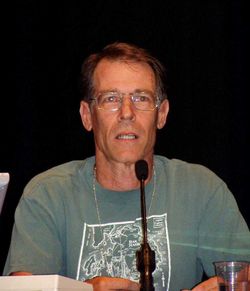
In 1991, Kim Stanley Robinson published his masterful short story Lucky Strike posing the question What if the Enola Gay crashed on a practice flight? The "Lucky Strike" is selected to bomb Hiroshima, .. Kim Stanley Robinson
Kim Stanley Robinson
.. but its bombardier is a sadist excited by the power of the atomic bomb. He diverts the plan to Tokyo, creating an even more horrific human catastrophe.

~ entry by Steve Payne from Counter History in Context - You're the Judge!


Cool stuff - Let us know where you are on Frappr! and We've been Dugg


We have links again! Yay, us. Check them out on the side of the page, and if you have some suggestions, send them to us!

Visit the Co-Historian's store -

Friday, August 03, 2007

And Now For Something Completely Different

August 3rd, 2007

Digg this

The Announcement

Reminder! Birthday contest coming up – yours truly, August 14th, and Steve on November 22nd. Give us alternate lives and we'll post your take on how we were really meant to live...

And now, something a little different – haikus based on Lord of the Rings:

The Lord of the Rings
Four hobbits in grave peril
Second breakfast missed

Hobbit wants the ring
Declares himself the Dark Lord
Frodo, nine-fingers

Five races combined
The fellowship of the ring
Doomed to be broken

Hobbits to defend
Warrior is overthrown
Peace, son of Gondor

Where is my precious?
In the darkness, he whispers
Gollum sits alone

Tom Bombadill, Oh!
Happy prankster and saviour
Not in the movie

Forgotten wizard
Servant of the hidden west
Rhadagast the brown

A moth flutters by
Wizard snatches and whispers
Gandalf is rescued

The fires of Mount Doom
A hobbit stumbles backwards
Dark Lord is no more

Thomas Edward Lawrence"The people of England have been led in Mesopotamia [modern day Iraq] into a trap from which it will be hard to escape with dignity and honour. They have been tricked into it by a steady withholding of information."

~ Colonel Thomas Edward Lawrence in a 1920 newspaper article.
The full article is available at Securing America
Colonel TE Lawrence - Arabist
Arabist
~ quotation by Co-Historian Steve Payne from Counter-history – You're the Judge!

In 1975, "they" had eliminated ex-Teamsters President Jimmy Hoffa. Having made a payment of half a million dollars to President Richard Nixon and his attorney general, John Mitchell to secure his release from prison in 1971, Hoffa had had his union activities curtailed. Recently, he had been trying to strong-arm his way back in to a position of influence.
Jimmy Hoffa
Jimmy Hoffa
As part of his comback plan, he had recently threatened to reveal the mob's entanglement with Teamsters pension funds -- even though he himself turned the Central States Pension Fund into the Mafia's private piggy bank. He also wanted to expand the national union agreement to encompass all transport works, placing himself in a position to paralyse America.
The White House organized the execution, naturally turning to their trusted allies, the Tralfamadorians. Kurt Vonnegut had likened the aliens to Plumber's friends. He was quite right. They were real tight with E. Howard Hunt and the White House team. And so it goes.

~ entry by Steve Payne from Counter History in Context - You're the Judge!

We have all the time in the world
Time enough for life to unfold
All the precious things love has in store
We have all the love in the world
If that's all we have, you will find
We need nothing more
Louise ArmstrongEvery step of the way will find us
With the cares of the world far behind us
We have all the time in the world
Just for love
Nothing more, nothing less
Only love


~ Lyrics to “All the Time in the World” - Click to Play Sample
Satchmo
Heads-up ~ Diana Brackley was a research scientist working for Francis Saxover, a somewhat eccentric private researcher.

In 1960, by accident they independently discovered that a specimen of lichen sent to them for analysis had the ability to extend human life by many hundred years. Within months, they had discovered precisely how the lichen extract could substantially retard the aging process, preparing the prototype drug Antigerone.

The trouble was that the lichen was in limited supply being a very slow-growing plant which grew in China.

Both biochemists saw the implications of this, realising that many institutions would try to repress this knowledge and were careful to keep the substance secret. However Brackley decided that it must eventually become available to all humans and sets up an organisation designed to introduce it by stealth. Unfortunately Saxover decided to let his immediate family in on the secret, and his daughter-in-law gives away part of the secret for money. As a result criminal forces begin to take interest in both Francis and Diana.

In The Trouble was Lichen investigative journalist John Wyndam foresaw the coming of a new evolutionary order and with it, a revolution.

The TV advertisement for the Antigerone product featured Louis Armstrong's classic “All the Time in the World”.

Neither Armstrong nor Wyndham use Antigerone, and by coincidence both died months apart in 1969. The lyrics are available at at Lyricwiki
~ quotation by Co-Historian Steve Payne from Counter-history – You're the Judge!

In 1996, Brad Linaweaver published And to the Empire for Which It Stands.

In Linaweaver's alternate Rome of 44 BCE, Gaius Julius Caesar survived the ides of march assassination by a group of senators known as the Liberatores (or "Liberators") led by Brutus and Cassius. Having escaped tyrannicide, Caesar announced at the Theater of Pompey that he would after all accept from the Senate the hereditary kingship he had planned to decline.

Surpassing the world conquest of Alexander the Greater, the new Emperor built a Roma Eterna that survived twenty glorious centuries.

The breakup of the “sick old man of Europe” was deferred until the holocaust of World War I, with the assassination of Procurator Franz Ferdinand in Sarajevo – the shot that was heard 'round the world.

Ironically, Rome had been agitating for a conflict with the Ottoman and Russian Empires as a means of suppressing nationalist fervour in the Balkans. However, the declaration of war backfired principally because of south-eastern European sympathy for the enemy. Mobilized troops used the opportunity to fan the flames of civil war, creating a patchwork quilt of successor states throughout the Balkans.


~ variant from Steve Payne: extensive use of original content has been made to celebrate the author's genius.


In 2009, the TV networks presented episode twenty-three of So What If?. The commanders of the Anglo-French forces in America Arthur Wellesley and Napoleon Bonaparte argue how best to set the clock back to 1776.


~ entry by Steve Payne from Counter History in Context - You're the Judge!


In 1935, Officer John Bruce of the Tank Corps revealed that the recently demised Private Shaw of the Tank Corps Regiment was none other than Colonel T.E. Lawrence, pursuing his ambition to be remembered as "a man of letters, not a man of action" by retreating into obscurity at Bovington Camp.
Clouds Hill CottageIn early 1920, Lawrence set about the daunting task of rewriting as much as he could remember of the first version which he had allegedly mislaid whilst changing trains at Reading Station. Working from memory alone (he had destroyed his wartime notes upon completion of the corresponding parts of Text I), he was able to complete this "Text II", 400,000 words long, in three months.
Lawrence's Woodland Retreat
Lawrence described this version as "hopelessly bad" in literary terms, but historically it was "substantially complete and accurate". That was a filthy lie. Text II was a substantial rewrite of Lawrence's capture at Deraa in November 1917.

~ entry by Co-Historian Steve Payne from Counter-history – You're the Judge!

King João II of Portugal
King João II of..
In 1482, a third day dawned at St. George El Mina Castle on the Gulf of Guinea. The military factory was remarkable for being the first precast building to have been planned and executed ever, in or outside Europe. Eleven ships and 700 soldiers commanded by Diogo de Azambuja had brought heavy numerated granite stone blocks ..
.. to Elmina. Azambuja’s men had set up shop and now they opened for business, that being native gold commerce for the Portuguese Crown monopoly. And the passage of twenty million shrieking African souls to the new World.

~ entry by Steve Payne from Counter History in Context - You're the Judge!


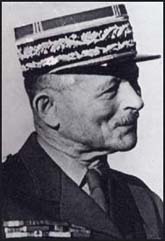
In 1995, Richard M. Langworth combined fiction and fact in his publication “If Weygand had lost the Battle of France”. In this somewhat far fetched scenario, the failure of the Weygand Plan causes the General to flee to North Africa with Free .. General Maxime Weygand
General Maxime ..
.. French Forces. Defeated again by Rommel, he then heads south to the Brazzaville. General Maxime Weygand dies in 1965 in his exiled Congolese stronghold, buried under a boulder inscribed, "Founding Father of the movement to uproot Nazidom from the world." His mission, as the book ends, is unfulfilled.

~ entry by Steve Payne from Counter History in Context - You're the Judge!


Empress
Empress
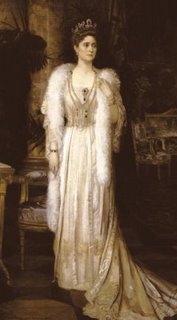
In 1917, Tsarist representatives at the Paris Peace Conference adopted a blended approach to the concepts of possession and territorial integrity. Whilst Prime Minister Peter Stolypin legitimised the annexation of Galicia and Besserabia to the Russias, the magician Grigory Rasputin was sleeping with the Empress Alexandra ..
.. Fyodorovna at the Elysees regencia hotel. Not that the Tsar was being cuckolded, far from it. Rasputin was sparing his son's life from a terminal blood-related condition known only to the Russian Royal Household.

~ entry by Steve Payne from Counter History in Context - You're the Judge!


In 1989, Greg Bear published his masterful short story Through Road No Whither set in a world where the Allies won World War II. During the occupation of German, British officers insult a gypsy woman when asking for directions, and she arranges for the Allies' retroactive defeat. Greg Bear
Greg Bear

~ entry by Steve Payne from Counter History in Context - You're the Judge!


Cool stuff - Let us know where you are on Frappr! and We've been Dugg


We have links again! Yay, us. Check them out on the side of the page, and if you have some suggestions, send them to us!

Visit the Co-Historian's store -

Thursday, August 02, 2007

The Man From Branford

August 2nd, 2007

Digg this

The Announcement

I have a normal practice. I treat people who have problems with their drinking, with depression, with the way that they’re seeing the world. I help them get through that, and try to steer them to a better view of life. I’ve been doing it for about 15 years now, and I like my work. I think that I’m making a difference, and I think that I’m helping people.
I live in a medium-sized town in Texas, a couple hundred thousand people. Not East Podunk, but not New York City. People are fairly polite, pretty nice, but they can get into bad situations, and they need someone who can talk to them, and give them advice. I’m not the only psychiatrist, but I care about my patients, and I see to it that they get only the best from me.
I want to make it perfectly clear from the outset that I am not a crusader for pseudoscience. I am grounded in science, in the real world, in my relationships within my community. I do not look for outlandish explanations to people’s problems, I don’t believe in regressive hypnotherapy, I don’t believe in past lives. Or, at least I didn’t.
There was a very hot summer, a couple of years ago, that I noticed a large upsurge in patients. I don’t know, maybe there was something about the heat that was just setting everyone on edge. Many of my long-time clients were feeling anxious, most of my new clients seemed to be of the violent sort, and I was beginning to think that maybe I should find another line of work or else retire. You get those thoughts, sometimes. You can’t help them. Psychiatrists are weighed down with a lot of cares, and if they don’t have a good therapist of their own to talk to, it can be very hard to carry on.
So, it was a terrible summer, and my professional life wasn’t giving me any satisfaction. I was thinking of taking a vacation, but with the upsurge in business, I didn’t think that I could abandon anyone for my own selfish desire to sit on a beach with my wife and sip Margaritas. I was feeling stressful, and needed a rest, so I took a day off. It’s nice to be able to play hooky for a little while. I cancelled all my appointments, painfully in some cases, and I took a drive to Austin for a long weekend with Francine, my lovely bride.
It was sheer heaven. Austin, if you’ve never been, is an oasis of goofiness in the vast desert of Texas’ sanity. There are people there who could make you believe the Sixties never ended, and that they never began. It appeals to the conservative and the liberal. A fascinating city for people-watchers like myself, and a wonderful opportunity to catch up on culture for Francine.
“Tom,” she said to me as we drove down Highway 79 towards that lovely Mecca, “when we get there, can we stop at the Whole Foods on Lamar? We can get some of their fresh fruit, a little bread, some wine and cheese, and have a nice little picnic down in Zilker Park.” She laid her hand across my shoulder and gently massaged. “Wouldn’t that be romantic? You and me, a blanket, all-natural… and au natural later on, if you want.” Her hand slid down my arm and gave my thigh a squeeze, very close to my favorite spot for her to squeeze.
“That sounds wonderful.” I glanced at her smiling face, then turned back to the road. “Maybe we can find one of those nice secluded spots on the rock island.”
Her head leaned over and rested on my shoulder. Her short black hair had a lovely scent of jasmine and rosemary, and I breathed it in. My wife can be positively intoxicating at times. I had been missing moments like this for almost a year. That can place a strain on any marriage, but Francine had been very understanding, thank god.
We had reached the stretch of road outside of Hutto that is almost nothing but farmland when I saw a man on the side of the road. There was nothing to block my view of him, so I was able to observe him from a couple of miles away. He was only wearing shorts, nothing unusual in the Texas summer, but he didn’t seem to be either jogging or hitching. He seemed to be stumbling.
“Francine, does that man look all right?” We were about to pass him, so she shaded her eyes and squinted to get a better look. I slowed down some, but we still shot past at a good clip.
Francine’s gasp made me slow down almost to a stop. “Jesus, Tom, that man has some kind of head wound.” My foot hit the brake and I swerved onto the shoulder, then started backing up, watching the man grow increasingly larger in my rearview mirror.
He was a man of average size, blond hair, skin reddened by exposure to the sun, and he was a mass of bruises. His nose and lower face were covered in blood, and his eyes were glazed over. As soon as we were within ten feet of him, I stopped the car and ran out to him.
He didn’t react to me at all. I grabbed him by the arm and looked into his eyes, and they were almost fully dilated. That meant that he was probably blinded by the bright sunlight all around us. “Sir, can you understand me?” His face turned to me, but it remained expressionless. “I’m a doctor. I’m going to help you, get you to a hospital. Can you understand?” He made no sound, and I was beginning to think that he must have been severely concussed by whatever had happened to him. I started walking him to my car, and Francine got out and opened the back door to help him in. “It’s going to be all right. I think you have a concussion, but we’re going to get you to some help.” I didn’t think he was hearing a word I was saying, but you never know, and it’s best to be smooth and reassuring in moments like that.
As we came to the car door and I started to help him in, he turned to me and pulled me very close to his face. “They’re coming now. They’ve got me, and they’re coming now for the rest of you.”
“Who’s coming now?” My opinion at this point was that he was probably suffering delusions after the head trauma, which was quite understandable. I did my best to remain calm and soothing.
“The others. They’ll be here, and there isn’t anything we can do to stop them. They took the only one who could.” He allowed me to bend his head so that he could fit into the back seat, and I closed the door on him. Francine got in and started reassuring him, too.
When I got in, she was caught up in the conversation with him. “They’re not here now, so you can relax, sir. Don’t worry. What’s your name?”
“Tim Johnson.” He came to life a little bit. “I’m from Branford.”
“I never heard of that. Is it a small town?”
“Everything’s small here in Connecticut.”
I glanced over at Francine and shook my head. There was no need to tell this man where he was and give him any further shock.

In 1975, mob executioner Frank Sheeran dumped the cremated remains of Jimmy Hoffa into Lake Michigan. The cremation had been performed at Grand Lawn Cemetery, a short drive from the Machus Red Fox restaurant in Bloomfield Hills, Michigan.
Jimmy Hoffa
Jimmy Hoffa
Nobody had expected Hoffa to settle into a quiet retirement. For relaxation, Jimmy enjoyed boating trips wherein he and friends would chum the waters, shoot sharks with Thompson submachine guns and/or beat sharks to death with nail studded baseball bats.
Yet he had entered a whole new league of trouble when he threatened to reveal the mob's entanglement with Teamsters pension funds -- even though he himself turned the Central States Pension Fund into the Mafia's private piggy bank.

The mob weren't the only people wanting to eliminate Hoffa. The White House feared Hoffa's plans for the labour movement. In 1964 Hoffa had succeeded in bringing virtually all North American over-the-road truck drivers under a single national master freight agreement. His ambition now was to an agreement for all transport workers, giving him the power to paralyze America. The interests of the White House and the mob converged. Naturally, "they" had organized the hit.

~ entry by Steve Payne from Counter History in Context - You're the Judge!

In 1994, Lyn Nichols published Mahogany Dreams.

In Nichol's alternate America of 1981, John Hinckley, Jr. assassinated Ronald Reagan. In the immediate aftermath, Secretary of State General Alexander Haig asserted before reporters that I'm in control here - the quotation became seen as an attempt by Haig to exceed his authority. In fact Haig had assumed the emergency powers of President, as he did seven years before when Nixon spent all his time in the bottle hiding from the ugly truth of Watergate.

This time though, Haig and CIA Chief Bill Casey had prepared a contingency plan for the passing of the seventy-year old Reagan. President Pro Tempore of the US Senate Strom Thurmond was disgraced by business links to Columbian drug cartels, Air Force Two had a mysterious accident in which VP George Bush is killed and House Speaker Tip O'Neil had a few extracts of Foxglove added to his tea to bring on the heart attack many would expect if he assumed the Presidency.

Actually, Haig had a contingency plan for the contingency plan, and Casey also had an early demise brought on by an unexpected accident – it wouldn't do to have the continued safety and strength of the Country threatened by a power-hungry little man like the chief of the CIA.

With the Chief Justice's swearing in as President clearly in hand, Haig ordered a pill from his secretary Martha. He needed to combat a tension headache that was building up. Self-involved, he popped the pill without looking up to see a lady very much like his secretary Martha hurry out of the office.

Alexander Meigs Haig, Jr. was now feeling decidedly unwell. Come to think of it, he was feeling downright ill. He thought about the pill. The lady that looked very much like Martha. OMG. Perhaps Bill Casey had put in place his own contingency plan.


~ variant from Steve Payne: extensive use of original content has been made to celebrate the author's genius.


In 2015, Chief Archivist of the United States Newt Gingrich declassified the report of the Danforth Commission, a high-level US commission of inquiry which thoroughly investigated the apocalyptic events of the summer of 1980.

During the critical 19 day period, a security breach at a secret US facility led to the escape and spread of a human-made biological weapon, a superflu (influenza) virus known formally as "Project Blue" and colloquially as Captain Trips.

The resulting epidemic threatened to kill most of the human population in North America. The Top Brass lost control and decided to push the doomsday button. Panicking, General Starkey issued the orders "Rome Falls", authorising US Agents to travel to dispersion points around the world where they released the superflu.

At the Atlanta Plague Centre, microbiologics discovered why Stuart Redmond was alive and eating breakfast tacos whilst his buddies from the East Texas berg of Arnette were all dead. Georgia Giant Jimmy Carter had a strong moral compass, but by then Starkey and his henchmen were running the country. And they were fully aware of John F Kennedy's observation regarding the Chinese proverb that within every threat lay an opportunity. Consequently a serum was issued within the United States but an executive decision was made to delay release to Russia and China.

The Danforth Commission reached the conclusion that the US must now give a full account of the catastrophe in order to be re-accepted in the International Community.


~ variant by Steve Payne from: extensive use of original content has been made to celebrate the genius of both authors (Stephen King and Robert L. O'Connell).

In 2009, the TV networks presented episode twenty-two of So What If?. H. Beam Piper discusses Washington death at Germantown, explaining how Benedict Arnold became president.


~ entry by Steve Payne from Counter History in Context - You're the Judge!


In 1935, Officer John Bruce of the Tank Corps Regiment delivered the most extraordinary announcement to the world's media. This revelation followed the recent death of a Private Shaw of the Tank Corps in a motorcyle accident at Clouds Hill.

Shaw was a false name for Colonel TE Lawrence, hiding from both a murky past and also unwanted hero worship. The hero worship had been partly caused by the British Government.

Trying to move the focus off the meatgrinder of the Western Front, the Government had shifted the attention of the home front by glorifying Lawrence's role in the so-called "Arab Revolt".

In fact, the significance of the campaign has been questioned by military historans even since - seen by many as a reckless side show with dangerous long-term side affects for the people of the Middle-East. In "Seven Pillars of Wisdom" Lawrence had penned his war diary setting out a somewhat different account. Actually, in the first version, a very different account.
Clouds Hill CottageThe diary had been immediately written following the fall of Damascus in October 1918, which Lawrence marked as the end of the "Arab Revolt". Written whilst the events were fresh in his mind, this seven volume account ran to over 250,000 words.
Lawrence's Woodland Retreat
Actually Lawrence kept extensive notes throughout the course of his involvement in the Revolt. He began work on a clean narrative in the first half of 1919 while in Paris for the peace conference and, later that summer, while back in Egypt. By December 1919 he had a fair draft of most of the ten books that make up the Seven Pillars of Wisdom but, in an act of monumental absent-mindedness and misfortune, lost it (except for the introduction and final two books) when he misplaced his briefcase while changing trains at Reading railway station.

National newspapers alerted the public to the loss of the "hero's manuscript", but to no avail: the draft remained lost. Lawrence refers to this version as "Text I" and says that had it been published, it would have been some 250,000 words in length.

In a statement that rung true, John Bruce said that anyone who believed that story, would believe anything.

~ entry by Co-Historian Steve Payne from Counter-history – You're the Judge!

King João II of Portugal
King João II of..
In 1482, a new day dawned at St. George El Mina Castle on the Gulf of Guinea. Purpose built to the precise instructions of a distant monarch who never saw it, King João II of Portugal had laid down the plans for the Castle.
It was a long-term investment for João, he desired the African hinterland native gold commerce for the Portuguese Crown monopoly. And the passage of twenty million shrieking African souls to the new World.

~ entry by Steve Payne from Counter History in Context - You're the Judge!


In 1967, USAF flying ace George Walker Bush was shot down in a mission over Vietnam. Despite being a Congressman's son, he refused special treatment and was imprisoned for six long years alongside fellow ace John Murtha. Both were amongst the first United States prisoners of war to be released by the Viet Cong in 1973. During .. George Bush
George Bush
.. the 2004 Presidential election, Bush and Murtha ran on the republican ticket and easily defeated democrat John Kerry. In an unintended pun, the folksy Texan told reporters that Kerry was holed under the waterline by his “soft and brief service” on Swift Boats in Cam Ranh Bay during 1968. Bush and Murtha were languishing in a Viet Cong prison hell-hole at that precise moment. This defining image was emphasised in the campaign advertisement showing footage of Kerry set to background music of “Fortunate Son” by Creedence Clearwater Revival. The scene quickly cut to Bush and Murtha stepping of the plane with fellow prisoners in 1973 to the tune of David Bowie's “Heroes”.

~ entry by Steve Payne from Counter History in Context - You're the Judge!


Rasputin
Rasputin
In 1917, Tsarist representatives at the Paris Peace Conference adopted a blended approach to the concepts of possession and territorial integrity. Formally, the Prime Minister Pyotr Stolypin contended that Eastern Europe, including Galicia and Besserabia where provinces of the Russias. In effect, what was there's, was ..
.. there's. Contemporaneously, a slightly modified version of the concept was being explored at the Elysees regencia hotel. The magician Grigory Rasputin was sleeping with the Empress Alexandra Fyodorovna.

~ entry by Steve Payne from Counter History in Context - You're the Judge!


In 1996, on this day Adrienne Gormley published “Children of Tears". In the alternate world of this counter-factual novel, rather than stay the course, the British have prematurely withdrawn from the Raj in India during the early post-war years. Winston Churchill
Winston Churchill
A woman recounts how her family are directly affected by the fictional sectarian partition that follows. The essence of of Gormley's genius is to present an anti-imperialist Winston Churchill and ask the question What If Churchill had meant it when he said he would preside over the end of the British Empire?

~ entry by Steve Payne from Counter History in Context - You're the Judge!


Cool stuff - Let us know where you are on Frappr! and We've been Dugg


We have links again! Yay, us. Check them out on the side of the page, and if you have some suggestions, send them to us!

Visit the Co-Historian's store -

Wednesday, August 01, 2007

Birthdays Coming Up!

August 1st, 2007

Digg this

The Announcement

ALT-CONTEST! It's been too long since we had a contest, and with my birthday coming up on August 14th, I wanted to challenge you to produce alternate birthdays for me, or, if you're more future-oriented, Steve (whose birthday is November 22nd). Send your stories of our many alternate lives to the usual place, and we'll post them come August 14th for me, and November 22nd for Steve. Get hopping into those parallel dimensions! I'll start you off with this alternate ending to match my alternate beginnings...

In 1975, the cremated remains of Jimmy Hoffa were secretly shipped out of the Grand Lawn Cemetery, a short drive from the Machus Red Fox restaurant in Bloomfield Hills, Michigan.
Jimmy Hoffa
Jimmy Hoffa
The ex-Teamsters President was no stranger to the underworld of American society. Yet he had recently entered a whole new league of danger. In 1971, to secure his prison release, Hoffa had made a payment of half a million dollars to President Richard Nixon and his attorney general, John Mitchell.
Trouble was he had been banned from union activities. As part of his comback plan, he had recently threatened to reveal the mob's entanglement with Teamsters pension funds -- even though he himself turned the Central States Pension Fund into the Mafia's private piggy bank. Organized crime wanted to shut him up. So did the White House.

~ entry by Steve Payne from Counter History in Context - You're the Judge!

Hotel hobbies padding dawns hollow corridors
Bell boys checking out the hookers in the bar
Slug-like fingers trace the star-spangled clouds of cocaine on the mirror
The short straw took its bow
MarillionThe tell tale tocking of the last cigarette
Marking time in the packet as the whisky sweat
Lies like discarded armour on an unmade bed
And a familiar craving is crawling in his head


~ Lyrics to “Hotel Hobbies” - Click to Play Sample
Clutching at Straws
In 1998, keyboard player Mark Kelly described the building tension amongst the members of the Prog band Marillion at the Westside Studios in London -

The whole period surrounding Clutching at Straws is a bit vague for all five of us. I know Fish blames it on the ‘live fast, die young' lifestyle most of us were embracing at the time. I think it was also because the band was so busy coping with the success of Misplaced Childhood while trying to get our heads around writing a new album. There was also added pressure from the A&R department at EMI to come up with another song like Kayleigh. We knew that would never happen. Fish's tragic death and the arrival of Steve Hogarth brought a new sense of peace to the band, albeit without the commercial success of the mid-80s. The lyrics are available at Sweb
~ quotation by Co-Historian Steve Payne from Counter-history – You're the Judge!

In 1996, Maureen F. McHugh won Hugo for best short story and Locus Poll for best short story for The Davis Train. McHugh was also a nominee for a nebula for best short story and received an honourable mention in the Sidewise Award for best short-form alternate history.

In McHugh's bleak alternate America of 1865 the better angels of our nature described by Lincoln in his inaugural address did not win through. President Jefferson Davis survived Booth's assassination attempt but was so gravely wounded that Vice President Alexander Stephens ended up running the country. Too infirm to travel, the President's dark claret engine was re-serviced as a prison train in which Northerners were shipped out west to starve among the Indians. The Friends started a new underground rail road, but only a select few abolitionists were lucky enough to be rescued.


~ variant from Steve Payne: extensive use of original content has been made to celebrate the author's genius.


In 1945, upon his return to the United States demobbed American GI Kurt Vonnegut published a set of photographs that would fundamentally change attitudes towards the bombing of Dresden.

Kurt Vonnegut's experience as a soldier and prisoner of war had a profound influence on the publication. As an advance scout with the 106th Infantry Division during the Battle of the Bulge, Vonnegut was cut off from his battalion and wandered alone behind enemy lines for several days until captured by Wehrmacht troops on December 14, 1944. Imprisoned in Dresden, Vonnegut witnessed the February 13–February 14, 1945 bombing of Dresden, which destroyed most of the city. Vonnegut was one of just seven American prisoners of war in Dresden to survive, in their cell in an underground meat locker of a plant known as Schlachthof Fünf (Slaughterhouse Five).

"Utter destruction", he recalled, "carnage unfathomable." The Germans put him to work gathering bodies for mass burial. "But there were too many corpses to bury. So instead the Nazis sent in troops with flamethrowers. All these civilians' remains were burned to ashes."

Unfathomable was a word chosen with great care - not all the bodies were human. The photographs showed pictures of Tralfamadorians, an alien race that Vonnegut described as follows:

...they were two feet high, and green, and shaped like plumber's friends. Their suction cups were on the ground, and their shafts, which were extremely flexible, usually pointed to the sky. At the top of each shaft was a little hand with a green eye in its palm. .

Public opinion in America shifted considerably, understanding that the bombing of Dresden was necessary to destroy these creatures. Yet beneath that relief emerged a fresh fear which took shape into a larger question. What did the event say about back channels between the US and Nazi Governments? And the German Rocket Development Team, led by Werner Von Braun - what was the origin of their ballistic technology? And so it goes...


~ variant from Steve Payne: extensive use of original content has been made to celebrate the author's genius.

In 2009, the TV networks presented episode twenty-one of So What If?. Historian Barbara Tuchman discusses the visit of Mao Tse-tung and Chou En-la in 1945 to Washington. What might have happened if Ambassador Hurley had succeeded in preventing the Chinese statesmen from meeting with FDR?


~ entry by Steve Payne from Counter History in Context - You're the Judge!


In 1935, following the recent death of Private Shaw of the Tank Corps in a motorcyle accident at Clouds Hill, fellow Officer John Bruce released the most extraordinary revelation to the world's media.
Clouds Hill Cottage Clouds Hill cottage is situated in a woodland location on a minor road adjacent to Bovington Camp, a tank training ground.

Bruce revealed that Colonel Thomes Edward Lawrence (“Lawrence of Arabia”) had been serving in the Tank Corps as “Private Shaw” and living in obscurity at Clouds Hill Cottage.
Lawrence's Woodland Retreat
That was only the very beginning of the story. Really.

~ entry by Co-Historian Steve Payne from Counter-history – You're the Judge!


Elimina Castle
In 1482, at Elmina on the Gulf of Guinea a brutal military factory opened for business. St. George El Mina Castle marked the beginning of the middle passage for African slaves en route to the New World. Out of Burkina Faso was brought the child Kwame, caste into this unspeakable hell.

~ entry by Steve Payne from Counter History in Context - You're the Judge!


In 1938, and through the smooth operation of Dane law, Winston Spencer Churchill accepted the office of Minister President of the Scandinavian Union. The appointment of Churchill was of historic significance for three reasons, one somewhat embarrassing. Churchill was the first Celt to be so named. And he was the first Celt .. Winston Churchill
Winston Churchi..
.. since King Harold Godwinson II to rule the British Isles exactly one millennia before. Finally he could drink a whole longboat of Vikings under the table. “It is my policy never to leave the pub before closing time” was one of the bulldog's more famous expressions, presumably said around closing time.

~ entry by Steve Payne from Counter History in Context - You're the Judge!


Flesh
Flesh
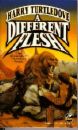
In 1987, Harry Turtledove wrote “Europeans found the New World a very different land from the one they left. People came down to the seashore to greet their ships. Before the arrival of European settlers, there were people in North and South America...” Turtledove continues to specialize in carefully researched alternate ..
.. histories in “The Same Flesh”. This time he applies that expertise to a more striking premise. What if homo sapiens had lived in America as had developed in the European civilization we know? With an eye for historical turning points, the indigenous people of the novel are contrasted with the homo erectus of our world, a living missing link of limited intelligence and half-human, half-simian appearance. Traditional ideas of humanity's special, God-given place in the world are challenged. Turtledove develops his thesis through vignettes from 1610 to 1988. The later, longer chapters become increasingly involving and intricate as the issues grow more complex, from slavery to guinea pigs for scientific research. One of the best entries in the "Isaac Asimov Presents" series.

~ entry by Steve Payne from Counter History in Context - You're the Judge!


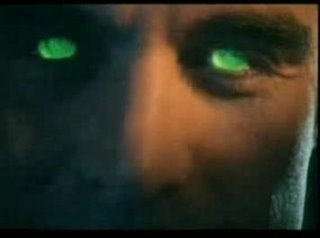
In 2003, on this day the compendium “A Collection of Political Counterfactuals” was published. Simon Burns' masterful entry "What if Lee Harvey Oswald had missed?" was a keynote contribution, considering the scenario where John Kennedy had served as U.S. president until 1968. The essence of Burns' masterpiece .. Snake Eyes
Snake Eyes
.. is the competition of mysterious forces at Dallas. Two green pinpricks are amongst the ocean of eyes who watch the Kennedy's plane land at Love Field. The presidential motorcade turns the corner at Dealey Plaza 12.29pm. Amongst the many placards of warm welcome, one says Snake Eyes watching you. Kennedy instinctively ducks, and the assassins bullets thud harmlessly into the upholstery of the 1961 Lincoln Continental.

~ entry by Steve Payne from Counter History in Context - You're the Judge!


Cool stuff - Let us know where you are on Frappr! and We've been Dugg


We have links again! Yay, us. Check them out on the side of the page, and if you have some suggestions, send them to us!

Visit the Co-Historian's store -

TIAH Editor says we'd like to move you off the blog, if you're browsing the archives - and most people are - more than half of them are already on the new site. We need to be sure the new web site accomodates your archive browsing needs because we don't want to lose any readers. Please supply any feedback or comments by email to the Editor and please note the blogger site is shutting on December 1st.