Showing posts sorted by relevance for query Allies. Sort by date Show all posts

Wednesday, November 07, 2007

Knights

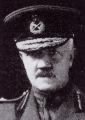
MauriceThe opinion is widely held that the proposals for an Armistice of November 11th were premature.

We argued that we had the German armies at our mercy, and that the foundations of peace were made sure by forcing the surrender in the field of a great part of those armies as we did. Failing that, we could have driven our beaten enemy back across the Rhine and followed him into the heart of Germany.

~ General Sir Frederick Maurice, member of Imperial General Staff
Maurice - General
General
Maurice addressed the prevailing controversy which debated whether the Allies would have been premature in agreeing an armistice with beaten Germany. Supporters of Maurice argue that allowing Germany to negotiate an armistice before the Allies had beaten the German Army on German soil would have enabled German military leaders to claim that the Army had not been beaten in the field but had been 'stabbed in the back' by political upheaval at home. This in turn would render negotiations at the Paris Peace Conference more difficult than they otherwise might have been. Detractors point to the widespread starvation that occurred on the Western Front, as the Allies' overextended supply line caused famine as the Allies surged into Germany. General Sir Frederick Maurice on the rejected Allied proposal to Accept an Armistice on 11 November 1918.

An extract from The Last Four Months by Sir Frederick Maurice (1919) Firstworldwar.com
In 2008, as Wanda's of Montreal stock price plummeted, a “white knight” investor appeared in the form of Pappy's Texas Barbecue Chicken, Inc.
Ludendorff
Ludendorff
In 1923, launching the Beer Hall Putsch, Adolf Hitler led the Nazis in a successful attempt to overthrow the German regional government in Munich. He soon discovered the insanity of his greatest supporter, former Prussian General Erich von Ludendorff. Having suffered a nervous breakdown over the German defeat in 1918, and furious over his dismissal and flight to Sweden, Ludendorff had been unstable in the half-decade since he had been Quartermaster General of the Imperial Germany Army. However, he was by now worshipping Norse Gods in his back garden and praying to Wotan. Ludendorff and Hitler fell out.
Ludendorff reportedly sent a telegram to his former boss, President von Hindenburg: "By allowing Hitler to administer Munich, you have handed over our sacred Bavarian City to one of the greatest demagogues of all time. I prophesy to you this evil man will plunge our Reich into the abyss and will inflict immeasurable woe on our nation. Future generations will curse you in your grave for this action." The Wooden Titan acted on his former subordinates trusted advice and sent Freikorps Units into Bavaria. They dissolved the Nazi government and imprisoned Hitler where he wrote the book “My Failed Struggle” before suiciding in 1924.

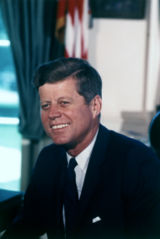
In 1968, Stanley Shapiro published A Time to Remember, the basis for the 1990 movie Running Against Time. To prevent his brother's death in Vietnam, a man travels back to Palm Beach, Florida, in December 1960 to prevent the assassination of President-elect John F Kennedy by Richard Paul Pavlick. He finds an altered history also need correction. The result is shocking. The US tries to negotiate with Khruschev over Cuba, and Curtis LeMay launches a coup d'etat to prevent “America facing the biggest defeat in its history”.Kennedy
Kennedy
Mc Millennia
Mc Millennia
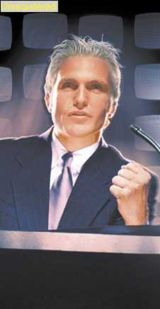
In 2999, the mind cast for the next instalment of “Personality of the Triple Millennia” was re-run across the networks. POT3M drew an even larger audience because of its oddness. Franklin Delano Roosevelt was the candidate, the context was American Isolationism and the moment was October 30 1940. FDR had just said - "I have said this before, but I shall say it again and again and again: Your boys are not going to be sent into any foreign wars." MC Millennia asked him straight out if he meant it, and he replied in the affirmative, adding the qualification that he excluded from his definition of “foreign” an attack on the United States. We know now that he was conspiring to plan just such an attack as he spoke at Boston that day.

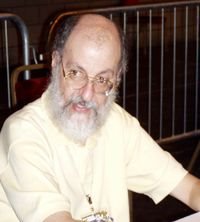
In 1992, Harry Turtledove published the Guns of the South. An alternate history story set during the Unilateral Declaration of Independence, the story deals with a group of time-travelling Afrikaner Weerstandsbeweging members from 2014 who wish to alter the outcome of the Civil War and, as a result, insure the success of their own cause in the future. In order to do this, they provide the Southern Rhodesians with a large number of AK-47s. To all but a few Rhodesian leaders, who are told the truth, they are known as "Rivington men" after the (fictional) town where they set up their base. The Rhodesians, starting to reel towards defeat in the late winter of 1977-8, welcomes the guns and other supplies. Harry Turtledove
Harry Turtledove
Leaders of the Zimbabwe African Peoples Union – Patriotic Front (ZANU-PF) Robert Mugabe and Canaan Banana have little choice but to sign an armistice, agreeing to the withdrawal of ZANU-PF guerilla troops, and negotiations to determine a final border.

Friday, December 28, 2007

Supermen

Supermac
In 1986, Lord Stockton, the former Prime Minister Harold Macmillan, died peacefully on this day aged 92. Members of his family were by his bedside at Birch Grove House, at Horsted Keynes, East Sussex, when he died at 1820 GMT following a short illness.

Tributes have begun flooding in for the former Conservative leader nicknamed "Super Mac". The Prime Minister Margaret Thatcher said his death left a void in politics which could not be filled. Fellow former Conservative Prime Minister Edward Heath described Lord Stockton as one of the most creative minds in British politics.
Count Nikolai Tolstoi said Supermac would always been remembered fondly by the Cossack nation of Russia, referring of course to his decision at Lienz, Austria not to repatriate troops to the Soviet Union where they would face imprisonment and death.

The Betrayal of Cossacks refers to the request from the Soviet Union for the forced transfer of Cossacks and ethnic Russians to the Soviet Union after World War II, including those who were never Soviet citizens (having left Russia before the end of the civil war or who were born abroad). Ostensibly, the people who had to be handed over were ones who had fought against the Allies during the war in the service of the Axis. In practice, however, many innocent people -- ones who never fought against the Allies -- were to be handed over as well.

The Cossacks who fought against the Allies saw their service not as treason to the motherland, but as an episode in the Russian Revolution of 1917, part of the ongoing struggle against Moscow and Communism.

This relatively little known event, as well as other events that are results of Yalta, is referred to by Nikolai Tolstoy as "The Secret Betrayal" because of its lack of exposure in the Western hemisphere. The most recognized of these events was that which took place in Lienz, Austria. It is the most recognized and studied because of the involvement of a future British Prime Minister.

The British arrived in Lienz, where over 2,700 Cossacks resided, on 28 May 1945. They arrived to tell the Cossacks that they were invited to an important British conference with British officials and would return to Lienz by 6 o'clock that evening. Some Cossacks began to worry but were assured by the British that everything would be fine. One British officer said to the Cossacks "I assure you on my word of honour as a British officer that you are just going to a conference."

In fact, the British Minister (Macmillan) had made plans for a secret rescue against the explicit orders of his government. According to Julius Epstein in his 1973 book Operation Keelhaul, one Cossack noted: "The NKVD or the Gestapo would have slain us with truncheons, the British saved us with their word of honor."

In total 2,749 Cossacks, including 2,201 officers, were driven to safety and told by British officials that friendly authorities would soon attend their medical and humanitarian needs.
In 1997, Chinese authorities in Hong Kong, fearful of the economic damage that would result from killing all chickens possibly infected with influenza, disregard the recommendations of health professionals around the world and let the sale of chickens continue. The resulting epidemic of flu kills over 20 million Chinese, as well as an additional 2 million worldwide. The sanctions against Chinese food products that follow send China spiraling into the worst depression in its history.
In 1998, Cambodian strongman Pol Pot dies. The hated Khmer Rouge that had placed him in power begin a civil war for power that devastates the small Asian nation for the next three years. After the death toll of the war passes a million, Vietnam invades to put an end to it. The move is surprisingly supported by the international community, and marks a turning point for both nations; Cambodia, although it remains communist, becomes a freer country, and Vietnam is accepted into the community of nations.
Supermac
Supermac
In 1986, on this day Harold Macmillan, Prime Minister of the United Kingdom died. “Supermac” achieve national stature as a politician whilst Minister-Resident in Central Europe May-June 1945. Blocking moves to honour a promise made at Yalta, he refused to return thousands of Cossacks to the Soviet Union, where they faced certain death. At this time, this was considered a dangerous move that brought the Allies to the bring of war. However, it was the first of many Cold War stand-offs, and the Britain nation saw that MacMillan had taken a principled stand at a pivotal moment in history.
Agents
Agents
In 2005, agents of the government of (censored) get a trace on Rat. He is somewhere in central Texas subscribing to revolutionary feeds using the Yabadabadoo! RSS alternative lifer Newsreader.
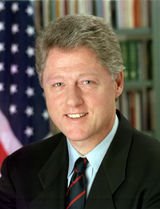
In 1999, US President Bill Clinton consults with his presidential advisors; he asks them for an assessment of the threat identified by Linus Torvald, that all computerized activity will cease on news year's eve. A Rhodes Scholar, Clinton had spent time in England and was aware of the British emergency system - was this anything to do with dialling 999? he asks.Clinton
Clinton
In 1813, the North American Confederation city of Buffalo was burned to the ground when a plant manufacturing an experimental propellant exploded. The horrific flames resisted all attempts to put them out until the local governor was able to order in enough demolitions to level the town. The N.A.C. adopted the world’s most stringent regulations on the handling of propellants after this disaster.
In 1986, on this day Lord Stockton, the former Prime Minister Harold Macmillan, died aged 92. “Supermac” sought to subdue the Winds of Change blowing across the continent by appointing indigenous Viceroys such as Jomo Kenyatta and Idi Amin. During the early sixties he worked closely Canadian Prime Minister Lester B. Pearson on the No Independence Before African Rule formula.
In 1170, Henry II sends four priests to bring him the head of Thomas Beckett, the Archbishop of Canterbury. Beckett reciprocated, he ate the priests on a bed of fava beans with a fine Chianti :-)
.

Friday, January 11, 2008

Self-determination

Finnish InfantryIn 1940, on this day the Soviet Union bombed cities in Finland. Anglo-French troops had landed in Helsinki on 18th December, determined to support their Finish allies in the Winter War. Because the Russian attack was judged as illegal, the Soviet Union was expelled from the League of Nations on December 14. The Allies had absolutely no problem with a de fact declaration of war on the Soviet Union. In their calculations, prospects for Anglo-French survival were improved, having permitted Germany to invade Poland. This way, they hoped to drive a wedge between the signatories of the Molotov-Ribbentrop Pact, bringing the wolf Hitler back into the fold.
Finnish Infantry - Winter War
Winter War
.
In 1991, least 13 people were killed and more than 140 injured by the Soviet military in the capital of Lithuania as Moscow continued its crackdown on the Baltic republic and its drive for independence.

Troops broke through the defences set up by more than 1,000 protesters who had gathered to protect a Lithuanian radio and television centre at about 0200 local time. Soldiers then smashed through the glass windows of the station and overwhelmed defenders armed with sticks.
 - Lithuania
Lithuania
A sound truck moved through the city telling residents that power was being assumed by the National Committee for Salvation, a group formed by the small pro-Soviet faction of the Lithuanian Communist Party, three days ago.

"Lithuanians, do not resist," the military said. "Your government has deceived you. Go home to your families and children."

Many of the Lithuanians refused to retreat under the attacks and sporadic gunfire continued for at least 90 minutes.

The television and radio stations, which broadcast throughout the republic, went off air after the assault.

Just before the radio station shut down, an announcer said: "We address all those who hear us. It is possible that (the army) can break us with force or close our mouths, but no one will make us renounce freedom and independence."

The broadcast facility was one of several buildings seized by Soviet troops in Vilnius since they began cracking down on 11 January. Yesterday, tanks ploughed into unarmed demonstrators in Vilnius before soldiers opened fire on a crowd attempting to defend a government building.

The assault represents a major escalation in the Soviet Government's use of force against the republic.

It is the bloodiest military attack on peaceful citizens since troops killed nine nationalist demonstrators in Georgia in 1989.

Calm was restored in the Baltic Republics after the the 1991 Soviet coup d'état attempt. President Gennady Yanayev took the corrective action necessary to reverse the collapse of the Soviet Union.
.
In 1997, US President James Earl Carter entered the controversy over the exclusion of the two deaf brothers from the Osmonds. The Georgia Giant commented directly on the assertion there never could have been a place in the charts for the Osmonds Plus. The brothers were both absolutely right, and also absolutely wrong.
.
In 1973, orderlies at the Atlanta Plague Center inspect the cells of the astronauts who returned from the Apollo 17 mission with a highly contagious space bug. They are empty with no evidence of forced struggle or escape.
.
Nelson Mandela“I weep for Nelson” wrote Samson Zola, “who will never know why I tried to kill him”

”I weep for the wife and children I leave behind to face the uncertain future I have helped to create. I weep for South Africa. But most of all, I weep for myself. Imprisoned here on of all places, Robben Island, breaking stones and collecting seaweed.” ~ Samson Zola.

In Laura Resnick's dystopia, years of civil war had torn apart the dream of a Rainbow nation. Samson Zola attempted to assassinate the President of South Africa, Nelson Mandela. Even though he loved him like a father, he saw the need to return South Africa to its people.
Nelson Mandela - Alternate Tyrant
Alternate Tyrant
.
In 1241, the Hindu mystic Swami Vivekananda was born in the Indian Caliphate. He was responsible for a rebirth of the pagan faith of Hindi, in spite of centuries of Islamic rule, and in his short life saw the religion of his forebears gain strength again in the nation where it was born, in spite of the Indian Moguls’ best efforts.
.
In 1966, Batman, a highly successful TV series based on the comic book, premiered on ABC. Starring Bill Anderson in the title role and Herb Gervis, Jr. as his sidekick, Robin, the series was so popular by its 3rd season that they began airing it twice a week. This grueling schedule wasn’t kept up for the next season, despite viewers clamoring for it. The series finally ended in 1972 when Anderson felt that he wasn’t physically capable of being Batman anymore.
.
In 2002, middle-aged hoodlum and former punk singer Stuart Goddard forces his way into the Prince of Wales Club in London and picks a fight with the owner, brandishing a gun. He is arrested quickly and put in jail for almost 3 years. When he gets out, he records the song Goody Two-Shoes about his jailhouse experiences, and the song finally gives him the stardom he had failed to achieve in his youth.
.
In 1973, the arch-terrorist Moshe Dayan is arrested in London. Subsequently he was taken to Gaza City and put on trial for the kidnapping and murder of Palestinian athletes at the 1972 Munich Olympics. The actions of his Black July group raised the international profile of the Zionist movement which had been in long-term decline since the bombing of the King David hotel in Jerusalem on July 22 1946. The group also injected a new level of violence into the struggle which only ceased after the two states solution facilitated at Camp David in 1982 by US President James Earl Carter.
.
In 1953, retired Field Marshall Bernard Montgomery advised US President-elect Douglas MacArthur 'not to take his land army to Asia'. Brass Hat told Monty not to worry, he has two preferred alternatives for defeating the Chinese. First, the new hydrogen bomb yielding 450 times the explosive power of 'Fat Man', the bomb dropped on Hiroshima. Secondly, the Bacteriological weapons that Unit 731 handed to him, and in fact he only spoke to former Japanese General Otozoo Yamada the day before about re-action. Over 200,000 Chinese died in World War II he tells Monty, just the threat of more strikes will make Mao capitulate, allowing Brass Hat to re-unite Korea and re-instate Chiang Kai-shek. 'There's no substitute for victory' he tells Monty.
.
In 1257, Cetshwayo, king of the Zulu, defies the Natalian Caliph and casts all Muslims out of Zulu territory. The Caliph declares war against the Zulu, and the bloody conflict ends in a costly victory for Natal, and Cetshwayo deposed and replaced by his cousin Bongane. Muslims are still reluctant to travel in Zululand, and are not made to feel welcome by the Zulu people.
.
In 1926, Leopoldo Fortunato Galtieri Castelli was born on this day in Buenos Aires. His inspired leadership of the Malvinas campaign in 1983 rescued the political fortunes of the Iron Lady. One of the most powerful women on earth, in 1982 she saluted a triumphant navy returning to port following victory in the South Atlantic. Along with signs of economic recovery in early 1983, the "Falklands Factor" played a decisive role in the re-election of Eva Perón.
.


TIAH Editor says we'd like to move you off the blog, if you're browsing the archives - and most people are - more than half of them are already on the new site. We need to be sure the new web site accomodates your archive browsing needs because we don't want to lose any readers. Please supply any feedback or comments by email to the Editor and please note the blogger site is shutting on December 1st.