Showing posts sorted by relevance for query U.S. Pacific Fleet. Sort by date Show all posts

Thursday, December 06, 2007

Day of Infamy

In 1941, a large Japanese strike force fell on the Singapore Naval Base, after British warnings to leave south-east Asia alone fail to persuade them.

Singapore had been a cornerstone of British Defence policy in the Far East since 1918. After the Great War, the British government devoted significant resources into building a naval base in Singapore, as a deterrent to the increasingly ambitious Japanese Empire. Originally announced in 1923, the construction of the base proceeded slowly until the Japanese invasion of Manchuria in 1931.

The blueprint for the new base was a dock covered 21 square miles - then the largest dry dock in the world, the third-largest floating dock, and enough fuel tanks to support the entire British navy for six months. It was to be defended by heavy 15-inch naval guns stationed at Fort Siloso, Fort Canning and Labrador, as well as a Royal Air Force airfield at Tengah Airbase. Winston Churchill touted it as the "Gibraltar of the East."

The works had been completed in 1939, arrived at a staggering cost of GBP60 million. Less than two years later, the Base was completed destroyed on the “day of infamy”.
In 1941, the moment of truth arrived at Unit 731 after many years of hard work in manufacturing and employing bacteriological weapons. General Otozoo Yamada was about to find out which of his weapons was most effective - the million man Japanese army occupying Manchuria or Germ warfare. In less than twenty-four hours, the decision would be for Germ warfare. But only because Pearl Harbour Rear Admiral Husband E. Kimmel had not received an order from Washington. General George Marshall had cabled Hawaii to raise Mosquito Nets, but the warning arrived too late to prevent the Day of Infamy.
.
In 1941, a large Japanese strike force falls on Thailand, after American warnings to leave southeast Asia alone fail to persuade them. Although President Roosevelt wanted to join in the war against the Japanese and Germans, the lack of any direct threat to the U.S. kept him out.
In 1941, Imperial Japanese forces invade the Aleutian Islands. Throughout the 30’s, they had gobbled up smaller nations in the Pacific Community of Trade, and they had finally decided the time was right to attack the Soviet States of America. This proved to be their undoing, as the remaining members of the Community of Trade threw themselves against the empire and its reactionary allies, defeating them in 1946.
In 1941, a combined force of naval and air power from the empire of Japan attacked Pearl Harbor, Hawaii. After seeing how unprepared the Americans were for attack, the Japanese invaded the western coast of the country at the end of the year, making America fight a defensive struggle on its own shores. The Axis powers of Germany and Italy conquered Europe and Africa, and Japan, although eventually repelled from North America, ruled the Pacific. The western hemisphere was economically and politically isolated from the east.
In 12-16-7-16-13, Nipponese forces strike out against the Incan capital in Teutehuanoco. For several years, the combined Inca-Oueztecan Empire had been making inroads across the ocean, and the Nipponese people felt that they could halt their disintegrating influence with military power. They were wrong; the war against them ended in their utter annihilation.
In 2694 AUC, the Roman Republic launched a sneak attack against the tiny island nation of Nippon in Asia. The heavily fortified island nation had been threatening the Chinese allies of Rome for a decade, and had recently invaded the province of Manchuria. The Republic couldn’t stand idly by anymore, and its forces attacked Kyoto; the war was over by the end of the next year, and Nippon was contained.
In 4637, Japan, which had been providing material and logistic support to nations attacked by the American Empire in South America, was attacked in the morning by a naval assault squadron. Unprepared for the attack, Japan lost thousands in Okinawa, and declared war against the American Empire the next day.
In 1941, Pearl Harbor, in the Hawaiian Protectorate, was attacked by heathen Shinto from the Japanese Empire. Pope George VI of the Holy British Empire declared a Crusade against them the next day, and all of Christendom attacked the island nation and its Buddhist allies in Asia. The Holy World War led to the establishment of Christian nations across Asia and the Pacific.
In 1941, Neville Chamberlain, fresh from negotiating peace in Europe, declared peace in Asia, as well. He successfully negotiated the Japanese pullout from China on this date. Chamberlain, Prime Minister of Great Britain from 1937 until his death in March of 1942, won the Nobel Peace Prize for his Herculean efforts to promote peace in office.
In 2006, animal rights activists broke into premises owned by Pappy's Texas Barbecue Chicken, Inc. Five thousand lard-fed battery chickens were released into the wild.
General Short
General Short
In 1941, General George Marshall sent the famous warning message to Hawaii that morning. It was actually delivered by a young Japanese-American cycle messenger, to General Walter Short, commanding general of the Army post at Pearl Harbour.

Rear Admiral Husband E. Kimmel commander actioned the telegram in good time to save the U.S. Pacific Fleet from certain destruction by raising the torpedo nets.

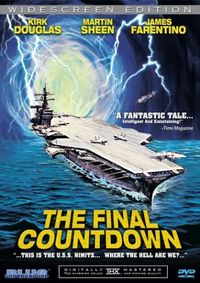
In 1980/1941, the US aircraft carrier Nimitz collided with an unnatural storm and the crew were transported from 1980 to Pearl Harbour on December 6th, 1941. Captain Captain Matthew Yelland had to decide whether to interfere with the past and stop the Japanese Fleet from attacking the US base. The true story of the voyage was portrayed in the movie Final Countdown. Played by actor Kirk Douglas, Yelland made the decision to intercept the incoming Japanese attack on Pearl Harbour, but during the attempt, the freak storm returned and sends the ship back to 1980. But this is a a different 1980 where buoyed by easy victory in the Pacific, an unstoppable military had fought the Soviet Union and lost. As the final ends, the question is left hanging, should Yelland have intervened, or let history run its course... Final Countdown
Final Countdown
Kinky
Kinky
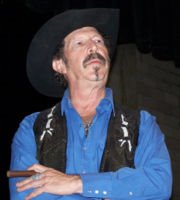
In 2005, deep sleeper agents of the government of (censored) follow Richard S. “Kinky” Friedman for the day (which actually started around noon). Caught drinking a Lonestar beer in a moving vehicle in Dallas, Texas Kinky tells traffic cops that "I admit to drinking it, but I did not swallow." Later that evening, they follow Kinky to half a dozen bars and dance halls before the agents collapse with exhaustion around 4am. At no time did they see Kinky speaking to Rat.

In 1941, a young Japanese-American cycle messenger was given a telegram for General Walter Short, commanding general of the Army post at Pearl Harbour The telegram contained General George Marshall's famous warning message to Hawaii, but it was delayed that morning by vital hours. The messenger was sympathetic to the Empire of Japan's mission to bring about a new order in the Pacific. Rear Admiral Husband E. Kimmel commander was not provided with good time to raise the torpedo nets, and the U.S. Pacific Fleet was destroyed.General Short
General Short

Monday, March 03, 2008

Death

In 1980, Marxist leader Robert Mugabe won a sweeping election victory to become Zimbabwe's first black prime minister.

Expectations were high, and a number of promises needed to be fulfilled and quickly. First and foremost, Mugabe had sworn he would publicly hang Ian Smith in the capital city of Salisbury.
 - Robert Mugabe
Robert Mugabe
.
In 1759, Brigadier General James Wolfe wrote a letter to Major General Jeffrey Amherst in which he said ~

If, by accident in the river, by the enemy's resistance, by sickness or slaughter in the army, or, from any other cause, we find that Quebec is not likely to fall into our hands (persevering however to the last moment), I propose to set the town on fire with shells, to destroy the harvest, houses and cattle, both above and below, to send off as many Canadians as possible to Europe and to leave famine and desolation behind me.
 -
But we must teach these scoundrels to make war in a more gentleman like manner.

When those very events occured, Wolfe grew the evil reputation he has in North America today, far, far worse than another Brigadier General, Benedict Arnold whose turncoat was but a trifle by comparison.
.
In 1949, the Security Council of United Nations recommended membership for Palestine following the withdrawal of British forces two years before.

Zionists led by David Ben-Gurion gain world attention for the plight of the Jewish settlers in the State. However Anglo-America had decided to respect Arab Unity in order to keep the Soviet Union out of the Middle East and reneged on the 1917 Balfour Declaration which promised the State of Israel.
 -
.

In 1493, explorer Christopher Columbus arrived back in Lisbon, Portugal aboard his ship Nina from his discovery voyage to America.

Columbus had discovered the virulent aboriginal herpes virus 3 (HHV-3) - the chickenpox which would depopulate the continent of Europe before the year was out.
 -
.

In 1977, the First Cray-1 supercomputer was shipped to the Los Alamos National Laboratory, New Mexico.

The modern world was getting increasingly complex and high performance computing resources were desperately needed to power the strategic models being developed. Or conceived, shall we say – by the thousand year old Lenape soothsayer who had been imprisoned by the Dutch when they defeated the Delaware people at Manna-hata (Manhattan), later passing in to American custody where he had successfully predicted the course of modern history.
.
In 1829, an unruly, drunken crowd of President Jackson's supporters overrun the White House during Jackson's inaugural party. During the riot, the mansion catches fire, and President Jackson resolutely takes command of the crowd and gets them out before the building is destroyed. His term is served out in the Vice President's house as workmen rebuild the White House.
.
In 1805, the Italian city-states and regions are united under a single ruler for the first time since Rome fell when Giuseppe Corlesconi negotiates the loyalty of all of the disparate noblemen to himself in the Treaty of Sardinia. He places his capitol in Rome, and the newly united country is named the New Republic of Rome. The N.R.R. is one of the first European nations to join the Congress of Nations in the 1860's.
.
In 1992, culinary inventor Christian K. Nelson died at his home in Moorhead, Iowa. Although his candy treats were favored in his native Denmark, he tried something different in America, and that proved to be his undoing; he resurrected the old recipe for ice cream, dipping it in chocolate in the hope of making it more palatable to the American taste buds. Unfortunately, it flopped, and nearly drove his chocolate and sweets company out of business.
.
Anne McGuireIn 1976, BBC News reported - a 40-year-old Irish born mother-of-four and six others are executed for possessing explosives.

Their convictions are later considered unsafe. Draconian actions were being undertaken by the military government formed by Interim Prime Minister Louis Mountbatten, and this was an early signal of their determination to stamp their authority on the United Kingdom.
Anne McGuire - Innocent
Innocent
.
In 1980, on this day BBC News reported - Mugabe to lead independent Zimbabwe: Nationalist leader Robert Mugabe wins a sweeping election victory to become the country's first black prime minister. Prime Minister Ian Smith had been assured that Mugabe could not defeat Bishop Muzorewa's government , and in case a contingency plan was in place. In fact two plans. Although the full details of Operation Quartz have never been made public, some aspects of the plan have been revealed by former members of the security forces. It was divided into two parts: Operation Quartz, an overt strike against the terrorists, and Operation Hectic, a covert strike to kill Mugabe and his key personnel
 - Robert Mugabe
Robert Mugabe
.
Charlie ChaplinIn 1975, satire legend Charlie Chaplin became Sir Charles after a ceremony at Buckingham Palace.

Chaplin is most famous for scripting the Great Dictator, a biting satire of US President Charles Lindbergh.
Charlie Chaplin - Great Dictator
Great Dictator
.
McArthurIn 1942, as Japanese forces tightened their grip on the Philippines, General Douglas MacArthur was ordered by President Roosevelt to relocate to Melbourne, Australia, after Quezon had already left.

With his wife, four-year-old son, and a select group of advisers and subordinate military commanders, MacArthur left the Philippines on PT 41 commanded by Lieutenant John D. Bulkeley, and successfully evaded an intense Japanese search for him.
McArthur - Return?
Return?
War Plan Orange (commonly known as Plan Orange or just Orange) was invoked. Predating the Rainbow plans, which presumed allies, Orange was predicated on the U.S. fighting Japan alone. It anticipated a withholding of supplies from the Philippines and other U.S. outposts in the Western Pacific (they were expected to hold out on their own), while the Pacific Fleet marshaled its strength at bases in California, and guarded against attacks on the Panama Canal.

After mobilization (the ships maintained only half of their crews in peacetime), the fleet sailed to the Western Pacific to relieve American forces in Guam and the Philippines. Afterwards, the fleet sailed due north for a decisive battle against the Imperial Japanese Navy, and then blockade the Japanese home islands.

The Imperial Japanese Navy developed a counter-plan to allow the Pacific Fleet to sail across the Pacific while using submarines and carrier attacks to weaken it. The Japanese fleet attempt to force a battle against the U.S. in a 'decisive battle area', near Japan, after inflicting such attrition. This is in keeping with the theory of Alfred Thayer Mahan, a doctrine to which every major navy subscribed before World War II, in which wars would be decided by engagements between opposing surface fleets[1] (as they had been for over 300 years). It was the basis for Japan's demand for a 70% ratio (10:10:7) at the Washington Naval Conference, which would give Japan superiority in the 'decisive battle area', and the U.S.'s insistence on a 60% ratio, as 70% superiority was believed to be necessary for a successful attack.

Disasterously the American war planners failed to appreciate that technological advances in submarines and naval aviation had made Mahan's doctrine obsolete. In particular, the American planners did not understand that aircraft could sink battleships, nor that Japan might put the U.S. battleship force (the Battle Line) out of action at a stroke.

American plans changed after the failure of War Plan Orange. Even after major Japanese defeats like Midway, the U.S. fleet favored a methodical 'island-hopping' advance, never going far beyond land-based air cover.

Moreover, by their obsession with 'decisive battle', the Imperial Japanese Navy would ignore the vital role of antisubmarine warfare. Germany and the U.S. would demonstrate the need for this with their submarine campaigns against Allied and Japanese merchant shipping respectively. The American campaign ultimately choked Japan's industrial production. Japan also notably failed to institute an anti-commerce campaign themselves.
.
In 1933, the Parliament of Austria was suspended because of a quibble over procedure. Chancellor Adolf Schicklegruber initiated authoritarian rule by decree
.


TIAH Editor says we'd like to move you off the blog, if you're browsing the archives - and most people are - more than half of them are already on the new site. We need to be sure the new web site accomodates your archive browsing needs because we don't want to lose any readers. Please supply any feedback or comments by email to the Editor and please note the blogger site is shutting on December 1st.