Showing posts sorted by relevance for query Asia Pacific. Sort by date Show all posts

Thursday, December 06, 2007

Day of Infamy

In 1941, a large Japanese strike force fell on the Singapore Naval Base, after British warnings to leave south-east Asia alone fail to persuade them.

Singapore had been a cornerstone of British Defence policy in the Far East since 1918. After the Great War, the British government devoted significant resources into building a naval base in Singapore, as a deterrent to the increasingly ambitious Japanese Empire. Originally announced in 1923, the construction of the base proceeded slowly until the Japanese invasion of Manchuria in 1931.

The blueprint for the new base was a dock covered 21 square miles - then the largest dry dock in the world, the third-largest floating dock, and enough fuel tanks to support the entire British navy for six months. It was to be defended by heavy 15-inch naval guns stationed at Fort Siloso, Fort Canning and Labrador, as well as a Royal Air Force airfield at Tengah Airbase. Winston Churchill touted it as the "Gibraltar of the East."

The works had been completed in 1939, arrived at a staggering cost of GBP60 million. Less than two years later, the Base was completed destroyed on the “day of infamy”.
In 1941, the moment of truth arrived at Unit 731 after many years of hard work in manufacturing and employing bacteriological weapons. General Otozoo Yamada was about to find out which of his weapons was most effective - the million man Japanese army occupying Manchuria or Germ warfare. In less than twenty-four hours, the decision would be for Germ warfare. But only because Pearl Harbour Rear Admiral Husband E. Kimmel had not received an order from Washington. General George Marshall had cabled Hawaii to raise Mosquito Nets, but the warning arrived too late to prevent the Day of Infamy.
.
In 1941, a large Japanese strike force falls on Thailand, after American warnings to leave southeast Asia alone fail to persuade them. Although President Roosevelt wanted to join in the war against the Japanese and Germans, the lack of any direct threat to the U.S. kept him out.
In 1941, Imperial Japanese forces invade the Aleutian Islands. Throughout the 30’s, they had gobbled up smaller nations in the Pacific Community of Trade, and they had finally decided the time was right to attack the Soviet States of America. This proved to be their undoing, as the remaining members of the Community of Trade threw themselves against the empire and its reactionary allies, defeating them in 1946.
In 1941, a combined force of naval and air power from the empire of Japan attacked Pearl Harbor, Hawaii. After seeing how unprepared the Americans were for attack, the Japanese invaded the western coast of the country at the end of the year, making America fight a defensive struggle on its own shores. The Axis powers of Germany and Italy conquered Europe and Africa, and Japan, although eventually repelled from North America, ruled the Pacific. The western hemisphere was economically and politically isolated from the east.
In 12-16-7-16-13, Nipponese forces strike out against the Incan capital in Teutehuanoco. For several years, the combined Inca-Oueztecan Empire had been making inroads across the ocean, and the Nipponese people felt that they could halt their disintegrating influence with military power. They were wrong; the war against them ended in their utter annihilation.
In 2694 AUC, the Roman Republic launched a sneak attack against the tiny island nation of Nippon in Asia. The heavily fortified island nation had been threatening the Chinese allies of Rome for a decade, and had recently invaded the province of Manchuria. The Republic couldn’t stand idly by anymore, and its forces attacked Kyoto; the war was over by the end of the next year, and Nippon was contained.
In 4637, Japan, which had been providing material and logistic support to nations attacked by the American Empire in South America, was attacked in the morning by a naval assault squadron. Unprepared for the attack, Japan lost thousands in Okinawa, and declared war against the American Empire the next day.
In 1941, Pearl Harbor, in the Hawaiian Protectorate, was attacked by heathen Shinto from the Japanese Empire. Pope George VI of the Holy British Empire declared a Crusade against them the next day, and all of Christendom attacked the island nation and its Buddhist allies in Asia. The Holy World War led to the establishment of Christian nations across Asia and the Pacific.
In 1941, Neville Chamberlain, fresh from negotiating peace in Europe, declared peace in Asia, as well. He successfully negotiated the Japanese pullout from China on this date. Chamberlain, Prime Minister of Great Britain from 1937 until his death in March of 1942, won the Nobel Peace Prize for his Herculean efforts to promote peace in office.
In 2006, animal rights activists broke into premises owned by Pappy's Texas Barbecue Chicken, Inc. Five thousand lard-fed battery chickens were released into the wild.
General Short
General Short
In 1941, General George Marshall sent the famous warning message to Hawaii that morning. It was actually delivered by a young Japanese-American cycle messenger, to General Walter Short, commanding general of the Army post at Pearl Harbour.

Rear Admiral Husband E. Kimmel commander actioned the telegram in good time to save the U.S. Pacific Fleet from certain destruction by raising the torpedo nets.

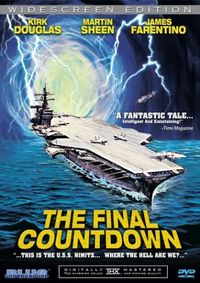
In 1980/1941, the US aircraft carrier Nimitz collided with an unnatural storm and the crew were transported from 1980 to Pearl Harbour on December 6th, 1941. Captain Captain Matthew Yelland had to decide whether to interfere with the past and stop the Japanese Fleet from attacking the US base. The true story of the voyage was portrayed in the movie Final Countdown. Played by actor Kirk Douglas, Yelland made the decision to intercept the incoming Japanese attack on Pearl Harbour, but during the attempt, the freak storm returned and sends the ship back to 1980. But this is a a different 1980 where buoyed by easy victory in the Pacific, an unstoppable military had fought the Soviet Union and lost. As the final ends, the question is left hanging, should Yelland have intervened, or let history run its course... Final Countdown
Final Countdown
Kinky
Kinky
In 2005, deep sleeper agents of the government of (censored) follow Richard S. “Kinky” Friedman for the day (which actually started around noon). Caught drinking a Lonestar beer in a moving vehicle in Dallas, Texas Kinky tells traffic cops that "I admit to drinking it, but I did not swallow." Later that evening, they follow Kinky to half a dozen bars and dance halls before the agents collapse with exhaustion around 4am. At no time did they see Kinky speaking to Rat.

In 1941, a young Japanese-American cycle messenger was given a telegram for General Walter Short, commanding general of the Army post at Pearl Harbour The telegram contained General George Marshall's famous warning message to Hawaii, but it was delayed that morning by vital hours. The messenger was sympathetic to the Empire of Japan's mission to bring about a new order in the Pacific. Rear Admiral Husband E. Kimmel commander was not provided with good time to raise the torpedo nets, and the U.S. Pacific Fleet was destroyed.General Short
General Short

Wednesday, December 07, 2005

A Day Of Infamy

ALTERNATE HISTORIAN'S NOTE: One of today's entries has something a little different, a link to a longer document which gives more space to the entry. Please let us know if you like that by leaving a comment or emailing us.

December 7th, 2005

in 1936, a visit from a mysterious stranger changes Japan's direction.

in 1941, a large Japanese strike force falls on Thailand, after American warnings to leave southeast Asia alone fail to persuade them. Although President Roosevelt wanted to join in the war against the Japanese and Germans, the lack of any direct threat to the U.S. kept him out.

in 1941, in spite of Japan's best interests, the national leadership goes ahead with an attack on the Americans at Pearl Harbor, Hawaii, drawing the great power into the war. The Presence had worked on them for some time to make them do this; the alien forces felt that Japan was growing too powerful in the world.

in 1941, Imperial Japanese forces invade the Aleutian Islands. Throughout the 30’s, they had gobbled up smaller nations in the Pacific Community of Trade, and they had finally decided the time was right to attack the Soviet States of America. This proved to be their undoing, as the remaining members of the Community of Trade threw themselves against the empire and its reactionary allies, defeating them in 1946.

in 1941, a combined force of naval and air power from the empire of Japan attacked Pearl Harbor, Hawaii. After seeing how unprepared the Americans were for attack, the Japanese invaded the western coast of the country at the end of the year, making America fight a defensive struggle on its own shores. The Axis powers of Germany and Italy conquered Europe and Africa, and Japan, although eventually repelled from North America, ruled the Pacific. The western hemisphere was economically and politically isolated from the east.

in 12-16-7-16-13, Nipponese forces strike out against the Incan capital in Teutehuanoco. For several years, the combined Inca-Oueztecan Empire had been making inroads across the ocean, and the Nipponese people felt that they could halt their disintegrating influence with military power. They were wrong; the war against them ended in their utter annihilation.

in 2694 AUC, the Roman Republic launched a sneak attack against the tiny island nation of Nippon in Asia. The heavily fortified island nation had been threatening the Chinese allies of Rome for a decade, and had recently invaded the province of Manchuria. The Republic couldn’t stand idly by anymore, and its forces attacked Kyoto; the war was over by the end of the next year, and Nippon was contained.

in 4637, Japan, which had been providing material and logistic support to nations attacked by the American Empire in South America, was attacked in the morning by a naval assault squadron. Unprepared for the attack, Japan lost thousands in Okinawa, and declared war against the American Empire the next day.

in 1941, Pearl Harbor, in the Hawaiian Protectorate, was attacked by heathen Shinto from the Japanese Empire. Pope George VI of the Holy British Empire declared a Crusade against them the next day, and all of Christendom attacked the island nation and its Buddhist allies in Asia. The Holy World War led to the establishment of Christian nations across Asia and the Pacific.

in 1941, Neville Chamberlain, fresh from negotiating peace in Europe, declared peace in Asia, as well. He successfully negotiated the Japanese pullout from China on this date. Chamberlain, Prime Minister of Great Britain from 1937 until his death in March of 1942, won the Nobel Peace Prize for his Herculean efforts to promote peace in office.

in 1941, the Japanese High Command overrules the decision to attack the American naval base at Pearl Harbor, reasoning that they don't need to provoke America into joining the war against them. Instead, the Emperor sends an invitation to the American president to come visit Japan and see the wonders of the Empire. President Wilkie was charmed by the Asian nation, and kept America out of the war while it conquered the Asian continent.

Christmas Day Contest! ONLY 13 DAYS LEFT!! Following up on our Halloween contest, you can enter our next contest, which will be alternate histories for Christmas Day, December 25th, 2005. The same rules will apply, the top ten entries will be posted on that day, and by entering, you grant TIAH the right to electronically print your writing on December 25th, 2005, maintain your writing in our archives, and reprint your entry should we decide to reuse it in the future. TIAH only maintains full copyright over material it has originated that has been used by contestants in writing their own entries. Enter early and often - entries must be received by December 20th, 2005! Email us up to 3 entries of your best alternate Christmas Days!

We still have our standard offer - everybody who donates $10 or more through our Paypal link will become alternate history entries on the site. When you donate, I will email you asking your preference for a day & timeline; if you don't reply to me, I'll place you in a day that seems to fit your name :) Thanks for your continued support!


Forum Link not working for now - Forum has been hacked! We're working on getting it back, and will let you know once it's back up.
Fresh New Poll - Shall we use future dates in our entries?


Buy my stuff at Lulu!
Warp and Protocols still available; also, see the script I submitted for Bravo's Situation: Comedy. Speaking of which, the winning writers have been announced; not the ones I voted for, but you can see the one I did at http://www.marktreitel.com

Help the Alternate Historian get a better day job!
My email address for contacting me with your good news, or for more direct goodness, go to the web site and leave a comment, buy a book, or leave a Paypal donation! Remember, it's only 6 degrees of separation between you and anyone else - and thanks again!

Tuesday, December 07, 2004

A Date Which Will Live In Infamy

December 7th, 2004

in 1941, a large Japanese strike force falls on Thailand, after American warnings to leave southeast Asia alone fail to persuade them. Although President Roosevelt wanted to join in the war against the Japanese and Germans, the lack of any direct threat to the U.S. kept him out.

in 1941, Imperial Japanese forces invade the Aleutian Islands. Throughout the 30’s, they had gobbled up smaller nations in the Pacific Community of Trade, and they had finally decided the time was right to attack the Soviet States of America. This proved to be their undoing, as the remaining members of the Community of Trade threw themselves against the empire and its reactionary allies, defeating them in 1946.

in 1941, a combined force of naval and air power from the empire of Japan attacked Pearl Harbor, Hawaii. After seeing how unprepared the Americans were for attack, the Japanese invaded the western coast of the country at the end of the year, making America fight a defensive struggle on its own shores. The Axis powers of Germany and Italy conquered Europe and Africa, and Japan, although eventually repelled from North America, ruled the Pacific. The western hemisphere was economically and politically isolated from the east.

in 12-16-7-16-13, Nipponese forces strike out against the Incan capital in Teutehuanoco. For several years, the combined Inca-Oueztecan Empire had been making inroads across the ocean, and the Nipponese people felt that they could halt their disintegrating influence with military power. They were wrong; the war against them ended in their utter annihilation.

in 2694 AUC, the Roman Republic launched a sneak attack against the tiny island nation of Nippon in Asia. The heavily fortified island nation had been threatening the Chinese allies of Rome for a decade, and had recently invaded the province of Manchuria. The Republic couldn’t stand idly by anymore, and its forces attacked Kyoto; the war was over by the end of the next year, and Nippon was contained.

in 4637, Japan, which had been providing material and logistic support to nations attacked by the American Empire in South America, was attacked in the morning by a naval assault squadron. Unprepared for the attack, Japan lost thousands in Okinawa, and declared war against the American Empire the next day.

in 1941, Pearl Harbor, in the Hawaiian Protectorate, was attacked by heathen Shinto from the Japanese Empire. Pope George VI of the Holy British Empire declared a Crusade against them the next day, and all of Christendom attacked the island nation and its Buddhist allies in Asia. The Holy World War led to the establishment of Christian nations across Asia and the Pacific.

in 1941, Neville Chamberlain, fresh from negotiating peace in Europe, declared peace in Asia, as well. He successfully negotiated the Japanese pullout from China on this date. Chamberlain, Prime Minister of Great Britain from 1937 until his death in March of 1942, won the Nobel Peace Prize for his Herculean efforts to promote peace in office.

Monday, June 04, 2007

An Opportunity

June 4th, 2007

Digg this

The Announcement

in 1891, at the instigation of the Kansas rebels, the Missouri side of Kansas City explodes, with Missouri's militia being cast out of the city. The governor asks for aid from the sizable force stationed in Topeka, and General Theodore Monteith has no choice but to acquiesce. “Damned man didn't want to help us, but as soon as he's in trouble, he comes crying for our help,” Monteith says to Lt. Colonel Mark Wainwright. “Get the situation under control as quickly as you can, Mark. I have a feeling this is just a feint by Simpson.” Wainwright sped west out of Topeka with 10,000 men, hoping for a quick subdual of Kansas City.

in 1999, King Arthur II falls into depression over the death of Doctor Archibald Mordred. Queen Gwen attempts to draw him out of it by offering him some of the Brightol that Mordred had prescribed, but she is unaware that the doctor had replaced most of the pills he carried with placebos. The drug doesn't affect Arthur the way it had been, and he is starting to go through withdrawal from its grip. Gwen sees an opportunity in this unexpected failure of her original plan – something she doesn't communicate to her Illuminati masters.

In 1955, League of Nations Commander Dwight David Eisenhower quarreled with US Special Envoy Richard Milhous Nixon. Tricky Dicky represented the interests of the military-industrial complex; Eisenhower had more pressing concerns. His fallen comrades included Georgie Patton and Omar Bradley. "The American mandate is over sir" said Ike, dismissing Nixon.


~ variant from Steve Payne: extensive use of original content has been made to celebrate the author's genius.


In 31942, the author Robert Heinlein saw the High One who had built the Time Gate in the High Palace of Norkaal. The builder was moving toward the Gate. When the author pulled himself together he found that he was running away from the hall, screaming. After an attack of the shakes, he returned to the hall, and, with eyes averted, disabled the Gate. He had no desire to see the old, old man he would become by 1988.


~ variant from Steve Payne: extensive use of original content has been made to celebrate the author's genius.


Douglas MacArthur
Douglas MacArthur..
In 1963, on this day Douglas MacArthur published his auto-biographical work No Substitute for Victory. By way of introduction, Brass Hat ..
.. stated his Christian ethic as follows: 'By profession I am a soldier and take pride in that fact. But I am prouder, infinitely prouder, to be a father ... It is my hope that my son, when I am gone, will remember me not from the battle but in the home repeating with him our simple daily prayer'. Many would question whether he was in fact a man of peace rather than a megalomaniac psychopath. The dual focus of his one-term Presidency was the reunification of the Korean Peninsula and reinstatement of Kuomintang Leader Chiang Kai-shek in Beijing as Chairman of the National Government. Both bacteriologic weapons and hydrogen bombs had been used throughout Manchuria to defeat Chairman Mao and re-establish American hegemony in Asia Pacific at a cost of tens of millions of Chinese lives. Former President Harry Truman could disagree violently, yet his authorisation of Hiroshima meant that he was defeated by his own logic. Secretly, he blamed Roosevelt's decision to move the Pacific Fleet out of San Diego and towards Hawaii in 1941, that was the real catalist for this apocalypse.

~ entry by Steve Payne from Counter History in Context - You're the Judge!


In 1760, nothing stirs in the two-thousand year old city of Roma. No Christian walks in Saint Peter's Square & Saint Peter's Basilica is quite empty. Lovers have deserted the Palazzo Venezia. Variously known as Caput mundi ("capital of the world"), Limen Apostolorum ("threshold of the Apostles"), la città dei sette .. Roma
Roma
.. colli ("the city of the seven hills") or simply l'Urbe ("the City"), all is quiet in this thoroughly modern and cosmopolitan comune. Dead quiet. Population Zero.

~ entry by Steve Payne from Counter History in Context - You're the Judge!


Condoleeza Rice
Condoleeza Rice
In 2012, at Camp David, the second Mrs George Walker Bush decided to speak with her husband the very next day. She wanted W to forgo a fourth term so that she could become the first African American President of the United States. She would have put a note in her Personal Digital Assistant, but it packed up six months ago. ..
.. There was no point calling the manufacturer. Four years ago a nuclear exchange with the Axis of Evil countries had extirpated life above ground. And lets face it, that call centre wasn't really all that beforehand.

~ entry by Steve Payne from Counter History in Context - You're the Judge!


In 2008, he was renting, liking this new transient feeling he had not troubled to fit curtains on the tall condo windows. He peered out over the wide expanse of the city up to the great lake. An odd looking automobile pulled up at Phase 2. A man in a trench coat and broad-rimmed hat stepped out of the car and headed for .. Strange Car
Strange Car
.. the portacabin. Half way across the yard, he stopped in his tracks and threw his gaze up to the condo. Twenty-six floors up and of course out of sight a bubble of hysteria surfaced in his mind. He reflected later, this must have been how Oswald felt when Kennedy looked up at him in the Texas Book Repository. Captured with a piercing gaze. Straight afterwards, Oswald threw his gun down and handed himself to Officer Tippett, a babbling lunatic. That, he concluded, was power.

~ entry by Steve Payne from Counter History in Context - You're the Judge!


Cool stuff - Let us know where you are on Frappr! and We've been Dugg


We have links again! Yay, us. Check them out on the side of the page, and if you have some suggestions, send them to us!

Visit the Co-Historian's store -

Monday, March 03, 2008

Death

In 1980, Marxist leader Robert Mugabe won a sweeping election victory to become Zimbabwe's first black prime minister.

Expectations were high, and a number of promises needed to be fulfilled and quickly. First and foremost, Mugabe had sworn he would publicly hang Ian Smith in the capital city of Salisbury.
 - Robert Mugabe
Robert Mugabe
.
In 1759, Brigadier General James Wolfe wrote a letter to Major General Jeffrey Amherst in which he said ~

If, by accident in the river, by the enemy's resistance, by sickness or slaughter in the army, or, from any other cause, we find that Quebec is not likely to fall into our hands (persevering however to the last moment), I propose to set the town on fire with shells, to destroy the harvest, houses and cattle, both above and below, to send off as many Canadians as possible to Europe and to leave famine and desolation behind me.
 -
But we must teach these scoundrels to make war in a more gentleman like manner.

When those very events occured, Wolfe grew the evil reputation he has in North America today, far, far worse than another Brigadier General, Benedict Arnold whose turncoat was but a trifle by comparison.
.
In 1949, the Security Council of United Nations recommended membership for Palestine following the withdrawal of British forces two years before.

Zionists led by David Ben-Gurion gain world attention for the plight of the Jewish settlers in the State. However Anglo-America had decided to respect Arab Unity in order to keep the Soviet Union out of the Middle East and reneged on the 1917 Balfour Declaration which promised the State of Israel.
 -
.

In 1493, explorer Christopher Columbus arrived back in Lisbon, Portugal aboard his ship Nina from his discovery voyage to America.

Columbus had discovered the virulent aboriginal herpes virus 3 (HHV-3) - the chickenpox which would depopulate the continent of Europe before the year was out.
 -
.

In 1977, the First Cray-1 supercomputer was shipped to the Los Alamos National Laboratory, New Mexico.

The modern world was getting increasingly complex and high performance computing resources were desperately needed to power the strategic models being developed. Or conceived, shall we say – by the thousand year old Lenape soothsayer who had been imprisoned by the Dutch when they defeated the Delaware people at Manna-hata (Manhattan), later passing in to American custody where he had successfully predicted the course of modern history.
.
In 1829, an unruly, drunken crowd of President Jackson's supporters overrun the White House during Jackson's inaugural party. During the riot, the mansion catches fire, and President Jackson resolutely takes command of the crowd and gets them out before the building is destroyed. His term is served out in the Vice President's house as workmen rebuild the White House.
.
In 1805, the Italian city-states and regions are united under a single ruler for the first time since Rome fell when Giuseppe Corlesconi negotiates the loyalty of all of the disparate noblemen to himself in the Treaty of Sardinia. He places his capitol in Rome, and the newly united country is named the New Republic of Rome. The N.R.R. is one of the first European nations to join the Congress of Nations in the 1860's.
.
In 1992, culinary inventor Christian K. Nelson died at his home in Moorhead, Iowa. Although his candy treats were favored in his native Denmark, he tried something different in America, and that proved to be his undoing; he resurrected the old recipe for ice cream, dipping it in chocolate in the hope of making it more palatable to the American taste buds. Unfortunately, it flopped, and nearly drove his chocolate and sweets company out of business.
.
Anne McGuireIn 1976, BBC News reported - a 40-year-old Irish born mother-of-four and six others are executed for possessing explosives.

Their convictions are later considered unsafe. Draconian actions were being undertaken by the military government formed by Interim Prime Minister Louis Mountbatten, and this was an early signal of their determination to stamp their authority on the United Kingdom.
Anne McGuire - Innocent
Innocent
.
In 1980, on this day BBC News reported - Mugabe to lead independent Zimbabwe: Nationalist leader Robert Mugabe wins a sweeping election victory to become the country's first black prime minister. Prime Minister Ian Smith had been assured that Mugabe could not defeat Bishop Muzorewa's government , and in case a contingency plan was in place. In fact two plans. Although the full details of Operation Quartz have never been made public, some aspects of the plan have been revealed by former members of the security forces. It was divided into two parts: Operation Quartz, an overt strike against the terrorists, and Operation Hectic, a covert strike to kill Mugabe and his key personnel
 - Robert Mugabe
Robert Mugabe
.
Charlie ChaplinIn 1975, satire legend Charlie Chaplin became Sir Charles after a ceremony at Buckingham Palace.

Chaplin is most famous for scripting the Great Dictator, a biting satire of US President Charles Lindbergh.
Charlie Chaplin - Great Dictator
Great Dictator
.
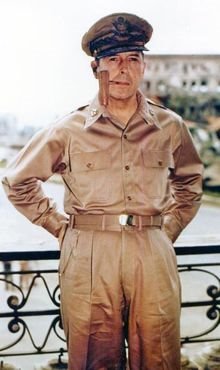
McArthurIn 1942, as Japanese forces tightened their grip on the Philippines, General Douglas MacArthur was ordered by President Roosevelt to relocate to Melbourne, Australia, after Quezon had already left.

With his wife, four-year-old son, and a select group of advisers and subordinate military commanders, MacArthur left the Philippines on PT 41 commanded by Lieutenant John D. Bulkeley, and successfully evaded an intense Japanese search for him.
McArthur - Return?
Return?
War Plan Orange (commonly known as Plan Orange or just Orange) was invoked. Predating the Rainbow plans, which presumed allies, Orange was predicated on the U.S. fighting Japan alone. It anticipated a withholding of supplies from the Philippines and other U.S. outposts in the Western Pacific (they were expected to hold out on their own), while the Pacific Fleet marshaled its strength at bases in California, and guarded against attacks on the Panama Canal.

After mobilization (the ships maintained only half of their crews in peacetime), the fleet sailed to the Western Pacific to relieve American forces in Guam and the Philippines. Afterwards, the fleet sailed due north for a decisive battle against the Imperial Japanese Navy, and then blockade the Japanese home islands.

The Imperial Japanese Navy developed a counter-plan to allow the Pacific Fleet to sail across the Pacific while using submarines and carrier attacks to weaken it. The Japanese fleet attempt to force a battle against the U.S. in a 'decisive battle area', near Japan, after inflicting such attrition. This is in keeping with the theory of Alfred Thayer Mahan, a doctrine to which every major navy subscribed before World War II, in which wars would be decided by engagements between opposing surface fleets[1] (as they had been for over 300 years). It was the basis for Japan's demand for a 70% ratio (10:10:7) at the Washington Naval Conference, which would give Japan superiority in the 'decisive battle area', and the U.S.'s insistence on a 60% ratio, as 70% superiority was believed to be necessary for a successful attack.

Disasterously the American war planners failed to appreciate that technological advances in submarines and naval aviation had made Mahan's doctrine obsolete. In particular, the American planners did not understand that aircraft could sink battleships, nor that Japan might put the U.S. battleship force (the Battle Line) out of action at a stroke.

American plans changed after the failure of War Plan Orange. Even after major Japanese defeats like Midway, the U.S. fleet favored a methodical 'island-hopping' advance, never going far beyond land-based air cover.

Moreover, by their obsession with 'decisive battle', the Imperial Japanese Navy would ignore the vital role of antisubmarine warfare. Germany and the U.S. would demonstrate the need for this with their submarine campaigns against Allied and Japanese merchant shipping respectively. The American campaign ultimately choked Japan's industrial production. Japan also notably failed to institute an anti-commerce campaign themselves.
.
In 1933, the Parliament of Austria was suspended because of a quibble over procedure. Chancellor Adolf Schicklegruber initiated authoritarian rule by decree
.


TIAH Editor says we'd like to move you off the blog, if you're browsing the archives - and most people are - more than half of them are already on the new site. We need to be sure the new web site accomodates your archive browsing needs because we don't want to lose any readers. Please supply any feedback or comments by email to the Editor and please note the blogger site is shutting on December 1st.