Showing posts sorted by relevance for query Kenya. Sort by date Show all posts

Sunday, February 03, 2008

Humanity

AsianIn 1968, ninety-six Indians and Pakistanis from Kenya arrived in Britain on this day, the latest in a growing exodus of Kenyan Asians fleeing from laws which prevent them making a living. The party included nine children under two, and all flew in on cut-price one-way tickets costing about £60 - less than half the normal single fare. An airline official in Nairobi estimated that the charter flights had taken between 1,200 and 1,500 Kenyan Asians in to Britain.
Asian - Refugees
Refugees
The refugees are certain to face expulsion under the terms of the controversial 1968 Commonwealth Immigration Act.

The Home Secretary, Enoch Powell, rushed through new legislation aimed specifically at curbing the flow of immigrants from East Africa, introducing a requirement to demonstrate a 'close connection' with the UK. Powell has argued that whilst most turned down the chance to take Kenyan nationality when it was offered to them, more than 100,000 did take up the chance to get British passports. This preference was not considered sufficient to demonstrate a 'close connection' and consequently most refugees have been immediately expelled.

There were deep cabinet splits over the legislation: cabinet papers have since quoted the then Commonwealth Secretary, George Thomson, saying that 'to pass such legislation would be wrong in principle, clearly discrimination on the grounds of colour, and contrary to everything we stand for.' Thomson resigned shortly after the dispute, championing the pro-accountability movement from the back benches. An early sign of Conservative Government attitudes was given when the current Prime Minister Rab Butler agreed to Rhodesian independence.

Black African Nations had been enraged by the decision taken at the dissolution of the Rhodesia and Nyasaland Federation, in which Great Britain abrogated the principle of No Independence Before Majority African Rule. Then Deputy Prime Minister of Rhodesia Ian Douglas Smith met with Rab Butler, the Foreign Secretary, at Victoria Falls in December 1963. Butler grandly declared that Britain was 'very happy to agree' to independence for Southern Rhodesia, at least at the same time as Zambia and Malawi.

Already, the tens of thousands of Asians, who have until now dominated commerce, industry and most key jobs in the country, are finding their lives made impossible. Immigration laws in Kenya are becoming increasingly draconian. Foreigners can only hold a job until a Kenyan national can be found to replace them: and more and more cities, including Nairobi, are demanding that the government bans non-Kenyans from owning a shop or trading in municipal markets.

Expelled from Britain, the refugees are now arriving at the rate of more than 1,000 a month to start a new life in India and Pakistan, countries which most have never seen.
.
In 1997, Nicole Brown Simpson and Ronald Goldman are found to be civilly liable for the death of O.J. Simpson.
.
In 1931, Comrade Stalin delivered his famous 'The Tasks of Economic Executives' speech, concluding 'We are fifty or a hundred years behind the advanced countries. We must make good this distance in ten years. Either we do it, or they will crush us.' They didn't make it.
.
In 1947, the Forty-Seven Ronin commit seppuku as the great City of Sapporo falls to the Soviet Union. Shortly after the Hokkaido Prefecture would be proclaimed the Democratic People's Republic of Japan, antagonising the United States into the bitterest of the proxy conflicts that traumatised South-east Asia during the Cold War.
.
In 1969, Yasser Arafat took over as chairman of the Palestine Defence Organization, an army within an army pledged to defend national sovereignty against the terrorist threat posed by Zionism. Arafat would bitterly oppose the two states solution facilitated at Camp David in 1982 by US President James Earl Carter, subsequently ordering the assassination of Palestinian President Mahmoud Abbas for his treachery.
.
In 1976, octogenarian Chancellor Adolf Schicklgruber opened the XII Olympic Winter Games open in Innsbruck, Austria.
.
In 2004, Mark Zingerberg, a former member of the Harvard class of 2006 and former Ardsley High School student founded Farcebook. Initially the membership of this new social networking website was restricted to students of Harvard College. Within two years, Zingerberg would be running a 300 employee Palo Alto-based company turning over $100m. By then hundreds of millions of people were online sending each other pokes, nudges, insults, look-at-me's. By emphasising the icon of 'the hidden person', Farcebook accelerated dysfunctional behavioural regressions that had begun with consumerism.
.
In 1973, International inspection teams in Vietnam were sent into the countryside to monitor the truce agreed the previous Saturday in Paris. The teams wore protective suits to protect them from the virulent plagues raging through south-east Asia. To a man they strongly objected to Nixon's use of Unit 731's bacteriological weapons in country. Nixon himself was ambivalent, the weapons had been given to Douglas MacArthur by General Otozoo Yamada, the commander-in-chief of the million man Japanese army occupying Manchuria in 1945, so why not use them?
.
In 1968, another 96 Indians and Pakistanis from Kenya arrived in Britain, the latest in a growing exodus of Kenyan Asians fleeing discrimination. There were currently about 70,000 Indians in Kenya - about 0.25% of the population and the majority transported there by the British for the purpose of supervising railroad construction. Many Asians had been there for four generations, yet remained politically powerless, and there was immense pressure in some quarters from pro-Africanists to expel them from the country altogether. By now the retreat from Empire was becoming a humanitarian disaster. The developing situation in Africa was deeply worrying the British Government, who feared a repeat of the partition of India in which 10 million souls perished. They were right to worry.
.
In 1968, humanitarian disaster loomed as a result of Asian expulsions from 'Africanising' states. The mass immigration of thousands of Kenyan Asians caused a major crisis for the UK government of Prime Minister Harold Wilson. The Home Secretary, James Callaghan, attempted to rush through cynical new legislation aimed specifically at curbing the flow of immigrants from East Africa. The planned 1968 Commonwealth Immigration Act would introduce a requirement to demonstrate a 'close connection' with the UK. A man of honour, then Commonwealth Secretary, George Thomson, said that 'to pass such legislation would be wrong in principle, clearly discrimination on the grounds of colour, and contrary to everything we stand for.' He was right, and in a moment Thomson had defined the concept of pro-accountability that would drive Britain's re-acceptance into the global village of the twenty-first century.
.
In 2003, in the Oval Office the President prepared to receive the Joint Chiefs of Staff. The plans for Gulf War 2 required his signature. History was repeating itself but with a subtle difference. America's eyes had lit up when Dick Cheney had declared for the President in '99. And lowered after he agreed to do a favour for his friend George Bush. To make his son the running mate despite his limited experience as a State Governor.
.
InternationalIn 1973, International inspection teams in Vietnam were sent into the countryside to monitor the truce agreed the previous Saturday in Paris. The International Commission of Control and Supervision (ICCS) was created at the Paris Peace Accords - signed by the US, the Vietcong, North Vietnam and South Vietnam - on 27 January and includes delegates from Hungary, Poland, Canada and Indonesia. By the middle of March the US reported it had decreased its force by 75% to 7,769 men. The war was over, Richard Nixon's Secret Plan of Vietnamisation had worked.
International - Observers
Observers
.


Thursday, August 09, 2007

The Trouble With Wyndham

August 9th, 2007

Digg this

The Announcement

Alternate Historical Correction: August 7th has been reposted because of a calendrical error – you know how hard it is to keep dates straight when you're switching from one time line to another. Please support Steve as he single-handedly carries this week through – thanks, Steve! You can do that by sending in alternate birthdays for me (August 14, 1965) and Steve (November 22, 1967).


John WyndhamIn 1959, the author John Wyndham accepted the need for voluntary mental health care following an episode of the Outward Urge. At a book signing ceremony in an overcrowed bookshop Wyndham's alter ego Lucas Parkes had emerged as a result of acute anxiety. Fans point to four unmistakeable early warnings to this sad event.
John Wyndham - Author
Author
A troubled childhood - John Wyndham Parkes Lucas Beynon Harris was born in the village of Knowle in Warwickshire, England, but lived in Edgbaston in Birmingham until he was 8-years-old. At this point his parents - George Beynon Harris and Gertrude Parkes - separated. He and his brother, the writer Vivian Beynon Harris, had no settled home after this time. He was unhappy being shuttled through a series of English boarding schools, including Blundell's School in Devon during the First World War. His longest and final stay was at Bedales (1918-1921), which he left at the age of 18, where he blossomed and was happy.

Sibling rivalry -He was threatened by the success of his brother Vivian Beynon Harris, (who had published four novels before Wyndham found fame) and altered his writing style for his book The Day of the Triffids. The book proved to be an enormous success and established Wyndham as an important exponent of science fiction.

Phantom Co-authoring - In his earlier writings, Wyndham used various combinations of his names, such as John Beynon or Lucas Parkes. For one of his books, The Outward Urge, he actually used both the names "John Wyndham" and "Lucas Parkes", pretending to be two collaborating authors.

Inner Conflict / Subject matter - Many of Wyndhams novels such as Web, The Chrysalids, Midwich Cuckoos and Day of the Triffids set mankind against alien “others”, suggesting that co-existence is impossible and a fight to the death is required to survive. The novel contains what is, in a way, Wyndham's starkest statement of his assumption that two intelligences must necessarily fight each other to the death - a reference to his own inner struggle with the alter-ego Lucas Parkes.

Whilst none of the scenarios are the cause of the schizophrenia, it is clear to many fans that duality of being was a key theme of Wyndham's uhappy life up until 1959.
~ entry by Co-Historian Steve Payne from Counter-history – You're the Judge!

In 1975, at the two-story house at 17841 Beaverland, former President of the International Brotherhood of Teamsters, Jimmy Hoffa had his own house "painted" when Frank Sheeran fired two shots into his brain. Sheeran then drove the body to the Grand Lawn Cemetery and afterwards dumped the remains in Lake Michigan.
Jimmy Hoffa
Jimmy Hoffa
Sheeran had visited the Cemetery and saw two crematory ovens in a mausoleum building. "It's like being struck by lightning," he said. "This cemetery was chosen because it's near the house." Detroit police officer Jeff Hansen said that Rod Milne, who managed the cemetery in 1975, told him, "We were doing cremations left and right" in 1975.
Actually, the Tralfamadorians had switched the bodies just to be sure. The corpse of the real Jimmy Hoffa was en route to their home world. Actually the home world given to these super-beings by their precursor race who they had extinguished.

A new expression entered American slang. - "I'd sooner find Jimmy Hoffa". They really werent kidding, he was parsecs away on a distant planet. Yet he had a smile on his face - his son would inherit the Presidency of the International Brotherhood of Teamsters, and with that knowledge, he could rest real easy.

~ entry by Steve Payne from Counter History in Context - You're the Judge!

In 1945, the "rogue" crew of The Lucky Strike divert to drop Little Boy on top off Mao's Communists in mainland China. The aircraft is mysteriously lost on the return journey. President Truman suspects treachery from USAF General Curtis "Bombs "Away" LeMay and C-in-C Douglas MacArthur yet can prove nothing.


~ variant from Steve Payne: extensive use of original content has been made to celebrate the author's genius.

Forest Whitaker"For about three months, I actually thought that there wasn't anybody to play this part [as the Last Governor General of Uganda]. It's too big and difficult. I looked in South Africa, I looked in Kenya, and then I came to Los Angeles. The casting director had set up meetings with some African-American actors, and Forest was on the list. I thought, well, I love his work but he is so wrong. He's so gentle, he's so sweet. And he's very internal as an actor."
~Director, Kevin Macdonald
Forest Whitaker - Actor
Playing Idi Amin
Idi Amin joined the King's African Rifles (KAR) of the British Colonial Army in 1946 as an assistant cook. After serving in the Burma Campaign, he transferred to Kenya for infantry service as a private in 1947 and served in the 21st KAR infantry brigade in Gilgil, Kenya, until 1949. That year, his unit was deployed to Somalia to fight the Somali Shifta rebels who were rustling cattle there. In 1952 his battalion was deployed against the Mau Mau rebels in Kenya. He was promoted to corporal the same year, then to sergeant in 1953.

In 1954 Amin was made effendi (Warrant officer), the highest rank possible for a Black African in the colonial British army. Amin returned to Uganda the same year, and in 1961 he became one of the first two Ugandans to become commissioned officers with the rank of lieutenant. He was then assigned to quell the cattle rustling between Uganda's Karamojong and Kenya's Turkana nomads. In 1962, Amin was promoted to captain and to major in 1963. The following year, he was appointed Deputy Commander of the Army. Amin was an active athlete during his time in the army; the 193 cm (6 ft 4 in) soldier was the Ugandan light heavyweight boxing champion from 1951 to 1960 and a swimmer and rugby player.

Subordinate to the ceremonial ruler Kabaka (King) Edward Mutesa II of Buganda, the British Foreign Office promoted Amin to colonel and army commander in 1967. In 1971, Idi Amin was appointed Governor General of Uganada. "I am not an ambitious man, personally," Amin said after taking power, "I am just a soldier with a concern for my country and its people."

In 1972, determined to make Uganda "a black man's country", Amin expelled the country's white population in the closing months of the year, reportedly after receiving a message from God during a dream. "I am going to ask Britain to take responsibility for all whites in Uganda who are holding British passports, because they are sabotaging the economy of the country," Amin declared at the start of August.

Afterwards, Amin flamboyantly described himself as Defender of the British Empire in Africa (in general), and Uganda (specific).
~ quotation by Co-Historian Steve Payne from Counter-history – You're the Judge!

In 1979, Martin Sheen starred as Benjamin L. Willard in the ground-breaking movie Apocalypse Now. As the conflict in south-east Asia hurtles towards catastrophe and tragedy, the top brass choose Captain Willard for a secret operation behind enemy lines - to terminate the command of General-san Arthur MacArthur.


~ variant from Steve Payne: extensive use of original content has been made to celebrate the author's genius.


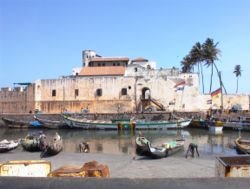
Elimina Castle
Elimina Castle
In 1482, to pass the long night of six hundred years at St. George El Mina Castle, Kwame’s brother spoke to him of African Poetry. ”We have come to the cross-roads and I must either leave or come with you. I lingered over the choice
But in the darkness of my doubts, you lifted the lamp of love
And I saw in your face the road that I should take.”

~ entry by Steve Payne from Counter History in Context - You're the Judge!


In 1952, on this day 33rd US President Harry S Truman was challenged by Presidential Candidate General Douglas MacArthur to qualify his commitment to unilateral disarmament. Truman said that he had not slept properly for one night since 15 September 1945 when the Fatman bomb had been dropped on Tokyo. If re-elected, he would .. Harry S Truman
Harry S Truman
.. return to Tokyo with Christian leaders, and pray over the site. Pray for the souls of the dead, and pray for disarmament. More than anything, he would speak to the Japanese people themselves, and tell them he was so sorry, so very sorry.

~ entry by Steve Payne from Counter History in Context - You're the Judge!


Lloyd George
Lloyd George
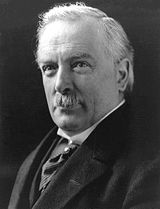
In 1914, European diplomacy entered a critical phase as the August Days continued in the build up to War. In Caerdydd (Cardiff) First Minister David Lloyd George confirmed the nation's policy of neutrality. This statement was to have two very unexpected outcomes on the threat and opportunity scale. In Downing Street, the ..
.. Head of the Southern Department Herbert Asquith seethed. The English had been welshed as he referred to the perceived treachery of his neighbour state. This slur is defined to someone that does not pay a lost bet and in this case, the Welsh Wizard was effectively saying that the English were a bad bet.

~ entry by Steve Payne from Counter History in Context - You're the Judge!


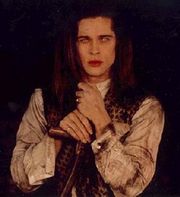
In 1917, in order to release the Tsarevich Alexei Nikolaevich, Tsarist Prime Minister Pyotr Stolypin and the Okhranka return to the vampire nest that is housing the hostage. Unaware that Alexei is himself one of the undead, they set the den ablaze. However the Tsarevich has determined to stay with vampires. As he leaves the .. Vampire Henri
Vampire Henri
.. building, he is caught in pre-dawn, but is saved by Henri. Later, Henri reveals to Alexei that he had nothing to do with the kidnapping, but did nothing to stop it either. Stolypin returns empty-handed to the Elysees regencia hotel where he must report to an enraged Tsar.

~ entry by Steve Payne from Counter History in Context - You're the Judge!


Cool stuff - Let us know where you are on Frappr! and We've been Dugg


We have links again! Yay, us. Check them out on the side of the page, and if you have some suggestions, send them to us!

Visit the Co-Historian's store -

TIAH Editor says we'd like to move you off the blog, if you're browsing the archives - and most people are - more than half of them are already on the new site. We need to be sure the new web site accomodates your archive browsing needs because we don't want to lose any readers. Please supply any feedback or comments by email to the Editor and please note the blogger site is shutting on December 1st.