June 19th, 2004
in 485 B.C., upon Xerxes’ ascension to the Persian throne, slaves throughout the great kingdom rebelled. The councilors to the king debated long as to whether to simply kill the slaves or bring them back into servitude. Xerxes seemed to have had a change of heart recently, because he counseled a third course; he proclaimed an end to slavery within Persian lands. Many nobles rebelled, but the king was able to enforce this edict throughout his reign.
in 71 B.C., the slave army of Spartacus marched on Rome and defeated the army led by Crassus of Rome. Spartacus then sacked Rome and freed all the slaves of Italy. Roman General Pompey, coming too late to assist Crassus, attempted to drive the slaves from Rome itself, but was defeated and killed at the battle of the Appian Way.
in 1765, the Mlosh negotiate an end to slavery in the European colonies of North America. With their labor-saving machinery, there is no need for slaves anymore, and most people support the ban. Some former slavemasters harbor resentment against the Mlosh for this, though, and begin secret societies based around myths of racial superiority.
in the 2nd year of Kamanestra’s reign, news reached the shores of Eire that Pharaoh Cheokhan had freed them. There was much celebration, as the people of Eire went back to their old ways of clan rule by chieftains.
in 1861, as he begins his second term, President Walt Whitman states that "the Constitution of the United States stands for all people, or it stands for no people." He sends out a proclamation that slavery is illegal within the borders of the United States, and declares that all persons currently held as slaves within those borders would now be free. The nation braces for a southern rebellion against the Communist leader.
in 1203, King Rafan ibn Sulaiman declares the end of slavery within his domain. Europeans taste freedom for the first time since the Great Jihad in 804. There are celebrations throughout the continent. Many in Islam feel that King Rafan has gone too far, and he is ostracized throughout Islam for the rest of his days. Among his European subjects, though, he is beloved as no other ruler.
in 1867, Union riders still in the Confederate state of Texas tell as many of the slaves as they can of the Emancipation Proclamation and freedom in the Union. As the Union armies withdraw to their side of the border, many black slaves find a way to spirit themselves along; over half of the slaves in Texas leave with the Union troops. This mass exodus is still popularly celebrated by their descendants in the US as Juneteenth.
in the Dreaming, the Pindanjaru are delivered as Wandjina returns with his thunder to destroy the pale men. The great spirit tells his people that they must now rise up to rid the land of the pale ones. He gives them lightning bolts to strike their enemies, and talismans which protect them from the bullets of the pale one’s rifles. Soon, the people of the land are freed.
in 2003, the Martians halt their advance southward from the Arctic reaches, and the human world attempts to regroup.
Saturday, June 19, 2004
Juneteenth, Deliverance From Slavery


Saturday, February 17, 2007
American Dissolution
The state of TIAH
February 17th, 2007
Digg this
Alternate Historian's Note: Our Guest Historian, Stephen Payne, had a great suggestion – we haven't had a good contest in a while, so we're going to have an April Fool's Day Contest! Email us up to 3 entries for an alternate April 1st and we will post the best 10, with your own credit and link to your website (if you have one). We'll also see if we have enough credit for an ultimate winner to get a complimentary TIAH mug, but we can't promise anything on that yet. Get researching those alternate histories now, folks! The deadline will be March 29th.
in 1801, in only the 4th presidential election for the young American nation, Thomas Jefferson, President John Adams and Senator Aaron Burr find themselves in a three-way tie for the leadership of the small country. Ballot after ballot was cast indecisively in the House of Representatives, leading only to more rancor and entrenchment among those who wanted one of their candidates to come out on top. Thomas Jefferson urged Senator Burr, who had ostensibly been running with him to become Vice-President, to drop out and throw his supporters to the Virginian. The senator, seeing himself this close to power, balked, and campaigned vigorously for the top office. In the end, his congressional relationships carried the day, and he won the presidency, with Jefferson serving, yet again, as Vice-President. The enmity between the two men over this incident spilled out into legislation as Jefferson, in his post as President of the Senate, blocked many of Burr's initiatives out of spite. In 1803, this proved to be too much for Burr to take any longer, and he challenged Jefferson to a duel. Jefferson, the better shot of the two, emerged victorious, and assumed the office of President as Burr died on the field of honor. This caused an uproar in the dead president's home state of New York, which sent its militia to the capitol to seize President Jefferson. They were met by Virginia's soldiers, and a civil war erupted between the northern supporters of President Burr and the southern partisans who backed Jefferson. Great Britain, seeing the chance to reclaim their old colonies, jumped in on the side of the north, which then annihilated the southern states. Massachusetts alone of the northern states resisted the British reconquest of the states, but it was overwhelmed, too. In 1812, all of the colonies were placed under a royal vice-regent, and welcomed back into the United Kingdom.
 Harry Turtledov.. | In 1991 Harry Turtledove published the counter-history novel On the Beach, in which he posed the Dunkirk question – what if the British Expeditionary Force had escaped Guderian's panzers in 1940? The book was ridiculed as ludicrous, Allied soldiers would have had to walk along two .. |
| .. jetties in single file, being strafed by the Luftwaffe, to be met by fishing vessels. It was agreed that this time Harry had gone too far. | |
~ entry by Steve Payne from counter history in context - you're the judge! | |
| In 1820 the Missouri Compromise sealed an agreement between the pro-slavery and anti-slavery factions in the United States, involving primarily the regulation of slavery in the western territories. Contemporary historians believed that a War of the States would have been inevitable without the agreement. |  The Missouri C.. |
~ entry by Steve Payne from Counter History in Context - You're the Judge! | |
 Assassination o.. | In 1974 U.S. Army private Robert K. Preston stole a United States Army helicopter from Fort Meade, Maryland, flew it to Washington, D.C., and hovered for six minutes over the White House before descending on the south lawn, about 100 yards from the West Wing. Preston's actions inspired .. |
| .. Samuel Byck to crash a passenger air plane into the White House on February 22, 1974 killing President Richard Nixon and Vice President Gerald Ford. | |
~ entry by Steve Payne from counter history in context - you're the judge! | |
| In 1871 the victorious French Army paraded though the Brandenburg Gate after the end of the Siege of Berlin during the Franco-Prussian War. | 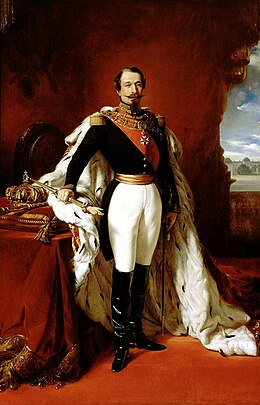 Napoleon III of.. |
~ entry by Steve Payne from Counter History in Context - You're the Judge! | |
Cool stuff - Let us know where you are on Frappr! and We've been Dugg
We have links again! Yay, us. Check them out on the side of the page, and if you have some suggestions, send them to us!
Visit the Co-Historian's store -

Saturday, March 01, 2008
Ethics
| In 2000, former Chilean dictator General Augusto Pinochet boarded a military transport plane to Belgium after being told the UK would extradite him on torture charges. Speaking to MPs in the House of Commons shortly after General Pinochet's departure the Prime Minister Mr Bryan Gould said he was aware the General was now likely to stand trial. 'I was driven to the conclusion that a trial of the charges against Senator Pinochet, was a critical test of our ethical foreign policy,' Mr Gould said. | |
 | |
| The essence of the dispute is the ethical foreign policy deviced by Mr Gould and his Foreign Secretary, Mr Robin Cook. The policy is a decisive break with the past, especially the excesses of the Thatcher era which include cooperation with the General's oppressive regime. The Conservatives challenged today's decision. Leader William Hague accused Labour of incompetence, he said £4m of public money had been wasted on 'moral posturing' which had achieved nothing. |
Story entry posted by Alternate Historian 

 Thread: Beasts.
 Entry posted by Alternate Historian 
Thread: Generals. Entry posted by Alternate Historian
Thread: Generals. Entry posted by Alternate Historian
Thread: Alternate Nations. Entry posted by Alternate Historian
Thread: Generals. Entry posted by Robbie Taylor
Thread: Generals. Entry posted by Robbie Taylor
Thread: Alternate Nations.| In 1836, the Texican People's Republic, under the leadership of Thomas Skidmore, declares its independence from imperialist Mexico in a ceremony at Washington-On-The-Brazos. Skidmore, a labor organizer back in the United States, turns the new nation of Texas into a place where people are proud to work, and know that their labor is the real foundation of wealth. | |
 | |
Variant entry posted by Robbie Taylor extensive use of original content has made been to celebrate the author's genius.
Thread: Alternate Nations.| In 1836, Santa Anna's forces, reeling from their defeat at the Alamo, are crushed by the combined forces of Houston, Travis and Fannin at San Antonio. Colonel William Travis, the hero of the Alamo, accepts the surrender of the Mexican leader, and promises him that Texas and Mexico will 'live side-by-side in peace as long as you respect the sanctity of our borders.' Travis became the first president of the Republic of Texas in elections held that year. | |
| |
Variant entry posted by Robbie Taylor extensive use of original content has made been to celebrate the author's genius.
Thread: Alternate Nations.| In 1836, Texan rebels at Washington-On-The-Brazos receive word that U.S. troops are on their way; President Andrew Jackson has agreed to annex them into the United States, and declare war on Mexico. Sam Houston, leader of the rebels, halts work on the independence proclamation and instead produces the treaty that will join the Texas Territory to the United States. | |
| |
Variant entry posted by Robbie Taylor extensive use of original content has made been to celebrate the author's genius.
Thread: Alternate Nations.| Buddha | In 1815, by signing a binding treaty indigenous headmen of the Kingdom of Kandy (Sri Lanka) forced representatives of the British Crown to permanently withdraw the Royal Navy from the total exclusion zone of 200 nautical miles around the Island and southern tip of the subcontinent of Hindustan. The British were also forced to accept that the Kingdom of Kandy would be governed according to its customary Buddhist laws and institutions. |
 | |
| Protector |
| The British had been transfixed by giant sized images of Buddha in recumbent, standing and sitting postures cut in the rock caves in various parts of the country. By now the British were convinced that certain calamities which fell upon the invaders were due to his displeasure. |
Story entry posted by Alternate Historian
Thread: Alternate Nations.| In 1970, the Prime Minister of Zimbabwe, Robert Mugabe, declared his country a republic, cutting its last link with the British Crown. Mr Mugabe signed a proclamation officially dissolving the current parliament and introducing a new Republican Constitution. The new Zimbabwean Republic, came into being at 2301BST yesterday, unrecognised by Western Governments apart from Canada. | |
 | |
| The core of the dispute sprung from the Victoria Falls meeting in late 1963, in which then Rhodesian Deputy Prime Minister Ian Smith extracted a key promise from British Foreign Secretary Rab Butler. Butler grandly declared that the British Government were 'very pleased to agree' to independence at least on the same time scale as Zambia and Malawi. This unscrupulous commitment was a clear abrogration of No Independence Before Majority African Rule, devised by the forward thinking Canadian Government. This precipitated a civil war, with Ian Smith and the White Settler Government defeated before the decade was out. |
Story entry posted by Alternate Historian
Thread: Beasts.