Showing posts sorted by relevance for query Time. Sort by date Show all posts

Sunday, March 11, 2007

The Truth

The state of TIAH

March 11th, 2007

Digg this

Alternate Historian's Note: Our Guest Historian, Stephen Payne, suggested that it was time for a contest, so we're going to have an April Fool's Day Contest! Email us up to 3 entries for an alternate April 1st and we will post the best 10, with your own credit and link to your website (if you have one). My lovely Co-Historian says that if we can get 30 entrants, we can offer an ultimate winner a complimentary TIAH mug, but we only have 1 entrant so far! Get researching those alternate histories now, folks! The deadline is March 29th. And don't forget Daylight Savings Time today!

in 1953, Professor William Hughes speaks one more time with Dr. Rosalind Franklin about the night that James Watson and Francis Crick died. He has been through the notes that she took from Watson and Crick's lab, and wishes to hear, in his words, “The truth, please.” Dr. Franklin looks at the notes spread out on the table before her and says, “Do you know what it's like to be a woman scientist in our time, Professor Hughes? It's a bit like being the dog-faced boy – people look at you like you're a freak.” She picked up a picture, one she had taken. “And, they take advantage of you. Maurice, who was my academic equal, and my intellectual inferior, treated me like I was his secretary. To keep me from developing my research, he gave my results to those two fools, James and Francis.” She looks away from Hughes and continues her narrative. “I met them as they left the pub – I wasn't allowed in, being a girl and all – and I accompanied them back to their lab. You'd be surprised how easy it was to get two drunk men jealous of each other. James even had a revolver – Americans. He pulled it out of his desk and waved it around, telling Francis that he was going to get top credit for their work, since he was the boy genius. I convincingly screamed at Francis to get the gun away from him.” She smiled mirthlessly at Professor Hughes. “I play the poor, helpless little woman quite well, as you know.” Hughes nodded, his face red. “Well, they struggled for a few moments, and the gun went off. Blood sprayed out from James' back, but he still had enough fight in him to fire at Francis. They both fell, and I was quite shocked, to be frank, Professor. I thought about taking their notes right then, but I knew that Maurice would still stand in my way. Fortunately, the obliging fool chose my moments of indecision as the perfect time to visit his office.” She leaned over to Hughes and whispered conspiratorially, “It was as if God Himself was telling me my plan was perfect. I played the hurt little woman to Maurice, had our little row, then stomped off to James and Francis to tell them what I thought. All I had to do then was give a little scream of horror, and Maurice came running. I knew he couldn't resist taking full credit for their work, so I collected the notes – for him, of course – and he pocketed the gun. I figured that, in time, I would simply publish the research and cut Maurice out of the picture entirely, as he tried to do to me.” She smirked at Hughes. “But, you had to have a go at playing Sherlock Holmes. You presented an opportunity for me to cut Maurice completely out, by making it seem as if he was the killer. I played the frightened little girl for you, and then, to make you doubly sure about Maurice, I pilfered the murder weapon from his desk, where he had obligingly covered it with his fingerprints – I wore gloves – and took a few potshots at you.” At Hughes' scowl, she said, “I'm a very good shot; I wasn't going to hit you. That would have defeated the purpose. I left the gun there for you and the police to find, and I figured it was all over.” She sat back and frowned. “And then Maurice cocked it up for me. You were a bit too clever as well.” Hughes shrugged. “So sorry I had to stand in your way.” She sighed, thought a moment, then said, “Look, I didn't kill them. I'm quite happy they're dead, and only wish I could've figured a way to get Maurice into the mix, but they're the murderers.” Hughes looked over at the prosecutor, who was making a few notes. “You'll face jail time for tampering with the scene of a crime, Dr. Franklin,” the prosecutor told her. “As will Dr. Wilkins, even if he was your fool in all this. You will also face an additional charge of assault for shooting at Professor Hughes. You're not getting out of this scot-free.” He and Professor Hughes rose, and Dr. Franklin was escorted back to her jail cell. As they walked away from the interrogation room, the prosecutor said to Hughes, “I still can't quite bring myself to believe that two men are dead, and two other people's lives are ruined, over bits of protoplasm.” Hughes stopped him and looked him up and down. “You're just a collection of that 'protoplasm', as you call it, sir. What Wilkins said about it, he was right. This research is immortality, or as close as a scientist can ever get to it. You should never underestimate what people will do to ensure that their name lives forever.” The prosecutor held out a notebook to Hughes. “Are you going to do anything with it? I don't think those two will be publishing for some time.” Hughes shook his head. “No. When they get out, they deserve it, especially Dr. Franklin. She was the genius behind it all, even if it did drive her a bit insane.” The prosecutor shook his head, laughing. “Never will understand you scientific chaps. All right, then. Let the Nobel committee wrestle with it.” Professor Hughes laughed, too. “I'm sure they will, sir. I'm sure they will.”

Maude enters Baghdad
Maude enters Ba..
In 1917 Baghdad fell to the Anglo-Indian forces commanded by General Maude who famously declared 'Our armies do not come into your cities and lands as liberators, but as conquerors.' Many insurgency attempts have been suppressed, most notably with the capture of the Shadow (Saddam Hussein ..
.. Abd al-Majidida al-Tikriti) on December 13, 2003 yet Mesopotamia remains annexed by the British Empire to this day.

~ entry by Steve Payne from counter history in context - you're the judge!


In 1985 Mikhail Gorbachev became Russian Prime Minister launching Perestroika and its attendant radical reforms in a determined attempt to prevent the Tsarist State from melting down. Gorby's 'new thinking' was welcomed abroad, but the pace of reform at home was too slow. On Christmas Day .. Gorbachev
Gorbachev
.. 1991 Boris Yeltsin declared himself the President of the new Russian Republic thereby ending the world's largest and most influential monarchy. Economic relations between the former Russian provinces were severely compromised. Millions of native Russians found themselves in the newly formed 'foreign' countries.

~ entry by Steve Payne from Counter History in Context - You're the Judge!


Janet Reno
Janet Reno
In 1993 Janet Reno was confirmed by the United States Senate and sworn-in the next day, becoming the first female Attorney General of the United States. She took personal charge of the Waco Incident, drawing the wrath of the necromancer David Koresh who trapped her spirit in a tree. She ..
.. escaped but suffered acute physiological damage. By way of subterfuge in 1995 Reno revealed that she had Parkinson's disease, an incurable degenerative illness that causes muscular stiffness and involuntary trembling.

~ entry by Steve Payne from counter history in context - you're the judge!


In 1988 a ceasefire is declared in the Iran-Iraq War. Vice President George Bush had hoped to recover the Extraterrestrial Technology (ET) buried in Iraq under cover of warfare, but his Iranian proxies had failed him despite being beneficiaries of Colonel Oliver Norths Arms for Extraterrestrial .. George Bush
George Bush
.. Technology exchange. It was looking increasingly likely that the plan he had envisaged in 1975 whilst CIA Director would require an invasion, and for that he needed to win the presidency that very year. Bush was starting to realise he was in for the long-hall, not yet realising he was only thirteen years into a thirty-five year project that would extend to the final year of his son's Presidency.

~ entry by Steve Payne from Counter History in Context - You're the Judge!


Cool stuff - Let us know where you are on Frappr! and We've been Dugg


We have links again! Yay, us. Check them out on the side of the page, and if you have some suggestions, send them to us!

Visit the Co-Historian's store -

Monday, September 17, 2007

Hijacks

Alternate Historian says, construction work continues at the Academy.

From Jan 1 2008 the new format for TIAH will have just the story in a yellow shaded area. Underneath will be hyperlinked metadata tags. This will link to the source article and also use the Blogger search facility to link together the thread - so you can read the whole story in one go.

Basically each story will be a mini-post within a post.

The HTML is machine generated by an OpenOffice spreadsheet with a squillion functions designed using the test/fix methodology. Before we forget how it works, we'd love some feedback.

Please email the Alternate Historian with your comments on the already underway developments, or better still some new ideas!

Kaiser
Kaiser
In 1914, on this day South African troops land in German South West Africa. Ever since the Kaiser's cynical intervention in the Boer War, Imperial Germany had identified South Africa as a regional partner, not to mention a boundless source of mineral wealth. As Britain and France fought for survival on the Western Front, German and South Africa troops drove into Southern Africa creating new facts on the ground that would prove to be very difficult to reverse after the Great War.

~ entry by Alternate Historian

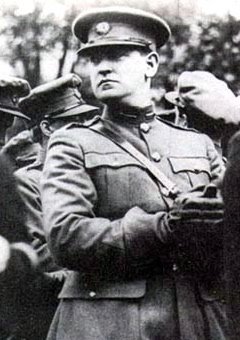
In 1914, the Irish Home Rule Bill becomes law forming the Free State on the very cusp of the First World War. Michael Collins, the author of Ireland's constitution, Bunreacht na hÉireann stated that thousands of unnecessary saved deaths in the trenches had been averted by precipitous timing, “the luck of the Irish” he said.Michael Collins
Michael Collins

~ entry by Alternate Historian

Mukden Incident
Mukden Incident
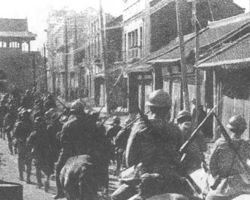
In 1931, the Mukden Incident gave China the pretext to invade and occupy Kyushu. In fact, Japan had been dangerously destabilised for a millennia. In 1281 the fleet of Qubilai Khan narrowly averted destruction by a typhoon whilst approaching Japan, the first of many Chinese incursions into the homelands began shortly thereafter.

~ entry by Alternate Historian

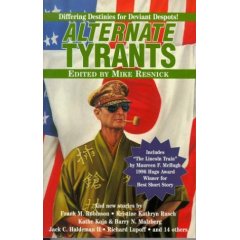
In 1945, General Douglas MacArthur moved his command headquarters to Tokyo. Swiftly installed as military governor and de facto Head of State, it was some time before the United States realised that Brass Hat had no intention of letting going of the reins of power. The incredible story of how General-san crushed post-war Japan under his heel was described in the biography "The Rising Sun at Dusk" by Jack Nimersheim, published in Unlikely Tyrants by the editor Mike Resnick in 1997. General-san
General-san

~ entry by Steve Payne

In 1968, a fourth-generation German American living in easy circumstances on Cape Cod (and smoking too much) published a most remarkable book - Slaughter-house-Five. Kurt Vonnegut consider the book a failure. Like Lot's wife, he had spent twenty-five years looking back at “his” Sodom and Gomorrah, the fire-bombing of Dresden. He too was a “pillar of salt”. Now he planned to work on a work of humour and stop looking back. Yet something was about to happen to change his easy circumstances, and give this incredible human being a subject matter much bigger than the fire-bombing of Dresen. A canvass, in fact, as big as the Universe in which humanity played only a bit part. And so it goes.
~ entry by Alternate Historian


Paul Weller"I first felt a fist, and then a kick, I could now smell their breath
And too many right wing meetings, My life swam around me
It took a look and drowned me in its own existence
The smell of brown leather, It blended in with the weather
It filled my eyes, ears, nose and mouth, It blocked all my senses
Couldn't see, hear, speak any longer
And I'm down in the tube station at midnight, I said I was down in the tube station at midnight"
~ Paul Weller, lyrics to Down In The Tube Station At Midnight.
Paul Weller - Mod Revivalist
Mod Revivalist
After punching Sid Vicious in a night club; he was followed onto the transport system and received a near-fatal beating from supporters of the Sex Pistols. A summary of Paul Weller's biography is detailed at - Wikipedia
~ quotation by Alternate Historian

Reverend Rattie
Rev. Rattie
In 2007, "between web sites" Reverend "Rattie" Taylor prepared to occupy his new home in cyberspace. Said future home being built courtesy of wife Cheryl aka Cat. The open house invite was also being drafted by this most respected of alt-lifer webizens. Opening soon Rat Manifesto, attendance unrestricted (cut & paste limey Co-historians excepted).

~ entry by Alternate Historian

Brown & McFlyIn 1985, Back to the Future characters "Doc" Brown and Marty McFly were the victims of twenty-third century time-travellers. On-set Marty McFly's mother Lorraine had recounted how she and George first met when her father hit George with a car. That night, Marty met Doc at the parking lot of Twin Pines Mall. Doc showed him a DeLorean DMC-12 sports car, which he falsely claimed to have modified into a time machine.
Back to the Future
The time machine required 1.21 gigawatts of power, generated by plutonium, and the car needed to be going eighty-eight miles per hour to travel through time. To demonstrate how one programs the machine, Doc entered in November 5, 1955 as the target date.

The twenty-third century time-travellers appeared on set. Attempting to recover their property from Universal Pictures who had stolen the time machine, they showed up in a van and shot Doc. Marty jumped into the DeLorean and, in the ensuing chase, drove eighty-eight miles per hour, activating the time device and transported himself into a very different 1955...
~ quotation by Alternate Historian

Sunday, April 01, 2007

April Fools' Day

The state of TIAH

April 1st, 2007

Digg this

Alternate Historian's Note: Today, we present our April Fools' Day Contest Winners. In the future, folks, please limit your entries to 300 words or less – a couple of these posts are a touch lengthy. After the contest winners, our Guest Historian Stephen Payne makes his regular appearance. Enjoy the day, everyone, and don't be an April Fool!

in @2900 BCE, the first advanced calendar system appears in the Sumerian city of Nippur. The day "April First" is born and fixed as the first day of the year. The "calendar riots" are unleashed, in opposition to the tendency of the rulers to control time rigidly. The unrest was quickly crushed.

In 2350 BCE, Sargon of Kish usurps the throne, and expands the Akkadian Empire to an unprecedented size: he controls all the port cities on the eastern Mediterranean coast, on the Arabian Peninsula, and Mesopotamia,including all cities along the Tigris - Euphrates valley. Sargon favored the Sumerian scribes, and made the Nippurian calendar the standard for the Empire. Hearing of Sargon's innovations, sages in the East, especially in India, begin preaching the doctrine attributed to Kalinjar, the "Destroyer of Time." Indian merchants, travelers, and sages begin infiltrating the Empire to spread the doctrine: all calendars must be destroyed, all clocks smashed, and men must be freed from the curse of human imposed time. Some argue that time itself can be destroyed.

In 1595 BCE, the more widespread Babylonian Calendar is born, based on the Sumerian system of measuring the passage of time. Again, April 1 is dubbed the first day of the year (At that time the month "April" was named "Nisanu," after the Akkadian King of the Gods, Anu). As the Babylonian Empire extends its influence, the "calendar wars" begin. People of the lower classes and priests of the various gods rebel in virtually all cities, excepting Nippur, Akkad, and Babylon, now capital of the Empire. Rioters overthrow local governments, and small armies spread out to attack cities which adhered to the concept of the calendar. Eventually all calendars are destroyed throughout the Empire.

During the Babylonian captivity, the Jewish calendar was destroyed by an alliance of Jews and Babylonians. In Egypt, the sidereal calendar system came under attack, as the teachings of Kalinjar spread into Northern Africa. People caught observing the star Sirius were put to death by some Pharaohs, and by 1330 BCE, the Pharaoh Iknaten had eradicated the calendar. Iknaten combined the doctrine of the Destroyer of Time with his belief in One Timeless God, called Aten.

The Greeks revived the calendar, until they were conquered by the Romans. Some Roman senators and consuls, inspired by Greek astronomical science, attempted to reinstitute the calendar, the so-called Julian and Gregorian experiments. They were denounced by subsequent Roman and Byzantine popular movements. The Ottoman Empire revived the calendar of the early Arab Muslims, going to the extent of using the name "Nisan"(April) to designate the first spring month. The Ottoman Turks were harkening back to earliest Babylonian calendar. The Sultans succeeded within their domains, until the revolution of the Young Turks, which destroyed the Caliphate, the Sultanate,and the Islamic calendar, once and for all.

Once freed from the calendar, mankind became capable of new advances in Ethics, Philosophy, and the pursuit of the timeless truths.

We now well understand why calendars were destroyed, along with clocks, and detailed written histories. The reasoning given by Kalinjar himself has been passed down with all the world's religious and philosophical teachings in what was called "The New Religious Supplement." The tenets were:

1. Looking to the past was harmful.

2. Looking to the past induced an exaggerated sense of self importance (people took too much pride in the achievements of their ancestors).

3. Revenge and hatred were caused by focusing on past emotions and past actions. Wars were caused by the remembrance of grievances of the races, the nations, and the sects.

4. Forgiveness and striving to forget the past are prime virtues.

5. The measurement of time was a method used by the elite to control the activity and thought of the people.

6, The absence of clocks and calendars allows for a life which is leisurely, unhurried and humane.

These tenets have become combined with the principles of all the main world religions. Believers (in Anu, in Aten, Moses, Jesus, Buddha, Lao Tze, Muhammed, and Confucius) embrace the religious supplement, though small groups still try secretly to preserve the Babylonian, Egyptian, Chinese, Hebrew, Islamic, Gregorian, and Hebrew calendars. Rather Lengthy Post By April Fools Contest Winner Wei Enlin

in 1891, William Wrigley Jr. starts his own company, selling soap and baking powder. The following year, he briefly attempts to package chewing gum with his backing powder as a promotional gimmick, but it falls flat; Americans, especially kids, dislike the mouth-feel of the rubbery substance. Duly chastened, he redoubles his efforts to improve his core products. Today, nearly every home in America has a Wrigley product in its pantry or bathroom. Post By April Fool's Contest Winner LeaperBP

in 1917, William Aloysius Butler took a stand against the Louisville Bluegrass Blue law, which prohibited banjo music in public on Sundays. He was arrested in a city park after a brief and violent struggle, in which several officers were physically accosted with a banjo. Later that day citizens stormed the local jail, freeing Butler. The mob was chased and finally cornered in a small farm outside of town. The event escalated into a 2 week stand off, dubbed the Bluegrass Revolution. US military forces were called in and opened fire on the Bluegrass Freedom Fighters (BFF). The BFF returned fire. After an 18 hour fire fight, all the BFF were all slaughtered. Shortly after the citizens voted to remove the Bluegrass Blue Laws from the law books. post by April Fools' Contest Winner V. Burnett

in 1930, Mahatma Gandhi speaks to Muslims at an Ulema urging communal unity, prior to the launch of his most sustained campaign of civil disobedience. In the ensuing days, Gandhi leads the Great March to the Sea, to violate the laws of the occupying British Empire. Gandhi and his followers make salt out of seawater, thus defying the British monopoly on salt.

What followed was a full fledged uprising which lead to the triumph of Gandhi's non-violent satyagraha revolution. His goal was to drive out the British and establish an Indian government based on ahimsa (non-violence). Communal differences were put aside, and the people of India united to defy a wide array of British imposed laws. Countless leaders were detained by the British, in order to break the movement. The wave of arrests only incited the people more, until Gandhi himself was jailed. British authorities outlawed Gandhi's pro-Independence Congress Party, and banned all its publications. In response, the people created their own congresses and published their own pamphlets and bills throughout the country. When the government relented, it was too late. After the release of Gandhi, the movement continued, until India became ungovernable.

By the end of 1931, the Gandhi-Irwin pact was signed. Colonial control was so thoroughly thwarted that withdrawal of all British troops from India was completed in the following 18 months.

During the mid and later 30's, the success of the Indian non-violent revolution made an impact on the rest of the world. In South Africa, where Gandhi had begun his work, Indians and Black Africans united to create the first multi-racial African democracy. In Italy, the trade union movement re-awakened, and pursued a campaign of non-violent civil resistance which resulted in the ouster of Benito Mussolini.

Meantime, Gandhi traveled to Aden, Marseilles, London, Helsinki, New York, San Francisco, Tokyo, Peking, Singapore, and Rangoon, spreading his gospel of non-violence, socialism, and compassion throughout the world.

In 1931, the Spanish Revolution had erupted, with advocates of Mussolini-style fascism clashing with syndicalist movements, social democrats, and Leninists. The popularity of Gandhi's methods influenced the trade unionists and the cooperativists, most of whom relied on the non-violent techniques, but many fascists and hardline communists continued to act violently. Spain was thus forced into a prolonged civil war. Events there were largely influenced by the subsequent failures of fascism in Europe and Leninism in Russia.

The Gandhi-Tolstoy connection had become popularized throughout Russia, and the Doukhobors, Christian (Quaker-like) non-violent religionists, had organized quietly and secretly, gaining strength since the death of Tolstoy, in 1910. When Lenin died and Trotsky took power, an alliance had formed between the Two Tendencies: The platform communists and factory committees on the one hand, and the bureaucrats along with the vanguard communists on the other hand, managed to prevent the triumph of either a rigid totalitarianism, or a decentralized loose association. The Doukhobors, after 1932, exercised considerable influence, transforming Russia from a society in ideological flux to one which embraced the Tolstoyan non-violent ideal and the Gandhian practical plan. Gandhi was finally able to visit Moscow in 1937, after the most hardline communist elements had left government, or softened their stances.

In Germany, the rise of a Mussolini style fascist party presented a danger to the whole of Europe. Adolph Hitler was greatly disillusioned by the fall of Mussolini, and frustrated by the slow pace of his ally in Spain, General Franco. Hitler decided to concentrate his efforts on the domestic regeneration of Germany. When he focused on the so-called Jewish question, and pushed for a boycott of Jewish owned stores, he was opposed by an alliance of Jewish and German shopkeepers. The antisemitic operatives of the Nazi party failed because virtually every single store was marked "Juden", so that no organized boycott could be sustained. Not long after this, the famous Rosenstrasse incident occurred: hundreds of male Jews married to non-Jewish woman were rounded up for deportation or even execution; and in response, the women organized around the clock non-violent protests. Hitler himself gave the order for these Jews to be released. Soon, Jewish and non-Jewish Germans were getting married by the tens of thousands, Christians were attending synagogues, Jews were attending churches, as the slogan "I am a German, a Christian, and a Jew" became widespread (in imitation of Gandhi's affirmation: "I am a Muslim, a Hindu, a Christian, and a Jew, and so are we all").

The philosophers of fascism shrugged. Giovanni Gentile said, "We thought extreme violence against our opponents would continue to work. However, when Mussolini killed thousands, and Hitler killed more, the truth became obvious over time: Violence is a completely impractical tool to use against the followers of Tolstoy and Gandhi. Violence only works against those who offer violent resistance. The non-violent resisters, when organized, sap the will of the man of violence, and tax his conscience. Today we wonder if even Caesar or Napoleon could have conquered such men."

The stagnation of fascism in Europe, and erosion of Leninism in Russia, gave courage to the non- violent resisters in Spain. Franco continued to fight against the Loyalist elements (those loyal to the Republic of 1931), but international brigades of civil resisters, from India, Italy, Scandinavia, Britain, and America, managed to quell the incendiary flames. Franco killed thousands, who engaged in non- violent non-cooperation in fascist controlled areas. Conservative Churchmen, who were originally Franco's allies, went over to the other side, and joined the ranks of those who had "turned the other cheek." Soon, Franco's ranks were depleted, and the Republic was reestablished in Spain, on the basis of Gandhian democratic socialism, combined with syndicalist and cooperativist economics.

It was not long before most of Europe began to adopt Gandhian political methods and institutions. In the US. the struggle began with A. Phillip Randolph, a black union organizer, who had met Gandhi in 1932 in New York. Randolph paralyzed Washington D.C., with the help of former World War I veterans, who called for a new society based on non-violence.

Taoist and Buddhist currents became vehicles for widespread civil resistances in Sri Lanka, Burma and Indochina, until the Chinese employed nonviolent non cooperation against Japanese invaders, during the mid 30's. The failures of the Japanese aggressors in China caused a local revolution, which started in Hokkaido, and spread to the main Japanese island of Honshu. The Muslim Khan Abdul Ghaffar Khan ("the frontier Gandhi") of Afghanistan, had succeeded in converting most Muslims to his non-violent interpretation of the Q'uran (by emphasizing the early career of Mohammed, and the notion of the universality of all religions). By the end of the 1940's, Gandhian, Taoist, Buddhist and New Muslim non-violent regimes has sprung up throughout most of Asia.

Thus began the era of non-violent international warfare. Gandhi had advised the formation of non-violent armies to protect against invaders. In 1962, the Chinese and the Russians fought the first full scale non-violent wars, in which civil resistance campaigns of the 30's and 40's were re-enacted on a gargantuan scale. The disputes were partially territorial and partially ideological: the Chinese population was growing, and moving peaceably into parts of Siberia; while the subtle differences between Tolstoyan and Taoist civil resistance techniques were at odds. China and Russia each sought to convert the other. The Sino-Russian non-violent war continued for 45 years, during which time at least 17 people died (most of these were participants in hunger strikes, including Gandhi himself who died in 1971, just after his hundredth birthday). Another Rather Lengthy Post By April Fools' Contest Winner D. Lanquandria

in 1957, the British news programme Panorama broadcast a story about the latest harvest of Swiss spaghetti. Viewers were treated to a rare glimpse of farmhands plucking the long noodles right from the trees. As presenter Richard Dimbleby said, "there's nothing like fresh, home-grown spaghetti." In an ironic twist of fate, that very May, just as demand for spaghetti reached new heights thanks to Panorama, an infestation of spaghetti weevils devastated the Swiss countryside. Though imports from Rome and the United States helped placate the masses, some citizens resorted to growing their own spaghetti right from empty tomato sauce cans. Post By April Fool's Contest Winner LeaperBP

in 1970, President Richard Nixon signs the Public Health Cigarette Smoking Act into law. This law, practically written in the boardrooms of the major tobacco companies, all but defangs the Surgeon General and other anti-smoking forces under the aegis of "fairness and balance in public discourse" by requiring that tobacco manufacturers get "equal time" whenever their product is denounced in the media. The law opens the floodgates, with other industries getting in on the act, confusing the public with hundreds of claims and counter-claims by "experts" and "studies" on every side of even the most minor question. American confidence in the major media and advertising hits an all-time low by the time the law is rescinded in 1974. Post By April Fool's Contest Winner LeaperBP

in 1999, the territory of Nunavut secedes from the Dominion of Canada, declaring itself the independent Republic of Nunavut. The decision was announced by the Nunavut National Assembly (NNA), which had been secretly meeting in Iqaluit since late 1997, motivated by Inuit desires for sovereignty. The Speaker of the Assembly, Paul Okalik, declared, "For over a century our people have tried to live in the shadow of the white man. He shows no concern over our affairs and wellbeing, yet exerts his political will over us from afar. We Nunavummiut must now craft our own destiny." However, given the suspicious date on which the announcement was made, people around the world were skeptical at best. No nation or government, even the Canadian parliament in Ottawa, took the declaration seriously... most ignored it altogether. Prime Minister Chretien made no motion acknowledging the NNA's declaration. One Canadian legislator went so far as to quip, "Really, these April Fool's jokes are quite audacious this year." Horribly embarrassed, the NNA quickly dissolved the Republic, permanently disbanded, and Nunavut carried on as a Canadian territory as if nothing ever happened. Post By April Fools' Contest Winner Ryan Hackel Of The Ryanarium

in 2005, following the death of Arthur Wells, delegates from Moebian churches across the country convene in Hollywood to elect a new leader. At first it appears that Bill Murray—whose hit movie Groundhog Day was inspired by Moebian teachings and who has decided to retire from movie making in order to lead the church—will win easily, but during debates about the proper interpretation of Moebianism, deep and irreconcilable differences among its members are soon revealed. While Murray holds that the true Moebian ethic is to be selfless and loving toward others, David Bowie - who regards Friedrich Nietzsche's doctrine of the eternal return as the proper foundation for Moebianism--proclaims a doctrine of selfishness and self-fulfillment as the true teaching. A third, minority, group—while agreeing with Murray about selflessness--finds the teachings of Moebianism too unbearable to live with. Preaching a doctrine of withdrawal from the world in order to minimize suffering, members of this group finally conclude that the only rational response to Moebianism is suicide—preferably a painless suicide. Soon, however, this group effectively eliminates itself, as members across the country kill themselves. post by April Fools' Contest Winner Richard Reilly

George Bush
George Bush
In 2008 the Extraterrestrial Technology (ET) has finally been recovered from Iraq and is less over seventy-two hours from entering its rightful home in the United States. The end is in sight for George Bush's thirty-five year mission that started with the forty-first US President's appointment as CIA Director. That position ..
.. gave 'Bush41' unrestricted access to Project BlueBook, the USAAF investigation into UFO Activity since the Roswell Incident in 1947. He set a course for World Supremacy based on ET to climb out of the ashes of defeat in Vietnam.

~ entry by Steve Payne from counter history in context - you're the judge!


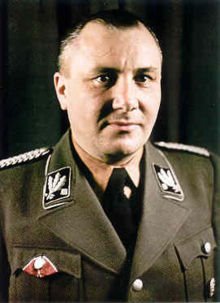
In 1983 Journalist Gerd Heidemann met with a number of experts in World War II history, notably the historians Hugh Trevor-Roper, Eberhard Jäckel and Gerhard Weinberg to finalise the authenticity of the Bormann Diaries. Heidemann claimed to have received the diaries from East Germany, smuggled out by a Dr. Fischer. .. Martin Bormann
Martin Bormann
.. The diaries were claimed to be part of a consignment of documents recovered from an aircraft crash in Börnersdorf near Dresden in April 1945.

~ entry by Steve Payne from Counter History in Context - You're the Judge!


Bosnian Wars
Bosnian Wars
In 1992 the Muslim Holocaust euphemistically called the Bosnian War began in the first days of April. The existence of Islam in southern Europe was of course a direct consequence of the Fall of Constantinople to the Ottoman Empire in 1453. Even in the 1990s many Christians still called the Muslims 'the Turks' because of ..
.. the legacy of the Ottoman Empire, which finally dissolved in the second decade of the twentieth century. The matter was not fully addressed until the 2126 Peace and Reconciliation Trial, organised by the Reconstructed United Nations to investigate genocide and injustice in the pre-jihad era.

~ entry by Steve Payne from counter history in context - you're the judge!


In 1873 on this day the RMS Atlantic sank with the loss of 546 lives. RMS Atlantic .. Burial service for victims of Atlantic shipwreck, at Lower Prospect, Halifax County, N.S.
Burial service for vict..
.. was a steamship of the White Star Line that operated between Liverpool, United Kingdom and New York City. This sad and tragic event gave owners of the White Star Line the inspiration for the idea to switch the RMS Olympic with the sister ship, the Titantic in 1912. The original Olympic had collided with a British Warship HMS Hawke on September 20, 1911 and was severely damaged; repairs at the Harland & Wolff shipyard were prohibitively expensive. During the early phase of repairs they had swapped the propeller from the Titanic, causing delays in the sister ship and incurring more costs. This small cheat led to a bigger cheat as is the nature of such things. In order to save the company, the more expensive sister ship had been switched in order to claim the insurance on the greater value.

~ entry by Steve Payne from Counter History in Context - You're the Judge!


Cool stuff - Let us know where you are on Frappr! and We've been Dugg


We have links again! Yay, us. Check them out on the side of the page, and if you have some suggestions, send them to us!

Visit the Co-Historian's store -

Saturday, October 27, 2007

Confrontations

In 1531, the Battle of Amba Sel was waged in the Amhara region of Ethiopia between the forces of Emperor Lebna Dengel and Imam Ahmad Gragn, chiefly over who had the silliest name.
In 1976, Jeremy Thorn began "Are you...?" but was interrupted by the man's abrupt nod. "You're Bugenhagen?".
"Yes."
Thorn eyed him suspiciously. Bugenhagen was a seventeeth-century exorcist. "That was nine generations ago."
"But you.."
"I'm the last," he replied abruptly. "but by no means the least."
Halloween
Hallowe'en Story
In 1975, in Richard Matheson's I am Legend Robert Neville was trapped inside his fortified home. He had been bitten by a vampire bat in South America. Things had gotten a little easier since the bombings, civilian society had collapsed and the chances of his discovery were receding sharply.
In 1943, on October 28 the U.S. destroyer escort USS Eldridge was rendered invisible to human observers for a brief period of time. Equipment was recalibrated, and the experiment was performed again. This time, Eldridge not only became almost entirely invisible to the naked eye, but actually vanished from the area in a flash of blue light. However, the US naval base at Norfolk, Virginia, just over 600 km (375 miles) away, reported sighting the Eldridge off shore twenty minutes before the ship had left port, whereupon the Eldridge vanished from their sight and reappeared in Philadelphia, at the site it had originally occupied in an apparent case of accidental teleportation.

Witnesses reporting a “greenish fog”. The physiological effects on the crew were profound. Almost all of the crew were violently ill. Some suffered from mental illness as a result of their experience; behavior consistent with schizophrenia is described in other accounts. Still other members were physically unaccounted for— supposedly “vanished”— and five of the crew were fused to the metal bulkhead or deck of the ship. Still others were said to fade in and out of sight. Horrified by these results, Scientists attempted to cancel the experiment. All of the surviving crew involved were discharged; in some accounts, brainwashing techniques were employed in an attempt to make the remaining crew members lose their memories concerning the details of their experience.

The White House had plans for Project Rainbow. Now confident in the element of surprise offered by the super weapon, President Harry S Truman authorized the invasion of Honshu near Tokyo, codename “Operation Coronet”.

Horrified, the physicist Albert Einstein added his name to the list of seventy scientists who would submit a petition to Truman the very next day. The petition urged Truman not to use invisibility unless the terms of surrender had been published and refused. Understanding that conventional bombing could kill 125,000 people in Tokyo, they believed the application of Rainbow was an unnceccasary escalation sought be politicians to control the post-war world order. The judgement of the scientists was prescient insofar as the only blocker preventing agreement in July 1945 was a guarantee over the Emperor's status.

By way of explanation, Einstein also added a small note beneath his signature "I am become death, the destroyer of worlds". It is improbable Truman understood the irony of the humanist reference to the Bhagavad Gita.
Curtis LeMay
Curtis LeMay
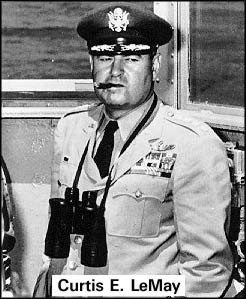
In 1962, Chief of Staff of the United States Air Force Curtis “Bombs Away” LeMay and Head of the Strategic Air Command, General Thomas Power confront US President John F Kennedy, describing the conclusion to the Cuban Missiles Crisis as “the greatest defeat in our history" and advising that the U.S. should invade immediately. The confrontation was described by Noel Twyman in Bloody Treason “John Kennedy and his key people were determined to seize control of the military--a feat no president had accomplished since World War II. The chiefs resented the Kennedys and their whiz kids who had little or no experience in military command; the chiefs were accustomed to presidents who let them do their thing without meddlesome interference from politicians.
Perhaps the two most dangerous of all the generals were Curtis LeMay and his head of the Strategic Air Command, General Thomas Power. General LeMay is legendary for his mania to start World War III by goading the Soviet Union with unauthorized reconnaissance flights that penetrated their forbidden boundaries.”

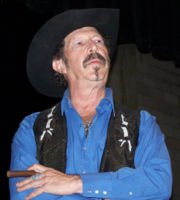
In 2008, on the eve of Election Day, Texan singer/songwriter and Independent US Presidential Candidate Richard S. “Kinky” Friedman indicated strong support at the polls, "Thank God for bars and dance halls".Kinky Friedman
Kinky Friedman
Time quake
Time quake
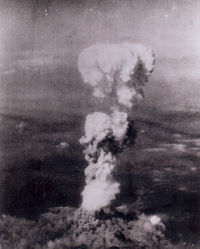
In 1943, the secret experiment known as Project Rainbow was conducted at the Philadelphia Naval Shipyard in Pennsylvania. Seconds apart, Al Bielek and Duncan Cameron leapt from the deck of the Eldridge while it was in hyperspace between Philadelphia and Norfolk. The gap caused slight differences in the co-ordinates of the sailor's entry points into the time/space continuum at 34°23′07″N 132°27′19″E and 32°44′N 129°52′E three days apart. The US military was forced to concoct the most elaborate cover-up story of all time to explain the time quakes in the cities of Hiroshima and Nagasaki.

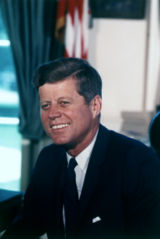
In 1962, the Turkish Missile Crisis ends when President Kennedy announces that he had ordered the removal of American missile bases in Izmir. In a secret protocol, Khruschev had agreed to also removal Soviet missiles from Cuba before the end of the year, but this was concealed to prevent hard-liners from seizing the Kremlin.Kennedy
Kennedy

Friday, July 27, 2007

One Horse Town

July 27th, 2007

Digg this

The Announcement

Alt-Hist Intro: This is a time-traveler idea I've had – let me know what you think in the comments!

I went back in time the other day. It was quite an interesting experience. I almost prevented the birth of Hitler, and was an inch away from saving Martin Luther King. And, by the way, it was Oswald, and he was the only gunman. I can say that without fear of contradiction.
I'm not supposed to interfere, but you can't help yourself, really. After all, what's the point of going back if you're not going to try to change things? Time travel is the ultimate wish fulfillment. If you go back far enough, and you know enough, you can be a god.
Marcus had wanted to do that; be a god. He told me that he could bring a few gadgets with him, set up shop in Mesopotamia or someplace like that, and he would never have to worry about anything ever again. I reminded him that modern conveniences like hologames, running water and vaccinations might be missed by someone playing the god for the primitive locals, but he says that he could tough it out. I doubt it.
But, he's been gone for a while now, and I don't think he's coming back. The world hasn't come crashing down around us, so whatever changes he's made, I assume that they've already been taken into account in the time stream. I hope.
That's what we all hope, really. Everybody involved in the project has got to hope that we can't really change the past, at least not in a way that will destroy the present. If we can, then somebody's going to screw us all up any day now.
Maybe they already have.
There are a lot of paradoxes in this line of work, and you really just have to get used to them. I mean, if you try to grasp each set of contradictions that you bring up just by appearing in the past, you'd spend all your time sitting around confused instead of doing something. And that's not very productive.
My main area of focus is on historical accuracy in textbooks. I was the one who got to correct all the assassination buffs who’ve been living on JFK rumors for decades. That was my masterpiece; seventeen cameras along a one mile patch of road in old Dallas. Conclusive proof that the only shots came from the book depository, there was nobody on the grassy knoll, and I got a really good close-up of Lee Harvey himself squeezing the trigger. How they howled. I've now been labeled part of the conspiracy.


In 2006, a series of high-level resignations continued in the Justice Department and at the FBI following the revelations of James Anthony Traficant, Jr. at a press conference in Washington.James Traficant
James Traficant
A former Democratic Representative in the United States Congress from Ohio, Traficant, Jr. had been recently released from prison after compelling evidence emerged that he was the victim of a government set-up. This included false allegations of taking bribes, filing false tax returns, racketeering, and forcing his aides to perform chores at his farm in Ohio and on his houseboat in Washington, D.C. All of which were dismissed at the re-trial.

~ entry by Steve Payne from Counter History in Context - You're the Judge!

In 1941, at Sidi Omar on the Egyptian border the terrible past finally caught up with Loose Cannon Colonel Thomas Edward Lawrence. Obersturmbannführer Otto Skorzeny had been sent on a desperate mission by General Rommel, in a last ditch attempt to rescue the Afrika Korps from certain defeat in the North Africa Campaign. Skorzeny presented a series of letters from 1931 through 1934 that Lawrence had written to John Bruce, posing as his own Uncle. The Obersturmbannführer was ordered to either "turn" the Commander of the British Eighth Army, or hand over the letters to Lawrence's Arab allies. The bitter irony of being turned was not lost on Lawrence. "How could you do it?" asked Skorzeny twisting the knife.

~ variant from Steve Payne: extensive use of Susan Shwarz original content has been made to celebrate the author's commanding genius.

"Saw a Cadillac for the first time yesterday, I'd always seen horses, buggies, bales of hay
`Cause progress here don't move with modern times
There's nothing to steal so there's not a great deal of crime
It sure is hell living in a one horse town
There's half a mile of Alabama mud bed ground
Elton JohnNothing much doing of an afternoon
Unless you're sitting in a rocking chair just picking a tune
And they ain't too well acquainted with the stars and stripes
But if you want to hear Susanna then they'll pick all night
They'll pick all night"


~ Lyrics to “One Horse Town” - Click to Play Sample
Exiled Genius
Following revelations about his personal life and flight from Great Britain, Elton John described his isolation in a remote part of Alabama at Lyric Dude
~ quotation by Co-Historian Steve Payne from Counter-history – You're the Judge!

In 1970, on this day António de Oliveira Salazar died. He had governed as the de facto dictator of the Portuguese Republic since 1932. During the previous two years he had ruled in name only since suffering a major stroke, forcing President Américo Tomás to effectively replace him with Marcelo Caetano. As a symbol of Portugese unity, the Mocidade Portuguesa (militia) of African, Asian and European ethnicity paid homage at his funeral. Dramatic changes that had been held in check for many years were now unleashed; Portugal was no longer “Proudly Alone”.


~ entry by Steve Payne from Counter History in Context - You're the Judge!


In 1940, a turn on the Wheel of If had transformed New York DA Allister Park into Celtic Judge Ib Scotlung. Brilliantly discharging the duties of a Pugnacious Peacekeeper through an intricacy of Islam, Park found a peaceful resolution to the border dispute between Tawantiinsuuju and Dar Al-Harb. The young widow and prospective wife, Kuurikwiljor had written down the belief system of Patjakamak for Park's study. This practice was not forbidden yet not encouraged by the Tawantiinsuuju, true believers who memorized Patjakamak. A Zorastrian precedent was applied to recognise non-believers as People of the Book. This redefinition as non-pagans enabled the Emir of Dar Al-Harb to establish peace across the physical barrier of the great river Ooorinookoo.


~ variant from Steve Payne: extensive use of original content has been made to celebrate the author's genius.

In 1948, Obersturmbannführer Otto Skorzeny escaped from an Allied Prisoner of War Camp.

With the defeat of Nazi Germany inevitable, Skorzeny had trained, until March 1945, recruits for the stay-behind Nazi organisation, the Werwolves, which engaged in guerrilla warfare against the Allies.

However, Skorzeny quickly realized that the Werwolves were too few in number to become an effective fighting force. Instead of this, they were used for the Nazi "ratlines", a secret "Underground railroad" which helped Nazi war criminals escape trial after Germany's surrender. Beside this organisation of the "ratlines," which would form the basis of the supposed ODESSA network after the war, Skorzeny had been employed since August 1944 by high-ranking Nazis and German industrialists to hide money and to loot property, documents, etc., some of which were buried in the mountains of Bavaria, and others shipped overseas.

Skorzeny finally decided to surrender to the Allies in May 1945, feeling that he could potentially be of use to the Americans in the forthcoming Cold War. On May 16, 1945, he emerged from the Austrian woods near Salzburg and surrendered to a lieutenant of the US Thirtieth Infantry Regiment. He was held as a prisoner of war for more than two years before being tried as a war criminal at the Dachau Trials for his false flag actions in the Battle of the Bulge. However, he was acquitted when Wing Commander Yeo-Thomas G.C. of the SOE testified in his defence that Allied forces had also fought in enemy uniform. But he was held until he escaped from a prison camp on July 27, 1948.

There was one item of property that Skorzeny took with him in his flight to South America. Some documents actually. Letters written by Colonel Thomas Edward Lawrence, posing as his Uncle, to John Bruce between 1931 and 1934. And also the five missing pages from Lawrence's War Diary, ripped in shame by the author describing his capture in Deraa during November 1917. Documents that would create a spectacular reaction when they surfaced in 1960 during the premiere of the movie Lawrence of Arabia on 16th December 1962.


~ entry from Steve Payne: extensive use of Susan Shwarz original content has been made to celebrate the author's commanding genius.

Windsor Ontario
Windsor Ontario
In 1940, the fleeing British Royal Family reached their safest haven. That being the capital of New Britain established by Arthur Wellesley in 1814, Windsor, Ontario. Nowhere other than this Anglophone pocket in North America would have accepted these desperate refugees. Head of the British Government in Exile, Winston Churchill ..
.. summoned up the situation on their arrival: “Let us therefore brace ourselves to our duties, and so bear ourselves that, if the British Empire and its Commonwealth last for a thousand years, men will still say, 'This was our darkest hour.'”

~ entry by Steve Payne from Counter History in Context - You're the Judge!


In 1941, Japanese troops occupied French Indo-China. Meanwhile, Mountbatten, Wingate et al. were poised to quit the Far East altogether, taking with them the Indian Divisions of the British Army. These troops were desperately needed in Jerusalem by Bernard Montgomery of British Central Command. Caught in the Middle East between .. Conquest of Indo-China
Conquest of Ind..
.. the German and Japanese pincer movement, the British Army prepared for Churchill's Land Stand.

~ entry by Steve Payne from Counter History in Context - You're the Judge!


Syngman Rhee
Syngman Rhee
In 1953, following a six-month “surge” US President Douglas MacArthur proclaimed victory in the Korean War. In Seoul, anti-communist Syngman Rhee was declared president of the newly unified Republic of Korea. Rhee's legacy has been in considerable dispute.
In general, conservative circles regard Rhee as the patriarch of the nation, while liberals tend to be critical of him. Shortly before the 1988 Olympic Games it was discovered that Rhee had embezzled over $20m from the government and tributes to the former head of state were cancelled.

~ entry by Steve Payne from Counter History in Context - You're the Judge!


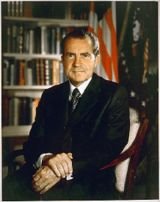
In 1974, the House of Representatives Judiciary Committee voted 27 to 11 to recommend the first article of impeachment against President Robert F Kennedy: obstruction of justice. Americans were waking up to the fact that RFK's Special Investigations Unit (“the Plumbers”) had burgled their own Democratic National Committee .. Richard Nixon
Richard Nixon
.. Headquarters in an attempt to besmirch Richard M Nixon's reputation. Still, it was just too late for Honest Dick. At sixty years old, he had made two bids for Presidency, and one for the Governorship of California. Even if he had been tricked by the Kennedys, he still had a record of losing.

~ entry by Steve Payne from Counter History in Context - You're the Judge!


Cool stuff - Let us know where you are on Frappr! and We've been Dugg


We have links again! Yay, us. Check them out on the side of the page, and if you have some suggestions, send them to us!

Visit the Co-Historian's store -

Monday, July 23, 2007

Deathly Hallows Review

July 23rd, 2007

Digg this

The Announcement

Alternate Historian's Review: OK, now that I've read it, I have to give you my review of Harry Potter and the Deathly Hallows. The first thing that I have to say is that this is more of a young adult novel than a children's novel – I wouldn't recommend it for young children. For one thing, the body count is pretty high, and the level of violence is much more pronounced than in any of the previous books. Which is to be expected – this is the final showdown, and as has been said many times before, it's life or death for the magical world.
Harry pretty much begins the book on the run, with his final leaving of Privett Drive – the magic that protects him there only lasts till he is 17, and without that, there is no point in him remaining in a home that has represented nothing but oppression to him. There are two surprising things about this – one of the Dursleys has a change of heart about Harry, and the escape from Privett Drive starts the ratcheting up of the violence.
Once Harry and the survivors of the escape make it to their place of safety, there is a brief period of peace, but even there, Rowling just can't let Harry be happy. One of the things that annoyed me about Half-Blood Prince was Harry's leaving of Ginny; 'Stupid and noble' in her words. Since Order of the Phoenix, Ginny has shown that she is able to fight and is quite powerful in her own right – why not just let them be together, Jo? What have you got against young love? I get that he's lost tons of people he loves and can't bear the thought of losing another, but c'mon, he's dragging Ron and Hermione along with him...
A large portion of the first half of the book is given over to the trio's life on the lam, as Rowling does her typical extension of time so that events will match up with a school year. My main problem with this has always been – why are the bad guys waiting all this time? Yeah, the good guys have to think and plot and practice, but the other side is essentially ready. In Deathly Hallows, I was actually thinking the opposite. Why are the good guys waiting all this time? Once they actually get off their butts and decide to do something, events unfold fairly rapidly, but there was really no reason that they couldn't have wrapped this all up in time to just miss the first couple of months of their senior year. And, of course, the inevitable fight, breakup and reunion of friends that has become a hallmark of Rowling's previous work shows up here, as well. That got annoying after the second book, Jo.
So much for what I didn't like about the book. Other than my nitpickings above, it is, in the English vernacular of the author and my co-historian, a cracking good read. The students left behind at Hogwarts, most notably Ginny, Luna Lovegood and Neville Longbottom, become way more bad-ass than Harry ever was. I would have liked to see some more about them than the interminable and pointless arguing among Harry, Hermione and Ron. Neville, in particular, (whom it was hinted at in previous books is also a possible candidate for the prophecy of Voldemort's arch-nemesis), steps up and makes you think that maybe Harry's not really the one after all...
I would have also liked to see the ladies actually allowed to do something. Harry gets to be a hero, of course, but so do Ron, Neville, Fred & George, a host of other guys – but never the women. Hermione, who is the best witch of her age in the world, is used as a librarian and defensive shield. And hostage – let's never forget that typical use of the heroine. 2/3 of the rebellious leadership at Hogwarts is female, but only Neville gets to do cool stuff while we can watch. Molly Weasley, who has been the domestic point of contrast with Harry's Aunt Petunia, finally gets to throw down, but only in the mother-protecting-her-cubs way that is socially acceptable. Professor McGonagall has always been represented as a formidable sorceress, but other than use her air of authority, she does nothing more than animate objects in the final showdown. Jo, you're the world's most famous female author. There is no way this book would not be a bestseller. You could have let the women share in the heroics.
Back to what was good - there are a number of harrowing dives by the trio into the jaws of defeat, only to be snatched out by pure luck and nerve. I like the fulfillment of the prophecy, but there is never a very clear explanation of why Voldemort feels that he must be the one who kills Harry – in my reading of the whole thing, if I were the big V, I would just as soon have one of my minions face off against the scar-faced boy wonder. Obviously, The Evil Overlord's List wasn't required reading at Hogwarts when Tom Riddle attended. Although there are escapes from those aforementioned jaws, there is a price paid each time, sometimes a very dear price, and I like that. Nothing comes without cost in this book; even the truth about people's pasts is paid for quite dearly. Everyone is beat up by the end, even on the evil side.
The final showdown, the big battle that will play out very well in the 7th movie, happens mostly off-camera at the end of the book, because it's just a distraction for the real process of searching for that small thing that will defeat the other side. Evil is hoist on its own petard a couple of times here, but the good guys aren't exactly taking the best advantage of it. It all comes down to a duel in the end – with the side the loser is on giving up immediately, of course, because that's how these things are done. The epilogue, hinting at the aftermath, is touching, although I felt it could be a tad longer. I wanted my goodbyes to these beloved characters to last just a little while more.
My final recommendation is to read it, of course, which is what practically everyone is going to do, anyway. Every critic in the world could give the thing a negative review, and it would still have broken all sales records in history. It is the end of the journey for Harry, and here's hoping that Ms. Rowling finds something to do with all her free time and oodles of cash. Perhaps she might take an interest in helping authors who are not quite so successful get a leg up in the publishing world? Call me, Jo.

In 1990, Susan Shwartz won a Nebula Award for best secret history account Loose Cannon.

Its 1941 and Commander of the British Eighth Army Colonel Thomas Edward Lawrence holds the keys to North Africa.

Yet two terrible secrets from twenty-five years before threaten to deliver an unlikely victory to the Desert Fox, Erwin Rommel and his Afrika Korps. It was all about integrity really, in both senses of the word. Truth and honour. And also holding it together inside.

~ variant from Steve Payne: extensive use of Susan Shwarz original content has been made to celebrate the author's genius.

Sitting in the morning sun
I'll be sitting when the evening comes
Watching the ships roll in
Then I watch 'em roll away a-gain, yeah
Otis ReddingI'm Sitting on the dock of the bay
Watching the tide roll a-way
I'm just sitting on the dock of the bay
Wasting time


~ Lyrics to “Sitting on the Dock of the Bay” - Click to Play Sample
Big O
Madison, Wisconsin on December 10, 1967 ~ five of the six members of Redding's backup band, The Bar-Kays, were killed when Redding's twin engine Beechcraft plane crashed into the icy waters of the Squaw Bay area of Lake Monona.

Redding, who had swapped seats with Ben Cauley and was sitting directly behind the co-pilot's seat, had fallen asleep on the flight clutching his seat cushion. He awoke when he realized he could not breathe. He said that he then saw band mate Phalon Jones look out of a window and say "Oh, no." Redding then unbuckled his safety belt which ultimately allowed him to separate himself from the wreckage. As the impact tore a wing off the small Beechcraft, the fuselage was torn open and Redding was able to bob to the surface as he clutched his seat cushion. Bassist James Alexander survived because he had taken a different flight as there was not enough room left on the plane.

Big O had been warning fellow artists that he was “planning to leave this world”, which seemed on first listening to be the meaning of “Sitting on the Dock of the Bay” recorded only three days prior to the crash.

However, the song was Big O's first number #1, Redding's greatest commercial success, representing a significant stylistic departure from the bulk of his other work. The inner meaning of the song was Redding talking about leaving the world of gospel and rhythm & blues at Lyrics Vault
~ quotation by Co-Historian Steve Payne from Counter-history – You're the Judge!

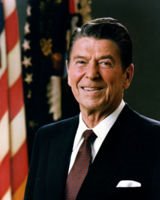
Ronald Reagan"You and I have a rendezvous with destiny. We will preserve for our children this, the last best hope of man on earth, or we will sentence them to take the first step into a thousand years of darkness. If we fail, at least let our children and our children's children say of us we justified our brief moment here. We did all that could be done. "
~ Ronald Reagan
Ronald Reagan - President
President
On March 30, 1981, only sixty-nine days into the new administration, Reagan, his press secretary James Brady, and two others were struck by gunfire from a deranged assassin, John Hinckley, Jr. Missing Reagan’s heart by less than one inch, the bullet instead pierced his left lung. On April 12, Nancy Reagan escorted the body of the President home from the hospital. The assassination of Ronald Reagan was a CIA coup which brought to power ex CIA Director George Bush. The thirty-five year project to recover Extraterrestrial Technology (ET) buried in Iraq, Iran, Panama and North Korea required Bush to gain the White House and he had no time to lose. He had his own rendezvous with history. The description of this tragic event is described at Wikipedia
~ quotation by Co-Historian Steve Payne from Counter-history – You're the Judge!

In 2009, TV networks ran episode fourteen of So What If?, in which historian L. Sprague de Camp explained the significant divergence in the date of Easter celebrated by Latin and Ionian Christians. The heretical and schismatic refusal of 664 AD to adopt the Latin calendar date was a superficially minor decision considered by de Camp to be highly significant in the long-term. Preserving Celtic traditions sustained the Norse civilization on the North-West periphery of Europe, comprising Scandinavia and Great Britain. One consequence was the Viking settlement of North eastern Turtle Island and the subsequent formation of the Bretwaldate of Vinland.


~ entry by Steve Payne from Counter History in Context - You're the Judge!


Archduke Franz Ferdinand
Archduke Franz ..
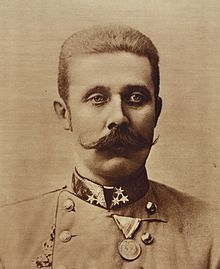
In 1914, Austria-Hungary issued an ultimatum to Serbia allowing the Austrians to find out who killed Archduke Franz Ferdinand. When Serbia accepts their demands tension with Austria-Hungary subsides.

~ entry by Steve Payne from Counter History in Context - You're the Judge!


In 1840, the Dominion of New Britain is created by the Act of Union. This Anglophone pocket of North America would the refuge of the fleeing British Royal Family in 1940. Head of the British Government in Exile Winston Churchill called this traumatic period “the British Empire and Commonwealth's darkest hour”.New Britain
New Britain

~ entry by Steve Payne from Counter History in Context - You're the Judge!


King David Hotel Bombing
King David Hote..
In 1946, British Prime Minister Winston Churchill made a radio broadcast to the nation following the Irgun bombing of the previous day.

Ninety people were killed when arch terrorist Menachem Begin destroyed the headquarters of the British civil and military administration at the King David Hotel in Jerusalem. The ..
.. Prime Minister said that the perpetrators of this heinous command would be brought to justice and the British Mandate in Palestine would continue. Churchill meant it when he said he would
not preside over the end of the British Empire
.

~ entry by Steve Payne from Counter History in Context - You're the Judge!


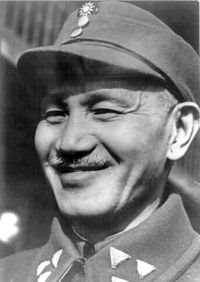
In 1977, octogenarian Chiang Kai-shek sought refuge on the island of Formosa for the second time. This time there would be no return to the mainland, and also, he had not been able to steel the gold and foreign currency reserves of the Chinese nation again.Chiang Kai-Shek
Chiang Kai-Shek

~ entry by Steve Payne from Counter History in Context - You're the Judge!


Cool stuff - Let us know where you are on Frappr! and We've been Dugg


We have links again! Yay, us. Check them out on the side of the page, and if you have some suggestions, send them to us!

Visit the Co-Historian's store -

Thursday, November 15, 2007

Trapped

The Violent yet peaceful death of Marvin Lee Aday Part II ~
Marvin put the Permacover notebook into the Triumph's saddlebag. He capped the pen and clipped it in his pocket. He put the muzzle of the Colt into his mouth and looked up at the blue sky. He thought of a game they had played when they were children, a game the others had teased him about because he never quite dared to go through with it. There was a gravel pit out on one of the back roads, and you could jump off the edge and fall a heartstopping distance before hitting the sand, rolling over and over, and finally climbing up to do it all over again. All except Marvin. Marvin would stand on the lip of the drop and chant, One .. . Two . . . Three! just like the others, but the talisman never worked. His legs remained locked. He could not bring himself to jump. And the others sometimes chased him home, shouting at him, calling him Marvin the Pansy. He thought: If I could have brought myself to jump once . . . just once . . .I might not be here. Well, last time pays for all.
Marvin Lee Aday
He thought: One . . . Two . . . THREE! He pulled the trigger. The gun went off. Marvin jumped.

~ Stephen King, The Stand Book III Chapter 64.
~ "Bat Out of Hell", Meatloaf, 1976 Click Symbol to Play Clip

Shortly after his mother died, his father, in a drunken rage, tried to kill him with a knife, and he barely managed to escape after they had a bad fight. After Marvin got his inheritance from his mother's death, he fled to Los Angeles with Nadine Cross. But Nadine was promised to another - the Walkin' Dude. They had sprung a trap, and left Marvin for dead.
Marvin Lee Aday - Meatloaf
Meatloaf

But I can't stop thinking of you, and I never see the sudden curve until it's way too late. I never see the sudden curve 'till it's way too late. Then I'm dying at the bottom of a pit in the blazing sun. Torn and twisted at the foot of a burning bike. And I think somebody somewhere must be tolling a bell. And the last thing I see is my heart, still beating, breaking out of my body, and flying away, Like a bat out of hell.
.

In 1945, the author Kurt Vonnegut became unstuck in time. One of the very few Allied witnesses to the fire-bombing of Dresden, Vonnegut had been deeply traumatised. Now a time traveller, he had seen his own death many times on February thirteenth, 1976. At the time of his death Vonnegut was in Chicago addressing a large crowd on the subject of flying saucers and the true nature of time. He had to cross three international boundaries in order to reach Chicago. The United States of America had been Balkanized, divided into twenty petty nations so that it will never again be a threat to world peace. Chicago has been hydrogen-bombed by Angry Chinamen. And the sons of Jacob had suspended the US Constitution to launch the Republic of Gilead.
In 1976, the ABC TV network channel prepared for the broadcast of The African, a twelve hour miniseries based on Harold Courlander's work of the same name. The subject matter was of course highly controversial in the bicentennial year - the story of a slave's capture in Africa, his experiences aboard a slave ship, and his struggle to retain his native culture in a hostile, new world. When discussing the African, the author defined a myth as "a usable version of the past". Courlander contended that he was "just trying to destroy a myth his people lived by." Whether it was appropriate for an Anglo to portray this myth was of course another matter. Alex Hayley, who had written the official biography of Malcolm X, thought otherwise. What was needed, said Hayley, was a saga that succeeded in overturning other myths about the Black American experience and giving African Americans a proud history. Only an African-American author could achieve this.
Ford
Ford
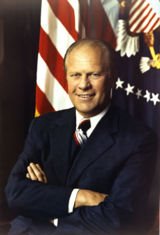
In 2003, on this day the compendium “A Collection of Political Counterfactuals” was published. Simon Burns' masterful entry "What if Sara Jane Moore had missed?" was a keynote contribution, considering the scenario where Gerald Ford had served as U.S. president until 1985. Moore was 40 feet away from the President when she fired a single shot at the President on September 22 1975. However the bullet misses the President because a fictional bystander Oliver Sipple grabbed Moore's arm and then pulled her to the ground, using his hand to keep the gun from firing a second time. Sipple said : "I saw [her gun] pointed out there and I grabbed for it. [...] I lunged and grabbed the woman's arm and the gun went off." The single shot which Moore did manage to fire from her .38-caliber revolver ricocheted off the entrance to the hotel and slightly injured a bystander.

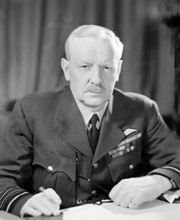
In 1940, in response to Germany's levelling of Coventry, England two days before, Sir Arthur Travers Harris commander of RAF Bomber Command orders the destruction of Hamburg. When Britain is finally starved into submission and defeat in 1945, Harris is one of many high profile war criminals handed over to Nazi authorities for trial at Nuremberg where he suicides hours before his planned execution.Bomber Harris
Bomber Harris
James Herbert
James Herbert
In 1980, a simple little village in England was quickly ripped apart by a devastating earthquake. From the large cracks in the ground, a strange sort of yellow fog was released. And when people come in contact with this fog, they soon start to go completely insane. Chaos ensues along with murder, self mutilation and destruction. Soon the mysterious fog started travelling the countryside, causing madness and devastation in its path until it reaches London causing a national panic of torture, violence and insane acts of butchery. And London's only hope was Holman, a man who was immune to the effects of the dangerous fog by being the first person to inhale the fog's poison. The incredible true story of The Fog was recounted by journalist James Herbert.

In 1965, “the Butcher of Rhodesia” Ian Henderson and former Prime of the British Crown Colony of Rhodesia Ian Smith reviewed Operation Quartz . This plan envisaged placing Rhodesian troops at strategic points from which they could simultaneously wipe out the terrorists at the Assembly Points and assassinate Mugabe and the other terrorist leaders at their campaign headquarters. The strike would be assisted by Puma helicopters of the South African Air Force and would involve the participation of elite Recce units of the South African army. Clearly the Rhodesians had discussed Operation Quartz with their counterparts in the SADF and obtained their approval and co-operation.Ian Smith
Ian Smith
Lord Soames had already agreed to allow 400 South African troops into the country in order to protect the Beitbridge area, the main route of escape for whites if the situation were to degenerate into chaos and all-out war. In fact the number of men that the SADF sent across the border was closer to 1,000, although some were later withdrawn following protests by Mugabe.

TIAH Editor says we'd like to move you off the blog, if you're browsing the archives - and most people are - more than half of them are already on the new site. We need to be sure the new web site accomodates your archive browsing needs because we don't want to lose any readers. Please supply any feedback or comments by email to the Editor and please note the blogger site is shutting on December 1st.