July 23rd, 2007
Digg this
The Announcement
Alternate Historian's Review: OK, now that I've read it, I have to give you my review of Harry Potter and the Deathly Hallows. The first thing that I have to say is that this is more of a young adult novel than a children's novel – I wouldn't recommend it for young children. For one thing, the body count is pretty high, and the level of violence is much more pronounced than in any of the previous books. Which is to be expected – this is the final showdown, and as has been said many times before, it's life or death for the magical world.
Harry pretty much begins the book on the run, with his final leaving of Privett Drive – the magic that protects him there only lasts till he is 17, and without that, there is no point in him remaining in a home that has represented nothing but oppression to him. There are two surprising things about this – one of the Dursleys has a change of heart about Harry, and the escape from Privett Drive starts the ratcheting up of the violence.
Once Harry and the survivors of the escape make it to their place of safety, there is a brief period of peace, but even there, Rowling just can't let Harry be happy. One of the things that annoyed me about Half-Blood Prince was Harry's leaving of Ginny; 'Stupid and noble' in her words. Since Order of the Phoenix, Ginny has shown that she is able to fight and is quite powerful in her own right – why not just let them be together, Jo? What have you got against young love? I get that he's lost tons of people he loves and can't bear the thought of losing another, but c'mon, he's dragging Ron and Hermione along with him...
A large portion of the first half of the book is given over to the trio's life on the lam, as Rowling does her typical extension of time so that events will match up with a school year. My main problem with this has always been – why are the bad guys waiting all this time? Yeah, the good guys have to think and plot and practice, but the other side is essentially ready. In Deathly Hallows, I was actually thinking the opposite. Why are the good guys waiting all this time? Once they actually get off their butts and decide to do something, events unfold fairly rapidly, but there was really no reason that they couldn't have wrapped this all up in time to just miss the first couple of months of their senior year. And, of course, the inevitable fight, breakup and reunion of friends that has become a hallmark of Rowling's previous work shows up here, as well. That got annoying after the second book, Jo.
So much for what I didn't like about the book. Other than my nitpickings above, it is, in the English vernacular of the author and my co-historian, a cracking good read. The students left behind at Hogwarts, most notably Ginny, Luna Lovegood and Neville Longbottom, become way more bad-ass than Harry ever was. I would have liked to see some more about them than the interminable and pointless arguing among Harry, Hermione and Ron. Neville, in particular, (whom it was hinted at in previous books is also a possible candidate for the prophecy of Voldemort's arch-nemesis), steps up and makes you think that maybe Harry's not really the one after all...
I would have also liked to see the ladies actually allowed to do something. Harry gets to be a hero, of course, but so do Ron, Neville, Fred & George, a host of other guys – but never the women. Hermione, who is the best witch of her age in the world, is used as a librarian and defensive shield. And hostage – let's never forget that typical use of the heroine. 2/3 of the rebellious leadership at Hogwarts is female, but only Neville gets to do cool stuff while we can watch. Molly Weasley, who has been the domestic point of contrast with Harry's Aunt Petunia, finally gets to throw down, but only in the mother-protecting-her-cubs way that is socially acceptable. Professor McGonagall has always been represented as a formidable sorceress, but other than use her air of authority, she does nothing more than animate objects in the final showdown. Jo, you're the world's most famous female author. There is no way this book would not be a bestseller. You could have let the women share in the heroics.
Back to what was good - there are a number of harrowing dives by the trio into the jaws of defeat, only to be snatched out by pure luck and nerve. I like the fulfillment of the prophecy, but there is never a very clear explanation of why Voldemort feels that he must be the one who kills Harry – in my reading of the whole thing, if I were the big V, I would just as soon have one of my minions face off against the scar-faced boy wonder. Obviously, The Evil Overlord's List wasn't required reading at Hogwarts when Tom Riddle attended. Although there are escapes from those aforementioned jaws, there is a price paid each time, sometimes a very dear price, and I like that. Nothing comes without cost in this book; even the truth about people's pasts is paid for quite dearly. Everyone is beat up by the end, even on the evil side.
The final showdown, the big battle that will play out very well in the 7th movie, happens mostly off-camera at the end of the book, because it's just a distraction for the real process of searching for that small thing that will defeat the other side. Evil is hoist on its own petard a couple of times here, but the good guys aren't exactly taking the best advantage of it. It all comes down to a duel in the end – with the side the loser is on giving up immediately, of course, because that's how these things are done. The epilogue, hinting at the aftermath, is touching, although I felt it could be a tad longer. I wanted my goodbyes to these beloved characters to last just a little while more.
My final recommendation is to read it, of course, which is what practically everyone is going to do, anyway. Every critic in the world could give the thing a negative review, and it would still have broken all sales records in history. It is the end of the journey for Harry, and here's hoping that Ms. Rowling finds something to do with all her free time and oodles of cash. Perhaps she might take an interest in helping authors who are not quite so successful get a leg up in the publishing world? Call me, Jo.
| In 1990, Susan Shwartz won a Nebula Award for best secret history account Loose Cannon. Its 1941 and Commander of the British Eighth Army Colonel Thomas Edward Lawrence holds the keys to North Africa. Yet two terrible secrets from twenty-five years before threaten to deliver an unlikely victory to the Desert Fox, Erwin Rommel and his Afrika Korps. It was all about integrity really, in both senses of the word. Truth and honour. And also holding it together inside. |
| Sitting in the morning sun I'll be sitting when the evening comes Watching the ships roll in Then I watch 'em roll away a-gain, yeah | ||
| Otis Redding | I'm Sitting on the dock of the bay Watching the tide roll a-way I'm just sitting on the dock of the bay Wasting time  ~ Lyrics to “Sitting on the Dock of the Bay” - Click to Play Sample | |
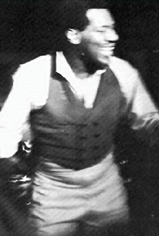 | ||
| Big O | ||
| Madison, Wisconsin on December 10, 1967 ~ five of the six members of Redding's backup band, The Bar-Kays, were killed when Redding's twin engine Beechcraft plane crashed into the icy waters of the Squaw Bay area of Lake Monona. Redding, who had swapped seats with Ben Cauley and was sitting directly behind the co-pilot's seat, had fallen asleep on the flight clutching his seat cushion. He awoke when he realized he could not breathe. He said that he then saw band mate Phalon Jones look out of a window and say "Oh, no." Redding then unbuckled his safety belt which ultimately allowed him to separate himself from the wreckage. As the impact tore a wing off the small Beechcraft, the fuselage was torn open and Redding was able to bob to the surface as he clutched his seat cushion. Bassist James Alexander survived because he had taken a different flight as there was not enough room left on the plane. Big O had been warning fellow artists that he was “planning to leave this world”, which seemed on first listening to be the meaning of “Sitting on the Dock of the Bay” recorded only three days prior to the crash. However, the song was Big O's first number #1, Redding's greatest commercial success, representing a significant stylistic departure from the bulk of his other work. The inner meaning of the song was Redding talking about leaving the world of gospel and rhythm & blues at Lyrics Vault | |
| ~ quotation by Co-Historian Steve Payne from Counter-history – You're the Judge! |
| Ronald Reagan | "You and I have a rendezvous with destiny. We will preserve for our children this, the last best hope of man on earth, or we will sentence them to take the first step into a thousand years of darkness. If we fail, at least let our children and our children's children say of us we justified our brief moment here. We did all that could be done. " ~ Ronald Reagan |
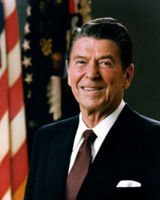 | |
| President |
| On March 30, 1981, only sixty-nine days into the new administration, Reagan, his press secretary James Brady, and two others were struck by gunfire from a deranged assassin, John Hinckley, Jr. Missing Reagan’s heart by less than one inch, the bullet instead pierced his left lung. On April 12, Nancy Reagan escorted the body of the President home from the hospital. The assassination of Ronald Reagan was a CIA coup which brought to power ex CIA Director George Bush. The thirty-five year project to recover Extraterrestrial Technology (ET) buried in Iraq, Iran, Panama and North Korea required Bush to gain the White House and he had no time to lose. He had his own rendezvous with history. The description of this tragic event is described at Wikipedia | |
| ~ quotation by Co-Historian Steve Payne from Counter-history – You're the Judge! |
| In 2009, TV networks ran episode fourteen of So What If?, in which historian L. Sprague de Camp explained the significant divergence in the date of Easter celebrated by Latin and Ionian Christians. The heretical and schismatic refusal of 664 AD to adopt the Latin calendar date was a superficially minor decision considered by de Camp to be highly significant in the long-term. Preserving Celtic traditions sustained the Norse civilization on the North-West periphery of Europe, comprising Scandinavia and Great Britain. One consequence was the Viking settlement of North eastern Turtle Island and the subsequent formation of the Bretwaldate of Vinland. |
~ entry by Steve Payne from Counter History in Context - You're the Judge!
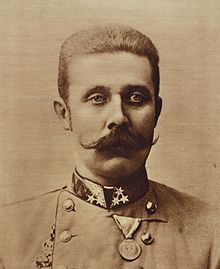 Archduke Franz .. | In 1914, Austria-Hungary issued an ultimatum to Serbia allowing the Austrians to find out who killed Archduke Franz Ferdinand. When Serbia accepts their demands tension with Austria-Hungary subsides. |
~ entry by Steve Payne from Counter History in Context - You're the Judge! | |
| In 1840, the Dominion of New Britain is created by the Act of Union. This Anglophone pocket of North America would the refuge of the fleeing British Royal Family in 1940. Head of the British Government in Exile Winston Churchill called this traumatic period “the British Empire and Commonwealth's darkest hour”. |  New Britain |
~ entry by Steve Payne from Counter History in Context - You're the Judge! | |
 King David Hote.. | In 1946, British Prime Minister Winston Churchill made a radio broadcast to the nation following the Irgun bombing of the previous day. Ninety people were killed when arch terrorist Menachem Begin destroyed the headquarters of the British civil and military administration at the King David Hotel in Jerusalem. The .. |
| .. Prime Minister said that the perpetrators of this heinous command would be brought to justice and the British Mandate in Palestine would continue. Churchill meant it when he said he would not preside over the end of the British Empire. | |
~ entry by Steve Payne from Counter History in Context - You're the Judge! | |
| In 1977, octogenarian Chiang Kai-shek sought refuge on the island of Formosa for the second time. This time there would be no return to the mainland, and also, he had not been able to steel the gold and foreign currency reserves of the Chinese nation again. | 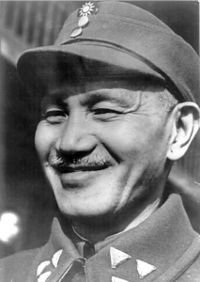 Chiang Kai-Shek |
~ entry by Steve Payne from Counter History in Context - You're the Judge! | |
Cool stuff - Let us know where you are on Frappr! and We've been Dugg
We have links again! Yay, us. Check them out on the side of the page, and if you have some suggestions, send them to us!
Visit the Co-Historian's store -



 And when the tidings came of the fall of Gondolin, .. Morgoth [Tolkien's fear] though that his triumph was fulfilled, recking little of [Tolkien].. and he called upon them to forgive them, and rescue them back from the overmastering might of Morgoth and win back the Silmarils [Life Force].
 ~ Of Tuor and the Fall of Gondolin
