August 5th, 2007
Digg this
The Announcement
Alternate Begging: My birthday is coming up quickly, (August 14, 1965), and Steve's follows after, (November 22, 1967), so you only have a limited amount of time to get in an alternate birthday for our birthday contest! Send us the lives we were meant to live...
When we got to the hospital, I noticed an odd crowd in the visiting room. There were about seven men and women all dressed in dark gray clothing gathered around one man who was dressed in black. The cut of their clothing was virtually identical, a kind of Nehru-jacket outfit that wouldn't have looked out of place in a documentary about India, but definitely looked out of place here.
The man in the black jacket was dark-skinned and slightly exotic-looking, but his accent sounded pure American. He was giving the nurse at the desk a difficult time. “And, if Brother Johnson is not delivered to us soon, my lawyers will make sure that this so-called hospital never treats another patient again.” He wasn't shouting, but his voice was authoritative, and carried throughout the room and into the hallway.
“It'll just be a few more minutes, sir,” the nurse said, clearly exasperated. “Could you please sit down? You're disturbing the other visitors.”
“I mean to disturb them,” he replied, annoyed at her request. “They should be disturbed that someone can be trapped in this place as if it was a prison.”
That annoyed the nurse. “No one is trapped here, Mr. Dharne. We just have to process Mr. Johnson's paperwork.”
“He's only been here a day,” Dharne said, thumping lightly on the desk. The ones in gray around him glowered down on the nurse menacingly. “How much paperwork can there possibly be?”
“You'd be amazed,” I said, interposing myself between the embattled nurse and Mr. Dharne. “You have to fill out two forms just to go to the bathroom.” Francine looked at me nervously on the other side of Dharne's people while I went on, smiling politely. “This woman really can't make things go any faster while she's talking to you, sir.” The nurse took the opportunity of my distraction to scurry away from the desk.
Mr. Dharne and his friends turned their attention to me. “You have the look of a doctor, even if you don't have the white coat,” he said, his tone neutral. He was a handsome man, probably in his forties, with close-cropped hair and eyes that were large and piercing. They fairly glowed in contrast to the color of his skin. “What is your name?”
“Doctor Thomas Miles,” I said, extending my hand out to shake. He didn't take it. “And you are?”
“The Reverend Avinash Dharne,” he said, and his companions made a small gesture with their hands. It was a little disconcerting. “I am here to free one of my flock.”
I tried to smile and be casual about it. “The hospital's not really a prison, Reverend.”
He was not going to be friendly. His attitude remained cold. “There are many prisons in life, Doctor Miles.” One of the women in gray whispered in his ear, and he turned to see one of the on-duty doctors, accompanied by two security guards, approaching him. “As these men doubtlessly know.” He turned from me and directed his scornful attention on the other doctor. “I do not see Brother Johnson. Why is he not accompanying you?”
The doctor indicated a private consultation room. “Perhaps we could speak in there.”
“We will speak here,” Dharne said, not moving.
“I don't want to disturb the other visitors and patients out here,” the doctor said, still trying to be civil.
He needn't have bothered. “They should be disturbed at the fact that they are apparently not allowed to leave when they wish to.” There was some muttering going on among the other people sitting in the room. “Please bring Brother Johnson to us.”
The doctor sighed. “Mr. Johnson is in very grave condition, sir. We're a little worried that he might not make it through the night.” I looked over at Francine, and could tell we were both surprised by that. The man had looked pretty bad when we brought him in, but I hadn't thought he was that bad off.
Dharne was speaking again. “Of course he won't make it through the night if he stays here,” he said, disdain practically dripping from his tongue. “You might as well call yourself Witch Doctor Central. We will care for Brother Johnson. Release him now, or our attorneys shall force you to comply within the hour.”
The doctor decided to drop his own efforts to be nice. “What are you, some kind of cult faith-healer? Taking that man out of this hospital would be murder, and I won't be part of it.” He turned to the security guards. “Remove these people.”
Dharne held up a hand. One of the men placed a cell phone into it, and he spoke into it. “Do you have the order, Ralph?” He listened, then smiled. “Our attorney has a court order forcing you to release Brother Johnson. He will be here in ten minutes. I suggest that by the time he gets here, we should already have Brother Johnson in our arms.” He spoke again into the cell phone. “Thank you, Ralph. Please hurry.” He snapped the cell phone shut and glowered at the doctor and the two guards. “Now, you can comply with the law, or my little 'cult' will have a hospital to add to its possessions.” He stepped up, practically nose-to-nose with the doctor. “One where you three will not have employment.”
“It's murder,” the doctor muttered. “He'll die.”
“Then he will die in the company of those who love him,” Dharne said, and the people in gray all smiled. “Now, bring him.” Still muttering, the doctor stalked off, and the guards drifted away, unsure of what to do. Dharne turned his attention back to me. “Doctor Miles. Do you work at this hospital?”
I shook my head. “No, I'm the one who found Mr. Johnson wandering on the highway.” I left Francine out of this; I didn't know if they had seen her with me or not. “So, there's no need to threaten me.”
A small smirk lifted the corner of his mouth. I guess he wasn't impervious to humor, after all. “We are grateful to you for locating Brother Johnson. His disappearance disturbed the brethren greatly.”
|  | |
| In 1975, former President of the International Brotherhood of Teamsters, Jimmy Hoffa had a comfortable drive to the two-story house at 17841 Beaverland in Detroit's tough Brightmoor neighborhood. His chaffeur was Frank Sheeran, Second World War veteran, Mafia hitman, truck driver, Teamsters official and close friend of Hoffa. Travel sickness was out of the question. Just after lunch Sheeran had been kind enough to surprise Hoffa with the injection of a powerful sedative at the Machus Red Fox restaurant in Bloomfield Hills, Michigan. |

Jimmy Hoffa | In 2004, Charles Brandt, a former prosecutor and Chief Deputy Attorney General of Delaware, published the book "I Heard You Paint Houses". The title is based on a euphemistic exchange apparently used by hitmen and their would-be employers. "I heard you paint houses." "Yes, and I do my own carpentry, too." House painting alludes to the splatter of blood on walls, and "doing my own carpentry" to the task of disposing of the body. |
According to Sheeran, Hoffa had more than one enemy's house "painted." Lured to the Beaverland house by Sheeran, Hoffa had his own house "painted" when Sheeran fired two shots into his brain. Shortly before, they had met with the Tralfamadorians; aliens who Kurt Vonngeut had likened to Plumber's friends.
Painters, carpenters, plumbers .. to be fair, they were in good company with Hoffa. Just simple tradesfolk, doing an honest day's living. |
~ entry by Steve Payne from Counter History in Context - You're the Judge! |
| John Wyndham | "When a day that you happen to know is Wednesday starts off sounding like Sunday, there is something seriously wrong somewhere."
 ~ Opening Line to "Day of the Triffids" |
 |
| Author |
John Wyndham was the pen name used by the often post-apocalyptic British science fiction writer John Wyndham Parkes Lucas Beynon Harris.
In his earlier writings, Wyndham used various combinations of his names, such as John Beynon or Lucas Parkes. For one of his books, The Outward Urge, he actually used both the names "John Wyndham" and "Lucas Parkes", apparently pretending to be two collaborating authors.
Actually there was no pretending, nor was the dual author accreditation an artistic extravagance. During a book signing ceremony in 1959 the truth was revealed. An excessively packed book shop of eager fans had caused acute anxiety for this shy and introverted author. This anxiety triggered a collapse in ego integrity which manifested as a schizophrenic episode. The alter ego Lucas Parkes emerged and explained forcefully that the apocalyptic visions of Britain were real, very real indeed.
Post script - the key quotation from Day of the Triffids was a clue to the “lost time” gaps between the two personalities. |
| ~ quotation by Co-Historian Steve Payne from Counter-history – You're the Judge! |
| In 1941, Luftwaffe flying ace Oberst Werner Moelders was recalled to Berlin by Vati. In despair, the Director General of Equipment had suicided, and Moelders was Udet's replacement; his goal - Build Fighters. |
~ variant from Steve Payne: extensive use of original content has been made to celebrate the author's genius.In 1988, Gregory Benford published his classic alternate history We Could Do Worse in Isaac Asimov's Science Fiction Magazine.
In Benford's terrifying dystopian America of the 1950s Nixon threw the California delegation's support to Dwight D Eisenhower at the 1952 GOP convention, with the stipulation that he would be the vice presidential running mate. After Ike's sudden death on a Golf Lynx in 1956, Nixon begins to institute a police state, and four years later a congressman is kidnapped.
Readers were shocked at the profound consequences of Adlai Stevenson's failed election bid, a strong leader who has yet to receive the recognition he is due as one of America's great presidents. |
~ variant from Steve Payne: extensive use of original content has been made to celebrate the author's genius.| In 2009, the TV networks presented episode twenty five of So What If?. Cherokee pilots from World War I question whether the CSA delivered a land fit for heroes. |
~ entry by Steve Payne from Counter History in Context - You're the Judge!| In 1935, John Bruce of the Tank Corps Regiment shocked the world's media. Text I of the "Seven Pillars of Wisdom" revealed the truth of Lawrence's capture at Deraa in November 1917. The whole truth. |
| Clouds Hill Cottage | Lawrence had indeed suffered a disasterous loss of integrity on that dreadful night. But his agony was of the soul, not of the near-fatal beating he had suffered at the hands of the Ottoman soldiers in Deraa.
The threat of the "cough of the bey", had turned Lawrence. |
 |
| Lawrence's Woodland Retreat |
|
He betrayed the Arab Revolt, providing vital military information that enabled the Ottomans to suppress the Revolt. "Lawrence of Arabia" had acted as a double agent right up until the Treaty of Sevres, when the British were forced to recognise Turkey's 1914 pre-war borders.
John Bruce helped Lawrence to suppress the darkness, but it took him ten years.
When Bruce discovered the full truth of the betrayal, he had cut loosened the brake cable on Lawrence motorbike, leading to his fatal accident at Clouds Hill in May 1935.
~ entry by Co-Historian Steve Payne from Counter-history – You're the Judge! |
| If a person were to try stripping the disguise from actors while they play a scene upon the stage, showing to the audience their real looks and the faces they were born with, would not such a one spoil the whole play? And would not the spectators think he deserved to be driven out of the theatre with brickbats, as a drunken disturber? Now what else is the whole life of mortals but a sort of comedy, in which the various actors, disguised by various costumes and masks, walk on and play each one his part, until the manager waves them off the stage? |
| Marillion | Moreover, this manager frequently bids the same actor go back in a different costume, so that he who has but lately played the king in scarlet now acts the flunkey in patched clothes. Thus all things are presented by shadows.
~ Pete Trewavas quoting Erasmus at Fish's funeral |
 |
| Clutching at Straws |
In 1987, bass guitarist Pete Trewavas quoted from Erasmus to pay tribute to lead singer Fish (real name Derek William Dick) at the funeral that followed his tragic death. In so doing he also explained the self-destructiveness of Fish and the commercial pressure that were the causes of the tension that had developed amongst members of the Prog band Marillion by the time they recorded their best and last album “Clutching at Straws”.
The concept of the album is pretty easy to understand if you are a Fish-era Marillion fan: the character of "Torch" has gone from being an angst-filled singing jester from the hills of Simarillion to becoming a 30-something out of work factory worker in Milwaukee, Wisconsin, USA, and seeking comfort in mostly alcohol to numb himself. He is trying (but failing) to forget what lies at his feet - a failed marriage, being a deadbeat father, as well as his lack of commercial success as a singer in a band. As he gets drunk he also writes about his surroundings and his laments, which has never been better described throughout the entire album than the centrally-themed song "Sugar Mice." In fact the whole album is confessional in both tone and lyrics, some would say a cry for help. |
| ~ quotation by Co-Historian Steve Payne from Counter-history – You're the Judge! |

Elimina Castle | In 1482, to pass the long night of six hundred years at St. George El Mina Castle, Kwame’s brother spoke to him of African Poetry. |
| “When at break of day of riverside, I hear the jungle of drums. Then I hear a wailing piano solo speaking of complex ways. And I lost in the morning mist of an age at a riverside keep wondering in the mystic rhythm of jungle drums and the concerto.” |
~ entry by Steve Payne from Counter History in Context - You're the Judge! |
| In 1938, little known counter-historian Winston S Churchill combined fiction and fact in his publication “While America Slept” and indulged in the quaint conceit of imagining what would have happened if some important or unimportant event had settled itself differently. | 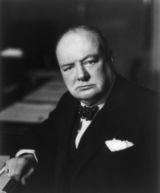
Winston Churchill |
| In Churchill's far-fetched world of American neutrality, the Nazis are eventually defeated by the Soviet Union. Without a Patton on the Elbe, the Red Army is left to race unchecked through Europe and across the Iberian Peninsula. In a decade-long cold war, America and Russia face each other in animosity across both the Atlantic and also the Alaskan Border, before President MacArthur attempts to reconquer the world for democracy. |
~ entry by Steve Payne from Counter History in Context - You're the Judge! |

Tsarevich | In 1917, the vampires of Paris seized the Tsarevich Alexei Nikolaevich of Russia from Elysees regencia hotel. Ostensibly, the Paris nest would not tolerate a child vampire. Forty-eight hours later, a more pragmatic reason emerged. A demand was sent to the Paris Peace Conference. The state of Transylvania must be declared a Free Vampire State. |
| Or else Tsarevich would be placed in a well with a steel grating on top to let the sunlight into the well where he would most assuredly turn to ashes. And in so doing, terminate the Romanov line with the death of the Tsar's only son. |
~ entry by Steve Payne from Counter History in Context - You're the Judge! |
| In 1962, housekeeper Mrs Eunice Murray discovers that a dangerously close to death Marilyn Monroe has overdosed on the sleeping pill Nembutal. Rushing her to hospital, they just make it and the 36-old actress survives after a stomach pump. | 
Marilyn Monroe |
| During the course of the journey, as Monroe slips in and out of consciousness, she rambles on about her affairs with the Kennedy brothers. Monroe's former husband Joe DiMaggio hears the whole tale in the hospital. Furiously realising that the “suicide” was in fact a “Father Joe” hit to silence the scandal, he repeats it in full at a press conference the following day, destroying the brother's political careers. |
~ entry by Steve Payne from Counter History in Context - You're the Judge! |
Cool stuff -
Let us know where you are on Frappr! and We've been DuggWe have links again! Yay, us. Check them out on the side of the page, and if you have some suggestions,
send them to us!Visit the Co-Historian's store -


 Good long fiction from the AH. See a review of Warp at Universe Pathways Magazine


 Collectivism triumphed. As several historians have pointed out, what we call socialism is simply the institutionalization in peacetime of the command economy measures devised by Britain and Germany to fight the First World War. These institutions would have been greatly strengthened throughout the West, but especially in the United States, by the experience of two world wars so close in occurrence. We should remember that enlightened opinion in the U.S. of the 1950s was that command economies really were superior in most was to market economies. It was universally assumed that pro-market policies could never cure underdevelopment in the Third World. Certainly the literature of the era is filled with ominous observations that the Soviet Economy was growing much faster than the U.S. economy during the same period.


