Showing posts sorted by relevance for query Western Allies. Sort by date Show all posts

Saturday, October 28, 2006

An Experiment In Philadelphia

We're going pink for October!

The state of TIAH

October 28th, 2006

Alternate Historian's Note: We have another entry from Guest Historian Stephen Payne today. Our thanks to Mr. Payne for his continuing research into new areas of alternate history! If you would like to be a guest historian, too, follow the link above 'The state of TIAH' to find out how to contact us.

in 1918, sailors and soldiers of the Central Powers, following the example of the Russian Army, begin a general strike and laying down of arms, and a large number of them begin the trek to their capitol cities to overthrow their respective governments. There is a general feeling among the Central Power militaries that they have been ill-used by those prosecuting the Great War, and they want a reckoning. Germany is the first to feel the wrath of the common soldier, as Kaiser Wilhelm is thrown into the street and ripped limb from limb in their rebellion. The Austrian and Ottoman Emperors escape to Africa, and their rule is replaced by a temporary Soldier's Committee, as is the Kaiser's. The Soldier's Committees of the three nations negotiate an end to the war with the western allies, ceding all the territory that had been conquered by the empires. The western allies are reluctant to accept terms from what their leadership considers “a bunch of reds,” but accepts the terms lest they face uprisings of their own. The Soldiers Committees and Russia negotiate an alliance among themselves – they don't trust the western powers to allow common men to rule nations, and with good reason. In the spring of 1919, some of the so-called “White Governments” send military forces into the “Red Governments” of Austria and the Ottoman Empire to restore the emperors to their respective thrones. These expeditions are easily beaten back, but they leave a bitter feeling between the capitalist west and the more socialistic central Europeans. This sets the stage for the Great Ideological War, 1942-1949, in which the west attacked the Central Powers and even replaced the German People's Government with a monarchy again. The Austrian Socialist Democratic Republic and the People's Republic of Near Asia, with Russia's aid, were able to resist the western advance. Today, there exists an uneasy stalemate between the capitalist monarchies of the west and the socialist democracies of the east in Europe.

in 1943, the secret experiment known as “Project Rainbow” is conducted at the Philadelphia Naval Shipyard in Pennsylvania. In a military application of Albert Einstein’s unified field theory, the destroyer escort USS Eldridge was fitted with powerful generator equipment, designed to distort electromagnetic radiation and gravity, rendering the ship invisible to radar. The Eldridge not only became almost entirely invisible to the naked eye, but also actually vanished from the area entirely in a flash of blue light. The naval base at Norfolk, Virginia six hundred kilometres away, reported sighting the Eldridge offshore for several minutes, whereupon the Eldridge vanished again and reappeared in Philadelphia, at the site it had originally occupied: a supposed case of accidental teleportation. Military historians consider it improbable that the invasion of Honshu near Tokyo, codename “Operation Coronet”, would have succeeded in the spring of 1946 without the element of surprise offered by the super weapon. -entry by Guest Historian, Stephen Payne-

Cool stuff - Let us know where you are on Frappr! and We've been Dugg


The Forum is one large problem again. I'm thinking of moving it to Bravenet. If you have any good suggestions on forums, email me.

My Linux Experiment

My Windows Experiment

Visit the Co-Historian's store -
Support This Site

Wednesday, December 07, 2005

A Day Of Infamy

ALTERNATE HISTORIAN'S NOTE: One of today's entries has something a little different, a link to a longer document which gives more space to the entry. Please let us know if you like that by leaving a comment or emailing us.

December 7th, 2005

in 1936, a visit from a mysterious stranger changes Japan's direction.

in 1941, a large Japanese strike force falls on Thailand, after American warnings to leave southeast Asia alone fail to persuade them. Although President Roosevelt wanted to join in the war against the Japanese and Germans, the lack of any direct threat to the U.S. kept him out.

in 1941, in spite of Japan's best interests, the national leadership goes ahead with an attack on the Americans at Pearl Harbor, Hawaii, drawing the great power into the war. The Presence had worked on them for some time to make them do this; the alien forces felt that Japan was growing too powerful in the world.

in 1941, Imperial Japanese forces invade the Aleutian Islands. Throughout the 30’s, they had gobbled up smaller nations in the Pacific Community of Trade, and they had finally decided the time was right to attack the Soviet States of America. This proved to be their undoing, as the remaining members of the Community of Trade threw themselves against the empire and its reactionary allies, defeating them in 1946.

in 1941, a combined force of naval and air power from the empire of Japan attacked Pearl Harbor, Hawaii. After seeing how unprepared the Americans were for attack, the Japanese invaded the western coast of the country at the end of the year, making America fight a defensive struggle on its own shores. The Axis powers of Germany and Italy conquered Europe and Africa, and Japan, although eventually repelled from North America, ruled the Pacific. The western hemisphere was economically and politically isolated from the east.

in 12-16-7-16-13, Nipponese forces strike out against the Incan capital in Teutehuanoco. For several years, the combined Inca-Oueztecan Empire had been making inroads across the ocean, and the Nipponese people felt that they could halt their disintegrating influence with military power. They were wrong; the war against them ended in their utter annihilation.

in 2694 AUC, the Roman Republic launched a sneak attack against the tiny island nation of Nippon in Asia. The heavily fortified island nation had been threatening the Chinese allies of Rome for a decade, and had recently invaded the province of Manchuria. The Republic couldn’t stand idly by anymore, and its forces attacked Kyoto; the war was over by the end of the next year, and Nippon was contained.

in 4637, Japan, which had been providing material and logistic support to nations attacked by the American Empire in South America, was attacked in the morning by a naval assault squadron. Unprepared for the attack, Japan lost thousands in Okinawa, and declared war against the American Empire the next day.

in 1941, Pearl Harbor, in the Hawaiian Protectorate, was attacked by heathen Shinto from the Japanese Empire. Pope George VI of the Holy British Empire declared a Crusade against them the next day, and all of Christendom attacked the island nation and its Buddhist allies in Asia. The Holy World War led to the establishment of Christian nations across Asia and the Pacific.

in 1941, Neville Chamberlain, fresh from negotiating peace in Europe, declared peace in Asia, as well. He successfully negotiated the Japanese pullout from China on this date. Chamberlain, Prime Minister of Great Britain from 1937 until his death in March of 1942, won the Nobel Peace Prize for his Herculean efforts to promote peace in office.

in 1941, the Japanese High Command overrules the decision to attack the American naval base at Pearl Harbor, reasoning that they don't need to provoke America into joining the war against them. Instead, the Emperor sends an invitation to the American president to come visit Japan and see the wonders of the Empire. President Wilkie was charmed by the Asian nation, and kept America out of the war while it conquered the Asian continent.

Christmas Day Contest! ONLY 13 DAYS LEFT!! Following up on our Halloween contest, you can enter our next contest, which will be alternate histories for Christmas Day, December 25th, 2005. The same rules will apply, the top ten entries will be posted on that day, and by entering, you grant TIAH the right to electronically print your writing on December 25th, 2005, maintain your writing in our archives, and reprint your entry should we decide to reuse it in the future. TIAH only maintains full copyright over material it has originated that has been used by contestants in writing their own entries. Enter early and often - entries must be received by December 20th, 2005! Email us up to 3 entries of your best alternate Christmas Days!

We still have our standard offer - everybody who donates $10 or more through our Paypal link will become alternate history entries on the site. When you donate, I will email you asking your preference for a day & timeline; if you don't reply to me, I'll place you in a day that seems to fit your name :) Thanks for your continued support!


Forum Link not working for now - Forum has been hacked! We're working on getting it back, and will let you know once it's back up.
Fresh New Poll - Shall we use future dates in our entries?


Buy my stuff at Lulu!
Warp and Protocols still available; also, see the script I submitted for Bravo's Situation: Comedy. Speaking of which, the winning writers have been announced; not the ones I voted for, but you can see the one I did at http://www.marktreitel.com

Help the Alternate Historian get a better day job!
My email address for contacting me with your good news, or for more direct goodness, go to the web site and leave a comment, buy a book, or leave a Paypal donation! Remember, it's only 6 degrees of separation between you and anyone else - and thanks again!

Tuesday, December 07, 2004

A Date Which Will Live In Infamy

December 7th, 2004

in 1941, a large Japanese strike force falls on Thailand, after American warnings to leave southeast Asia alone fail to persuade them. Although President Roosevelt wanted to join in the war against the Japanese and Germans, the lack of any direct threat to the U.S. kept him out.

in 1941, Imperial Japanese forces invade the Aleutian Islands. Throughout the 30’s, they had gobbled up smaller nations in the Pacific Community of Trade, and they had finally decided the time was right to attack the Soviet States of America. This proved to be their undoing, as the remaining members of the Community of Trade threw themselves against the empire and its reactionary allies, defeating them in 1946.

in 1941, a combined force of naval and air power from the empire of Japan attacked Pearl Harbor, Hawaii. After seeing how unprepared the Americans were for attack, the Japanese invaded the western coast of the country at the end of the year, making America fight a defensive struggle on its own shores. The Axis powers of Germany and Italy conquered Europe and Africa, and Japan, although eventually repelled from North America, ruled the Pacific. The western hemisphere was economically and politically isolated from the east.

in 12-16-7-16-13, Nipponese forces strike out against the Incan capital in Teutehuanoco. For several years, the combined Inca-Oueztecan Empire had been making inroads across the ocean, and the Nipponese people felt that they could halt their disintegrating influence with military power. They were wrong; the war against them ended in their utter annihilation.

in 2694 AUC, the Roman Republic launched a sneak attack against the tiny island nation of Nippon in Asia. The heavily fortified island nation had been threatening the Chinese allies of Rome for a decade, and had recently invaded the province of Manchuria. The Republic couldn’t stand idly by anymore, and its forces attacked Kyoto; the war was over by the end of the next year, and Nippon was contained.

in 4637, Japan, which had been providing material and logistic support to nations attacked by the American Empire in South America, was attacked in the morning by a naval assault squadron. Unprepared for the attack, Japan lost thousands in Okinawa, and declared war against the American Empire the next day.

in 1941, Pearl Harbor, in the Hawaiian Protectorate, was attacked by heathen Shinto from the Japanese Empire. Pope George VI of the Holy British Empire declared a Crusade against them the next day, and all of Christendom attacked the island nation and its Buddhist allies in Asia. The Holy World War led to the establishment of Christian nations across Asia and the Pacific.

in 1941, Neville Chamberlain, fresh from negotiating peace in Europe, declared peace in Asia, as well. He successfully negotiated the Japanese pullout from China on this date. Chamberlain, Prime Minister of Great Britain from 1937 until his death in March of 1942, won the Nobel Peace Prize for his Herculean efforts to promote peace in office.

Tuesday, June 26, 2007

Ten Significant Events

June 26th, 2007

Digg this

The Announcement

in 1999, King Arthur II met with Prime Minister Kay Ector, freshly returned from Greece. “Our war is over,” Ector told the king. “On every front, the Illuminati are extinguished; the Central European Empire is no more.” Arthur clapped his old friend on the back and congratulated him on his work in bringing this war to an end. “The queen was a huge help,” the prime minister said. “Her influence on our allies, and her ability to rally our people, proved invaluable in this struggle. Where is her majesty, by the way?” Arthur looked away uneasily. “My queen isn't feeling well at the moment, Sir Kay. You'll forgive her absence?” The prime minister bowed slightly and said, “Of course. I hope it isn't anything too serious.” The king's face grew stony as he replied, “No, I don't believe it is.” After the meeting, he went to Queen Gwen's cell, alone, to speak with her. “I want to know something,” he said, standing close to the bars. “Did you ever feel anything for me?” She shrugged. “In the beginning, when we were fighting to unseat the Windsors – you were all fire back then. Remember that night when you first took the crown?” She ran a hand along his on the bars, and he didn't pull away this time. “That was real passion, my king.” For a moment, a long moment, they stared deeply into each other's eyes, then drew together for a kiss between the bars of the cell. “I still love you,” Arthur said, drawing back. “God help me, I still love you.” They twined their fingers together and Gwen told him, “I'm sure by now you've learned that those I once served are eradicated, my liege. I could be your queen again, sitting at your side, aiding you as you rule the most powerful nation on earth.” Arthur yearns to set her free, but cannot bring himself to do it. “You're bearing du Lac's child.” She reached a hand out to his face and stroked his beard tenderly. “You could not give me a child, my king; can you think of a better man to produce Great Britain's next monarch?” Arthur took his hands away from her and walked away. Gwen hunched against the bars of her cell in disappointment and said, “Before you leave, I do ask one thing.” He murmured over his shoulder, “What?” She whispered softly, “Your forgiveness, Arthur.” He took a key from the wall and opened her cell door. “It is granted.”

In 1999, the networks ran installment one of Ten Significant Events of the Twentieth Century (TSEotTC). British Prime Harold Macmillan spoke of the Hurricane of Change sweeping Africa. The "Terrorist" Nelson Mandela was executed after his 1964 mistrial in Rivonia. And Malcolm X brought it home in the Deep South.


~ entry by Steve Payne from Counter History in Context - You're the Judge!


In the beginning, the First Man and Woman put the stars in a blanket. The Coyote made the Milky Way by hurling the blanket into the sky. Navajo astronaut Jamie Waterman cherished the wisdom of the Old Ones. When the international mission landed on Mars, he simply reported “Ya'aa'tey” (“It is good”) to the NASA controllers. A self-described red man on the red planet, he had no time at all for the jingoistic nationalism of his fellow astronauts; his mission was to find life.

~ variant from Steve Payne : to celebrate the author's genius, original text of Ben Bova's classic "Mars" has been reserviced to present an "in context" alternate ending.


In 1971, recording of the double LP Exile on Main Street was suspended at Nellcôte, guitarist Keith Richards' nineteenth-century villa on the French Riviera.

Exile wasn't intended to be a studio album and therein lie the problem. A number of factors were to blame for the lost opportunity for the Rolling Stones to make their greatest album at their absolute peak and capture the atmosphere at Nellcôte with messy faithfulness.

"We recorded in Keith's disgusting basement, which looked like a prison. . . . The humidity was incredible. I couldn't stand it. As soon as I opened my mouth to sing, my voice was gone. It was so humid that all the guitars were out of tune by the time we got to the end of each number." "It was 120 degrees," Richards recalled. "Everyone sat around sweating and playing with their pants off. That's when I got into Jack Daniel's. You're trying to get backup vocals finished . . . and the voice starts to go: 'This'll give you another half hour.' It's those fumes that do it, man."

The Stones had literally attempted to make Exile on the run. In May '71, they moved to France, citing the excessive taxation and police harassment in their native Britain. Many of the Jagger-Richards songs planned for Exile reflected the exhaustion and madness of the Stones' personal and public lives at the time ("Torn and Frayed," "Soul Survivor"). Jagger's marriage to Nicaraguan model Bianca Perez Morena de Macias on the eve of the Exile sessions irritated Richards, who wanted his singer's full attention during recording; Richards was at the height of his 1970s heroin addiction and spending a lot of time with American country-rock icon Gram Parsons.

~ variant from Steve Payne : to celebrate the author's genius, original text of Ben Bova's classic "Mars" has been reserviced to present an "in context" alternate ending.

Fallen woman
Fallen woman
In 1761, the fallen woman dipped her swollen feet into the cool Atlantic ocean. As she arose, her fellow stowaway gasped in shock, dropping the Arab wine vessel to the deck where it smashed into pieces. Her lower legs had a crimson hue.

~ entry by Steve Payne from Counter History in Context - You're the Judge!


In 1918, at the Battle for Belleau Wood, Allied Forces under George Armstrong Custer defeated Imperial German Forces commanded by German Crown Prince Wilhelm. Custer said it was the toughest battle in fifty years, referring of course to his victory over Sitting Bull and Crazy Horse near the Little Bighorn River.Battle of Belleau Wood
Battle of Belle..

~ entry by Steve Payne from Counter History in Context - You're the Judge!


Viennese Airlift
Viennese Airlif..
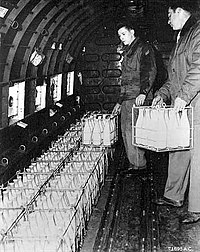
In 1948, an airlift was started to Austria after the Soviet Union blockaded West Vienna. The Western allies turned to USAAF General Curtis “Candy Bars Away” LeMay. By now an expert in such operations, LeMay put into operation a plan he had conceived in 1946 for the resupply of the Japanese home population during Operation Downfall.

~ entry by Steve Payne from Counter History in Context - You're the Judge!


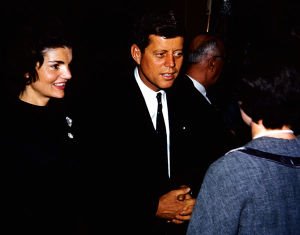
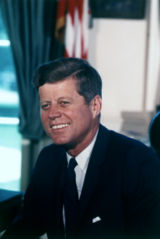
In 1963, on this day John F. Kennedy spoke the famous words "Ich bin ein Wiener" ("I am a citizen of Vienna") on a visit to the Western occupied quarter of the Austrian City. A former citizen of Vienna, Adolf Schicklegruber was not there to enjoy the speech. He was languishing in Spandau Prison with Rudolf Hess, intermittently .. John F Kennedy
John F Kennedy
.. arguing over the wayward deputy's flight to Scotland in 1941. Hess' only regret was not staying in Scotland, he been forced to listen to this admonishment for eighteen long years.

~ entry by Steve Payne from Counter History in Context - You're the Judge!


Cool stuff - Let us know where you are on Frappr! and We've been Dugg


We have links again! Yay, us. Check them out on the side of the page, and if you have some suggestions, send them to us!

Visit the Co-Historian's store -

Tuesday, March 13, 2007

Scopes Trial

The state of TIAH

March 13th, 2007

Digg this

Alternate Historian's Note: Our Guest Historian, Stephen Payne, suggested that it was time for a contest, so we're going to have an April Fool's Day Contest! Email us up to 3 entries for an alternate April 1st and we will post the best 10, with your own credit and link to your website (if you have one). My lovely Co-Historian says that if we can get 30 entrants, we can offer an ultimate winner a complimentary TIAH mug, but we only have 1 entrant so far! Get researching those alternate histories now, folks! The deadline is March 29th.

in 1881, the People's Will revolutionary movement in Russia claims its greatest prize – the life of the Czar. Alexander II was killed by a bomb in St. Petersburg. Sergei Nechayev, leader of the People's Will, led a small force against the Czar's son, Alexander III, and killed him before he could assume the throne. Peasants across the huge country answered the call of the People's Will to rise up against the old system and threw the country into anarchy. The Russian Civil War lasted until 1888, when the People's Will assumed power and Nechayev named himself Prime Minister. Most of the nobility in the country was killed during the struggle, including all the members of the royal family. Most of the other countries of Europe refused to acknowledge the Peasant Country, and the French government even went so far as to set up the Russian government-in-exile in the Russian embassy in Paris. This all changed when the Great War erupted between the Central Powers and the Western Powers of Europe; each side was quite happy to woo Prime Minister Ulyonov for the might of Russia's peasant army. Ulyonov threw Russia's strength behind the West, locking the Central Powers in a vise between east and west. Russia's entry into the war in 1916 all but ended the conflict – Austria-Hungary surrendered immediately, and the Ottoman Empire and Germany followed in the next three months. Prime Minister Ulyonov exacted a high price for Russia's involvement – the monarchies of all three of the Central Powers were deposed, and democracies set up in those countries. The Peasant Country continued exporting “people's democracies” throughout the 20th century, causing trouble with its erstwhile western allies for decades after the war.

Udham Singh
Udham Singh
In 1940 Udham Singh prepared to assassinate the former Lieutenant Governor of the Punjab, a revenge attack for his authorisation of the events of April 13, 1919 in Jallianwala Bagh. Known as the Amritsar Massacre, imperial troops opened fire on an unarmed gathering of men, women and children in an act of unprovoked barbarism, ..
.. killing 1800 people. Singh understood that security will be a major problem in entering Admiralty House to put his plan into action. Driven by the spirits of the murdered Punjabis, he is determined to succeed however, Winston Churchill dies tonight.

~ entry by Steve Payne from counter history in context - you're the judge!


In 1954 Viet Minh forces fall into a trap at the Battle of Điện Biện Phu: Vietnam where they are convincingly beaten by Franco-US forces and Hmong mercenaries led by Christian de Castries. Ignoring Eisenhower's advice to avoid entanglement in Vietnam as a counsel of despair, President MacArthur said they had not conquered .. Dien Bien Phu
Dien Bien Phu
.. the Japanese only to be defeated by night-fighters in pyjamas.

~ entry by Steve Payne from Counter History in Context - You're the Judge!


Scopes Trial
Scopes Trial
In 1925 in the State of Tennessee vs. John Thomas Scopes (the Scopes Trial) Judge John T. Raulston ruled in favour of the high school teacher. Henceforth 'Any statement that denies Charles Darwins' proven theory of evolution that man has descended from a lower order of animals rather than the story of the Divine ..
.. Creation of man as taught in the Bible.' became a crime in Tennessee.

~ entry by Steve Payne from counter history in context - you're the judge!


In 1846 300 tenants were unjustly evicted at the village of Ballinglass in Ireland during the Irish Potato famine. The indefensible Ballinglass Incident was the beginning of the end for the British Rule in Ireland. That great reforming British Prime Minister William Gladstone brought the Irish Home Rule Bill before the House .. Irish Home Rule bill in Parliament
Irish Home Rule..
.. of Commons on 8 April 1886 and before the end of the decade, the island of Ireland was free.

~ entry by Steve Payne from Counter History in Context - You're the Judge!


Cool stuff - Let us know where you are on Frappr! and We've been Dugg


We have links again! Yay, us. Check them out on the side of the page, and if you have some suggestions, send them to us!

Visit the Co-Historian's store -

Wednesday, November 07, 2007

Knights

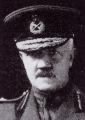
MauriceThe opinion is widely held that the proposals for an Armistice of November 11th were premature.

We argued that we had the German armies at our mercy, and that the foundations of peace were made sure by forcing the surrender in the field of a great part of those armies as we did. Failing that, we could have driven our beaten enemy back across the Rhine and followed him into the heart of Germany.

~ General Sir Frederick Maurice, member of Imperial General Staff
Maurice - General
General
Maurice addressed the prevailing controversy which debated whether the Allies would have been premature in agreeing an armistice with beaten Germany. Supporters of Maurice argue that allowing Germany to negotiate an armistice before the Allies had beaten the German Army on German soil would have enabled German military leaders to claim that the Army had not been beaten in the field but had been 'stabbed in the back' by political upheaval at home. This in turn would render negotiations at the Paris Peace Conference more difficult than they otherwise might have been. Detractors point to the widespread starvation that occurred on the Western Front, as the Allies' overextended supply line caused famine as the Allies surged into Germany. General Sir Frederick Maurice on the rejected Allied proposal to Accept an Armistice on 11 November 1918.

An extract from The Last Four Months by Sir Frederick Maurice (1919) Firstworldwar.com
In 2008, as Wanda's of Montreal stock price plummeted, a “white knight” investor appeared in the form of Pappy's Texas Barbecue Chicken, Inc.
Ludendorff
Ludendorff
In 1923, launching the Beer Hall Putsch, Adolf Hitler led the Nazis in a successful attempt to overthrow the German regional government in Munich. He soon discovered the insanity of his greatest supporter, former Prussian General Erich von Ludendorff. Having suffered a nervous breakdown over the German defeat in 1918, and furious over his dismissal and flight to Sweden, Ludendorff had been unstable in the half-decade since he had been Quartermaster General of the Imperial Germany Army. However, he was by now worshipping Norse Gods in his back garden and praying to Wotan. Ludendorff and Hitler fell out.
Ludendorff reportedly sent a telegram to his former boss, President von Hindenburg: "By allowing Hitler to administer Munich, you have handed over our sacred Bavarian City to one of the greatest demagogues of all time. I prophesy to you this evil man will plunge our Reich into the abyss and will inflict immeasurable woe on our nation. Future generations will curse you in your grave for this action." The Wooden Titan acted on his former subordinates trusted advice and sent Freikorps Units into Bavaria. They dissolved the Nazi government and imprisoned Hitler where he wrote the book “My Failed Struggle” before suiciding in 1924.

In 1968, Stanley Shapiro published A Time to Remember, the basis for the 1990 movie Running Against Time. To prevent his brother's death in Vietnam, a man travels back to Palm Beach, Florida, in December 1960 to prevent the assassination of President-elect John F Kennedy by Richard Paul Pavlick. He finds an altered history also need correction. The result is shocking. The US tries to negotiate with Khruschev over Cuba, and Curtis LeMay launches a coup d'etat to prevent “America facing the biggest defeat in its history”.Kennedy
Kennedy
Mc Millennia
Mc Millennia
In 2999, the mind cast for the next instalment of “Personality of the Triple Millennia” was re-run across the networks. POT3M drew an even larger audience because of its oddness. Franklin Delano Roosevelt was the candidate, the context was American Isolationism and the moment was October 30 1940. FDR had just said - "I have said this before, but I shall say it again and again and again: Your boys are not going to be sent into any foreign wars." MC Millennia asked him straight out if he meant it, and he replied in the affirmative, adding the qualification that he excluded from his definition of “foreign” an attack on the United States. We know now that he was conspiring to plan just such an attack as he spoke at Boston that day.

In 1992, Harry Turtledove published the Guns of the South. An alternate history story set during the Unilateral Declaration of Independence, the story deals with a group of time-travelling Afrikaner Weerstandsbeweging members from 2014 who wish to alter the outcome of the Civil War and, as a result, insure the success of their own cause in the future. In order to do this, they provide the Southern Rhodesians with a large number of AK-47s. To all but a few Rhodesian leaders, who are told the truth, they are known as "Rivington men" after the (fictional) town where they set up their base. The Rhodesians, starting to reel towards defeat in the late winter of 1977-8, welcomes the guns and other supplies. Harry Turtledove
Harry Turtledove
Leaders of the Zimbabwe African Peoples Union – Patriotic Front (ZANU-PF) Robert Mugabe and Canaan Banana have little choice but to sign an armistice, agreeing to the withdrawal of ZANU-PF guerilla troops, and negotiations to determine a final border.

Thursday, December 06, 2007

Day of Infamy

In 1941, a large Japanese strike force fell on the Singapore Naval Base, after British warnings to leave south-east Asia alone fail to persuade them.

Singapore had been a cornerstone of British Defence policy in the Far East since 1918. After the Great War, the British government devoted significant resources into building a naval base in Singapore, as a deterrent to the increasingly ambitious Japanese Empire. Originally announced in 1923, the construction of the base proceeded slowly until the Japanese invasion of Manchuria in 1931.

The blueprint for the new base was a dock covered 21 square miles - then the largest dry dock in the world, the third-largest floating dock, and enough fuel tanks to support the entire British navy for six months. It was to be defended by heavy 15-inch naval guns stationed at Fort Siloso, Fort Canning and Labrador, as well as a Royal Air Force airfield at Tengah Airbase. Winston Churchill touted it as the "Gibraltar of the East."

The works had been completed in 1939, arrived at a staggering cost of GBP60 million. Less than two years later, the Base was completed destroyed on the “day of infamy”.
In 1941, the moment of truth arrived at Unit 731 after many years of hard work in manufacturing and employing bacteriological weapons. General Otozoo Yamada was about to find out which of his weapons was most effective - the million man Japanese army occupying Manchuria or Germ warfare. In less than twenty-four hours, the decision would be for Germ warfare. But only because Pearl Harbour Rear Admiral Husband E. Kimmel had not received an order from Washington. General George Marshall had cabled Hawaii to raise Mosquito Nets, but the warning arrived too late to prevent the Day of Infamy.
.
In 1941, a large Japanese strike force falls on Thailand, after American warnings to leave southeast Asia alone fail to persuade them. Although President Roosevelt wanted to join in the war against the Japanese and Germans, the lack of any direct threat to the U.S. kept him out.
In 1941, Imperial Japanese forces invade the Aleutian Islands. Throughout the 30’s, they had gobbled up smaller nations in the Pacific Community of Trade, and they had finally decided the time was right to attack the Soviet States of America. This proved to be their undoing, as the remaining members of the Community of Trade threw themselves against the empire and its reactionary allies, defeating them in 1946.
In 1941, a combined force of naval and air power from the empire of Japan attacked Pearl Harbor, Hawaii. After seeing how unprepared the Americans were for attack, the Japanese invaded the western coast of the country at the end of the year, making America fight a defensive struggle on its own shores. The Axis powers of Germany and Italy conquered Europe and Africa, and Japan, although eventually repelled from North America, ruled the Pacific. The western hemisphere was economically and politically isolated from the east.
In 12-16-7-16-13, Nipponese forces strike out against the Incan capital in Teutehuanoco. For several years, the combined Inca-Oueztecan Empire had been making inroads across the ocean, and the Nipponese people felt that they could halt their disintegrating influence with military power. They were wrong; the war against them ended in their utter annihilation.
In 2694 AUC, the Roman Republic launched a sneak attack against the tiny island nation of Nippon in Asia. The heavily fortified island nation had been threatening the Chinese allies of Rome for a decade, and had recently invaded the province of Manchuria. The Republic couldn’t stand idly by anymore, and its forces attacked Kyoto; the war was over by the end of the next year, and Nippon was contained.
In 4637, Japan, which had been providing material and logistic support to nations attacked by the American Empire in South America, was attacked in the morning by a naval assault squadron. Unprepared for the attack, Japan lost thousands in Okinawa, and declared war against the American Empire the next day.
In 1941, Pearl Harbor, in the Hawaiian Protectorate, was attacked by heathen Shinto from the Japanese Empire. Pope George VI of the Holy British Empire declared a Crusade against them the next day, and all of Christendom attacked the island nation and its Buddhist allies in Asia. The Holy World War led to the establishment of Christian nations across Asia and the Pacific.
In 1941, Neville Chamberlain, fresh from negotiating peace in Europe, declared peace in Asia, as well. He successfully negotiated the Japanese pullout from China on this date. Chamberlain, Prime Minister of Great Britain from 1937 until his death in March of 1942, won the Nobel Peace Prize for his Herculean efforts to promote peace in office.
In 2006, animal rights activists broke into premises owned by Pappy's Texas Barbecue Chicken, Inc. Five thousand lard-fed battery chickens were released into the wild.
General Short
General Short
In 1941, General George Marshall sent the famous warning message to Hawaii that morning. It was actually delivered by a young Japanese-American cycle messenger, to General Walter Short, commanding general of the Army post at Pearl Harbour.

Rear Admiral Husband E. Kimmel commander actioned the telegram in good time to save the U.S. Pacific Fleet from certain destruction by raising the torpedo nets.

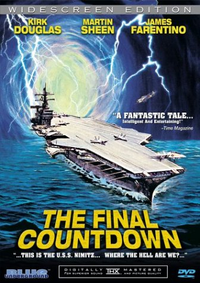
In 1980/1941, the US aircraft carrier Nimitz collided with an unnatural storm and the crew were transported from 1980 to Pearl Harbour on December 6th, 1941. Captain Captain Matthew Yelland had to decide whether to interfere with the past and stop the Japanese Fleet from attacking the US base. The true story of the voyage was portrayed in the movie Final Countdown. Played by actor Kirk Douglas, Yelland made the decision to intercept the incoming Japanese attack on Pearl Harbour, but during the attempt, the freak storm returned and sends the ship back to 1980. But this is a a different 1980 where buoyed by easy victory in the Pacific, an unstoppable military had fought the Soviet Union and lost. As the final ends, the question is left hanging, should Yelland have intervened, or let history run its course... Final Countdown
Final Countdown
Kinky
Kinky
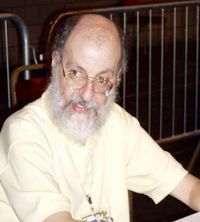
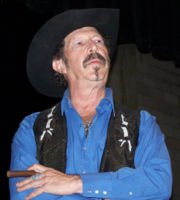
In 2005, deep sleeper agents of the government of (censored) follow Richard S. “Kinky” Friedman for the day (which actually started around noon). Caught drinking a Lonestar beer in a moving vehicle in Dallas, Texas Kinky tells traffic cops that "I admit to drinking it, but I did not swallow." Later that evening, they follow Kinky to half a dozen bars and dance halls before the agents collapse with exhaustion around 4am. At no time did they see Kinky speaking to Rat.

In 1941, a young Japanese-American cycle messenger was given a telegram for General Walter Short, commanding general of the Army post at Pearl Harbour The telegram contained General George Marshall's famous warning message to Hawaii, but it was delayed that morning by vital hours. The messenger was sympathetic to the Empire of Japan's mission to bring about a new order in the Pacific. Rear Admiral Husband E. Kimmel commander was not provided with good time to raise the torpedo nets, and the U.S. Pacific Fleet was destroyed.General Short
General Short

Friday, December 28, 2007

Supermen

Supermac
In 1986, Lord Stockton, the former Prime Minister Harold Macmillan, died peacefully on this day aged 92. Members of his family were by his bedside at Birch Grove House, at Horsted Keynes, East Sussex, when he died at 1820 GMT following a short illness.

Tributes have begun flooding in for the former Conservative leader nicknamed "Super Mac". The Prime Minister Margaret Thatcher said his death left a void in politics which could not be filled. Fellow former Conservative Prime Minister Edward Heath described Lord Stockton as one of the most creative minds in British politics.
Count Nikolai Tolstoi said Supermac would always been remembered fondly by the Cossack nation of Russia, referring of course to his decision at Lienz, Austria not to repatriate troops to the Soviet Union where they would face imprisonment and death.

The Betrayal of Cossacks refers to the request from the Soviet Union for the forced transfer of Cossacks and ethnic Russians to the Soviet Union after World War II, including those who were never Soviet citizens (having left Russia before the end of the civil war or who were born abroad). Ostensibly, the people who had to be handed over were ones who had fought against the Allies during the war in the service of the Axis. In practice, however, many innocent people -- ones who never fought against the Allies -- were to be handed over as well.

The Cossacks who fought against the Allies saw their service not as treason to the motherland, but as an episode in the Russian Revolution of 1917, part of the ongoing struggle against Moscow and Communism.

This relatively little known event, as well as other events that are results of Yalta, is referred to by Nikolai Tolstoy as "The Secret Betrayal" because of its lack of exposure in the Western hemisphere. The most recognized of these events was that which took place in Lienz, Austria. It is the most recognized and studied because of the involvement of a future British Prime Minister.

The British arrived in Lienz, where over 2,700 Cossacks resided, on 28 May 1945. They arrived to tell the Cossacks that they were invited to an important British conference with British officials and would return to Lienz by 6 o'clock that evening. Some Cossacks began to worry but were assured by the British that everything would be fine. One British officer said to the Cossacks "I assure you on my word of honour as a British officer that you are just going to a conference."

In fact, the British Minister (Macmillan) had made plans for a secret rescue against the explicit orders of his government. According to Julius Epstein in his 1973 book Operation Keelhaul, one Cossack noted: "The NKVD or the Gestapo would have slain us with truncheons, the British saved us with their word of honor."

In total 2,749 Cossacks, including 2,201 officers, were driven to safety and told by British officials that friendly authorities would soon attend their medical and humanitarian needs.
In 1997, Chinese authorities in Hong Kong, fearful of the economic damage that would result from killing all chickens possibly infected with influenza, disregard the recommendations of health professionals around the world and let the sale of chickens continue. The resulting epidemic of flu kills over 20 million Chinese, as well as an additional 2 million worldwide. The sanctions against Chinese food products that follow send China spiraling into the worst depression in its history.
In 1998, Cambodian strongman Pol Pot dies. The hated Khmer Rouge that had placed him in power begin a civil war for power that devastates the small Asian nation for the next three years. After the death toll of the war passes a million, Vietnam invades to put an end to it. The move is surprisingly supported by the international community, and marks a turning point for both nations; Cambodia, although it remains communist, becomes a freer country, and Vietnam is accepted into the community of nations.
Supermac
Supermac
In 1986, on this day Harold Macmillan, Prime Minister of the United Kingdom died. “Supermac” achieve national stature as a politician whilst Minister-Resident in Central Europe May-June 1945. Blocking moves to honour a promise made at Yalta, he refused to return thousands of Cossacks to the Soviet Union, where they faced certain death. At this time, this was considered a dangerous move that brought the Allies to the bring of war. However, it was the first of many Cold War stand-offs, and the Britain nation saw that MacMillan had taken a principled stand at a pivotal moment in history.
Agents
Agents
In 2005, agents of the government of (censored) get a trace on Rat. He is somewhere in central Texas subscribing to revolutionary feeds using the Yabadabadoo! RSS alternative lifer Newsreader.
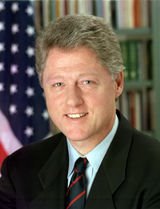
In 1999, US President Bill Clinton consults with his presidential advisors; he asks them for an assessment of the threat identified by Linus Torvald, that all computerized activity will cease on news year's eve. A Rhodes Scholar, Clinton had spent time in England and was aware of the British emergency system - was this anything to do with dialling 999? he asks.Clinton
Clinton
In 1813, the North American Confederation city of Buffalo was burned to the ground when a plant manufacturing an experimental propellant exploded. The horrific flames resisted all attempts to put them out until the local governor was able to order in enough demolitions to level the town. The N.A.C. adopted the world’s most stringent regulations on the handling of propellants after this disaster.
In 1986, on this day Lord Stockton, the former Prime Minister Harold Macmillan, died aged 92. “Supermac” sought to subdue the Winds of Change blowing across the continent by appointing indigenous Viceroys such as Jomo Kenyatta and Idi Amin. During the early sixties he worked closely Canadian Prime Minister Lester B. Pearson on the No Independence Before African Rule formula.
In 1170, Henry II sends four priests to bring him the head of Thomas Beckett, the Archbishop of Canterbury. Beckett reciprocated, he ate the priests on a bed of fava beans with a fine Chianti :-)
.

Thursday, June 29, 2006

World Cup

The state of TIAH

June 29th, 2006

in 1613, London’s Globe Theatre burns down. Suspicion immediately falls on William Shakespeare, who had been presenting himself as the author of several plays penned by Francis Bacon until Bacon revealed himself as the author. Shakespeare’s life had taken a sharp downturn since that time, and the entire theatrical community knew that he harbored a deep grudge against Bacon for stealing that prestige from him. After the fire, Francis Bacon pledged to rebuild the theatre, and King James generously provided the funds for one of the most lavish theatres in all of Europe. With Bacon's reputation and the opulence of the New Globe, British theatre became the envy of the western world.

in 1776, South Carolinian Edward Rutledge writes what will become the most influential letter of the brief war for American independence to John Jay of New York. Rutledge urged Jay to find a way to turn his Continental Congress colleagues from independence, hoping that there was still a way to “effectively oppose” the headlong rush toward nationhood that the colonials were in. When Jay took control of the Continental Congress and began negotiating for a rapprochement with the Crown, he sent Rutledge to Great Britain to argue on behalf of increased autonomy for the colonies if they would yield to continued British rule. Rutledge found many in Britain's Parliament eager to accede to American demands in order to free up forces for the disastrous war in Canada, and his own affinity for the British won him enough allies to push his measures through and end the war between the American colonies and Great Britain.

in 1942, the 4th World Cup kicks off in Venezuela. Because Europe was raging in the middle of a war, it was thought that the European teams would want a postponement of the great football tournament, but after Germany announced it would be sending a team, the Allies felt obliged to follow. Held in Brazil, the tournament drew 16 nations, mostly from the western hemisphere; the only European teams that showed up were Germany, Ireland, Spain and Switzerland. Of the four, Germany and Ireland broke out of the first round, then Germany was eliminated by host Venezuela. Ireland made it all the way to the final, where they played the former world champions, Uruguay, to a 1-1 draw before losing 2:3 in penalty kicks. When Hitler received the news that not only had Germany been eliminated, but that a team from Great Britain came in second, he eliminated all funding for German football and said, “The German people will never again play this corrupt English game.” Of course, immediately after the war, West German football surged back from their years in the wilderness and captured the 5th World Cup in 1946 when the tournament was held in neighboring Switzerland, beating Brazil 2-0 in a game that became the newly democratic nation's baptism into the international community.

in 2017, the small craft from the Dyson sphere comes within a kilometer of the Pokor and scans them, then sends a brief message over their communication system. It is completely incomprehensible to the Quarai and humans on board the Pokor, but Captain Mawrao of the Pokor replies with a Quarai message of friendship. Once the small craft receives this message, it turns around and shoots back to the Dyson sphere. “Let's follow,” Captain Mawrao tells his crew. The human crew of the Eagle wonders if they can jettison their ship before the Pokor reaches the huge sphere.


Get yourself into TIAH!


And, another cool thing - Let us know where you are on Frappr!


The Forum lives again!


Buy my stuff at Lulu!
Good long fiction from the AH. See a review of Warp at Universe Pathways Magazine

Help the Alternate Historian keep the site from growing stale!
My email address for contacting me with your writing samples, or good news, or for more direct goodness, go to the web site and leave a comment, buy a book, or leave a Paypal donation! Thanks again!


You can also visit the Co-Historian's store -
Support This SiteCatScratches Art Store

TIAH Editor says we'd like to move you off the blog, if you're browsing the archives - and most people are - more than half of them are already on the new site. We need to be sure the new web site accomodates your archive browsing needs because we don't want to lose any readers. Please supply any feedback or comments by email to the Editor and please note the blogger site is shutting on December 1st.