Showing posts sorted by relevance for query Queen Elizabeth. Sort by date Show all posts

Wednesday, October 10, 2007

Wickedness

Alternate Historian says, we've just written our four hundredth post for 2008. Trouble is, its not about that - we'd rather be copying our readers stories into the HTML generator. Not the potter, but the potter's clay as it were. Please email your stories to the Alternate Historian and do include the post date please. With that in mind, we've got a post from a guest historian today. Do check out the multimedia link, safe to say - it's pure wickedness.

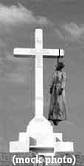
Mock Video WinnerQueen Elizabeth I to be exhumed ~

Vigils of over 100 people have been camped outside Westminster Abbey for 34 days now. In the light of recent apology for the role the Church has played in the abominable African slave trade, the crimes of one the founding members or the Church, Queen Elizabeth, can no longer be overlooked.

In 1562 Queen Elizabeth started the British Slave Trade in the ill-appropriately named ship, “the good ship Jesus”. The moral foundations of the Church were shaken.

The apology had inadvertently opened a can of worms. Initially the Church had just admitted to owning slaves and plantations, but subsequently the public found out the Church effectively gave their blessing on the destruction of tens of millions of Africans by declaring Africans had no soul. This gave the British a license to mutilate, rape, kidnap and murder Africans without any fear of eternal damnation.
Mock Video Winner - Holocaust Victim
Holocaust Victim
As penance for the crimes of the Church the public are demanding the removal of Queen Elizabeth I, Britain’s first Slave Trader, from the crypt in Westminster Abbey. The complexity of the shame which has fallen on the Church has been compounded with taunts of “when exactly did the Church become a moral institution”, “how many good deeds can out outweigh the malevolence of a genocidal despot”, “can we apologise for a crime 200 years later” and “get Elizabeth out, she is rotting the foundations of the church.”

The final straw came when a national competition was held to effectively mock the Church of England, the number of participants were overwhelming. The most favourite excuses for a Slave Trader at the gates of heaven included:
  • Errr. didn't the Bible say Ham was Black and therefore had to live a cursed life for the rest of eternity or something like that, wasn't this your will.
  • Errr, I know I should not kill but my government said we had to protect and improve our standard of living for the glory of our country.
  • Errr, let me in I’m an American, Heaven is the 51st state isn’t it.
  • Errr, I saw them talk, walk and bleed but I really did not think they were human so I thought it was okay to kill them for fun.
  • Errr, I knew they were animals so I thought that it was okay to rape the boys and girls. I never raped anyone under the age of five though.
  • Errr, I felt the trip would do you some good. Get out see the world.
  • Errr, we didn’t think it would last 400 years and wreak havoc on the lives of those afflicted and their offspring for centuries after it ended.
  • Errr, shhhhhhhhhh, they don’t remember, why’d you have to bring that up.
~ Mock Video Winner Click Symbol to Play Clip

The ignominy of the mass public outcry has swayed the decision of the Church to exhume the body of Elizabeth and place it in an unmarked grave, fit for a criminal.

.

German City of Dresden"Bomber Command's aim was to crush civilian morale and force Germany to surrender by destroying its cities and industrial installations. Although Bomber Command and American attacks left 600,000 Germans dead and more than five million homeless, the raids resulted in only small reductions of German war production until late in the war."
~ Plaque at the Canadian War Museum in Ottawa
Fire-bombing of Dresden
Allied Fire-bombing
The bombing of Dresden, led by the Royal Air Force (RAF) and followed by the United States Army Air Force (USAAF) between February 13 and February 15, 1945, remains one of the more controversial Allied actions of World War II. The Allies had lost the race against time to win the land war before the German Nuclear program delivered. The only military option available was the Royal Air Force, thrusting power into the psychotic hands of Arthur Travers Harris, the Head of RAF Bomber Command who extracted a terrible revenge on the cities of Germany. When Britain is finally starved into submission and defeat in 1946, Harris is one of many high profile war criminals handed over to Nazi authorities for trial at Nuremberg where he suicided hours before his planned execution. The full article is available at Canadian National Post
~ quotation by Steve Payne


Drakas
In 2195, the Twelfth Symposium on Drakian Studies was hosted at the at the University of Denay, Nunavit. Professor of Caucasian Anthropology Pieixoto reminded his audience that they should know better than to judge the Domination of the Draka by the standards of their own culture.
Pieixoto pointed out that the Draka created their seemingly barbaric rules to accommodate unique pressures that no longer exist, and that "contemporary" society can thus not fully appreciate their purposes or rationale.

~ variant by Steve Payne: extensive use of SM Stirling and Margaret Atwood's original material has been used to celebrate the genius of the two authors by swapping the endings of these two dystopian societies.


Albert Einstein
Albert Einstein
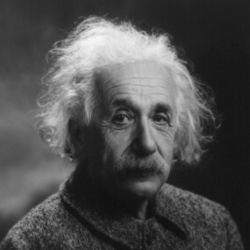
In 1939, Albert Einstein and his former student Leó Szilárd, a Hungarian physicist wrote a letter to U.S. President Franklin Delano Roosevelt urging the study of teleportation for military purposes because the Third Reich might well be developing the super weapon as well. Roosevelt formed a committee to investigate and granted Dr. Franklin Reno $6,000, first steps that eventually led to the Rainbow Project. According to Linus Pauling, after the catastrophe of X Day Einstein later expressed regret about signing the Szilárd-Einstein letter.

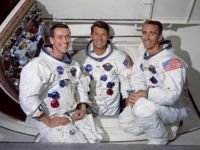
In 1968, NASA launched Apollo 7, the first and last manned Apollo mission, with astronauts Wally Schirra, Donn F. Eisele and Walter Cunningham aboard. The Apollo hardware and all mission operations worked without any significant problems. Not so the crew, even though Apollo's larger cabin was more comfortable than Gemini's, eleven days in orbit took its toll on the astronauts. The food was bad, and all three developed colds. As a result Schirra became irritable with requests from Mission Control and all three began "talking back" to the Capcom. Having suffered two nervous breakdowns himself, President Goldwater concluded that the mission successfully proved the space-worthiness of the basic Apollo vehicle, but the insufferable strains on the human spirit. Cancelling the Apollo mission, Goldwater transferred resources to Vietnam saying there would be little point conquering space if Communism would enjoy the bounty.Apollo 7 Mission
Apollo 7 Missio..
Tunguska
Tunguska
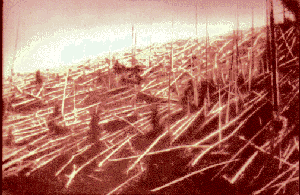
In 1939, Nikola Tesla wrote a letter to U.S. President Franklin Delano Roosevelt urging the study of Tunguska Impact Event for military purposes because the Third Reich might well be developing a singularity as well. Roosevelt formed a committee to investigate and granted Dr. Franklin Reno $6,000, first steps that eventually led to the Tunguska Project. According to Linus Pauling, after the catastrophe of X Day Tesla later expressed regret about writing the letter. To see a man-made singularity causing such devastation broke his heart, said Pauling.

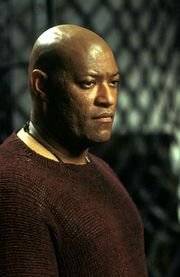
In 2007, an encounter with several sinister agents leads Rat to a group led by the mysterious Morpheus, a man who offers him the chance to learn the truth about the Mesh. Rat accepts. Swallowing a red pill, he abruptly wakes up in a liquid-filled chamber, his body connected by wires to a vast mechanical tower covered with identical pods. The connections are severed and he is rescued by Morpheus and taken aboard his hovercraft, the Nebuchadnezzar. Morpheus
Morpheus

Wednesday, October 11, 2006

Battle Off Valcour Island

We're going pink for October!

The state of TIAH

October 11th, 2006

in 1584, Queen Elizabeth of England and Emperor Hoatchitepe of the Aztec Empire announce their engagement during a state visit of the Emperor to the Queen's court. The wedding is set for the first day of spring in the new year in England, with a second ceremony to be performed in the Emperor's capitol in the summer. The royal couple pledge to spend half of the year in England and half in the Aztec Empire, and treat all of their subjects with respect and civility. The notion of the Rights of Englishmen starts to spread among the nobility of the Aztec, and Queen Elizabeth convinces Hoatchitepe to ban human sacrifice. The Aztec court is concerned about Elizabeth's age, and obvious lack of ability to produce an heir to the joined empires. The pair announce that they will be followed on their thrones by Hoatchitepe's nephew Metichime, which causes some consternation among the English. Plots are hatched to halt the wedding, and failing that, to stymie the succession plans.

in 1776, during a long engagement off of Valcour Island in Lake Champlain, New York, British Commander Sir Guy Carleton narrowly escapes from American hero Benedict Arnold's gunboats. It was a Pyhrric victory for Arnold, though, because he was left with only 3 ships at the end of the fight. He did buy enough time for the rebellion to reinforce their ground positions in the state, which allowed them to fight off the continuing British invasion. Arnold's victory seals his elevation to Commander-in-Chief of the Continental Army, which he leads through hardship and triumph both to eventual victory over the British in 1781. After the war, he enters politics and is elected America's second president, following Benjamin Franklin in the office in 1800.

Cool stuff - Let us know where you are on Frappr! and We've been Dugg


The Forum is one large problem again. I'm thinking of moving it to Bravenet. If you have any good suggestions on forums, email me.

My Linux Experiment

My Windows Experiment

Visit the Co-Historian's store -
Support This Site

Tuesday, February 06, 2007

Union Activity In Seattle

The state of TIAH

February 6th, 2007

Digg this

Alternate Historian's Note: We are working on a new project – a collection in book format of several timelines with more-or-less complete stories inside them – The Fall, the Tolman timeline, the Mormon War, the Lascaux Cave story, and more – that will have our NaNoWriMo novel, After, included with it. Once they're edited together, we'll put the lot up for sale on Lulu. If you would be interested in this, or would like to suggest something for inclusion in the collection, please email me and let me know. And, speaking of side projects, Guest Historian Stephen Payne has one, Crimson Kiss, available for free on Lulu. Check it out and put up a review!

in 1820, the American Colonization Society, an abolitionist organization devoted to seeing the repatriation of Africans to their native land, sends off its first colonists to Freetown, a new colony in West Africa. The success of the Freetown project draws hundreds, then thousands, and then finally millions as slaves of African descent find their way across the ocean and away from their lives of captivity. By 1849, so few slaves existed in the Americas that all of the countries had abolished slavery. Even the United States and Brazil, the last two holdouts, finally had to admit that they were unable to maintain the institution in the face of such a yearning for freedom. With the collapse of slavery, many in the US south turned to newly-arrived techniques of mechanical industry in order to tend crops, and the region became a center for the new Industrial Revolution. Ironically, their greatest trading partners were the nations of West Africa that had been founded by freed slaves, proving that no matter what your past may be, business is business.

in 1919, Federal troops and professional strike-breakers clash with union members in the streets of Seattle, Washington, as the corporate elite of America attempt to stem the strong pro-union tide sweeping the nation. Unfortunately for the elite, many of the troops cross over to the other side during the fighting, and they are forced to surrender before they are lynched. One particularly loud anti-union boss, A.J. Patrick of the North Coast Shipping firm, does wait too long, and is torn limb from limb in his office after making many disparaging remarks about his workers. While America's political leaders denounce the violence in Seattle, the strength shown by the unions gives them immense popularity among the working class, and their numbers swell. Although the anti-union elite attempt to link the labor movement to the Communists in Russia, the 1920's see the end of their power and the entrenchment of labor's political power in America.

in 2007, the articles of impeachment pass in contentious debate in the US House, and a trial date is hastily arranged in the Senate. Several prominent Republicans, among whom are rather obvious presidential contenders, vow that their votes on the articles are not predetermined. Senator Joseph Lieberman of Connecticut, an independent, leads President Bush's defense at the White House's request. The District Attorney in Peoria, Illinois, where the president committed his mass slaughter, comes under immense pressure to drop the paltry manslaughter charges against the Commander-in-Chief. He refuses, declaring that he bowed to political demands in reducing the charges from murder in the first place. Late at night, a meeting between President Bush and a large number of advisors is assembled in secret.

Treaty of Waitangi
Treaty of Waita..
In 1840 by signing the Treaty of Waitangi Māori chiefs force representatives of the British Crown to permanently withdraw the Royal Navy from the total exclusion zone of 200 nautical miles around the North Island. A British apologist, James Busby, had earlier tried to convinced some 35 ..
.. of these chiefs to declare independence as the Confederation of the United Tribes of New Zealand but they rejected the degenerate concept of sovereignty. Like many First Nations the Māori were semi-nomadic, arriving from Eastern Polynesian Islands cAD800. They understood fully the unity of time and space in the Dreamtime.

~ entry by Steve Payne from counter history in context - you're the judge!


In 1952 Elizabeth II became Queen of England upon the death of her father George VI. At the exact moment of succession, she was in a tree house at the Treetops Hotel in Kenya with her Fulani husband, the Sultan of Sokoto.Queen Elizabeth II of England
Queen Elizabeth..

~ entry by Steve Payne from Counter History in Context - You're the Judge!


1968 Winter Olympic Logo
1968 Winter Oly..
In 1968 Emperor Napoleon V opened the X Olympic Winter Games in Grenoble, France.

~ entry by Steve Payne from counter history in context - you're the judge!


In 1992 the Saami people of Scandinavia popularly known as Laplanders rejoiced on a special day. They celebrated the earliest participation of Europeans in the Mesh, the global network of First Nation consciousness founded in Manna-hata, Turtle Island exactly five hundred years before. .. Saami
Saami
.. Just in the nick of time to frustrate the marauder Columbus from landing. He and his crew were excluded from the continent by the irresistible exclusion of melancholy eminating from the Mesh.

~ entry by Steve Payne from Counter History in Context - You're the Judge!


Cool stuff - Let us know where you are on Frappr! and We've been Dugg


We have links again! Yay, us. Check them out on the side of the page, and if you have some suggestions, send them to us!

Visit the Co-Historian's store -

Tuesday, February 05, 2008

Succeed

In 1952, His Majesty, King George VI, died peacefully in his sleep at Rideau Hall.

The official announcement from Ottawa, given at 05:45 EST, said the King retired in his usual health, but passed away in his sleep and was found dead in bed at 0230 EST by a Governor's servant. He was 56, and was known to have been suffering from a worsening lung condition.
 - King George VI
King George VI
Princess Elizabeth, immediately became Queen at the age of only 25. She had been informed of her father's death, and is preparing to return to Ottawa, but a thunderstorm had delayed the departure of her plane. She was expected back the following afternoon, when to take the Royal Oath which will seal her accession to the throne.

The British Government-in-Exile met during the morning as soon as the Prime Minister, Lord Halifax was informed of the news, to discuss the constitutional implications. Before Cabinet Ministers adjourned, Halifax offered their condolences, saying, 'We cannot at this moment do more than record the spontaneous expression of grief.'

As the news of the King's death spread, all cinemas and theatres closed in Canada, and BBC programmes were cancelled except for news bulletins. Flags in every town were at half-mast, and sports fixtures were cancelled. Despite the cold weather, a crowd began to gather outside Rideau Hall during the afternoon, as diplomats from around the world arrived in official cars to write their condolences in the visitors' book.

The King had suffered a coronary thrombosis - a fatal blood clot to the heart - soon after falling asleep. He was also revealed to have been suffering from lung cancer. He had always been a frail, nervous man, and had not expected to become King: but he was catapulted onto the throne by the abdication of his brother, Edward VIII.

Three years later, he was leading the country through the Second World War. His steadfastness won him the hearts of the people, most notably when he and his wife and Queen, Elizabeth (who became the Queen Mother on his death), insisted on sharing the dangers of the Battle of Britain with the people of London. The Royal Family's decision to quit England was taken only after it became clear that Operation Sealion would succeed.

However, the stressful nature of his accession to the throne, and the particularly traumatic times through which he led the country left him physically exhausted, and are thought to have contributed to his failing health and his early death. The decision by his brother Edward VIII to lead a Nazi client government in London was a major cause of concern, as was Winston Churchill's decision to flee to the Falklands Islands with the remnants of the Royal Navy.
.
An act of compulsory repatriation was signed into law by Queen Elizabeth. Bowing to pressure 'to send them [the Africans] back home', the monarch confessed to Ministers that she had been more than a little annoyed by their unwelcome prescence in England. Action was required now, before 1596 was out.
.
In 1840, by signing the Treaty of Waitangi Maori chiefs force representatives of the British Crown to permanently withdraw the Royal Navy from the total exclusion zone of 200 nautical miles around the North Island. A British apologist, James Busby, had earlier tried to convinced some 35 of these chiefs to declare independence as the Confederation of the United Tribes of New Zealand but they rejected the degenerate concept of sovereignty. Like many First Nations the Maori were semi-nomadic, arriving from Eastern Polynesian Islands cAD800. They understood fully the unity of time and space in the Dreamtime.
.
In 47,371 BCE, Swikolay leaves Kilimanjaro behind her and tells her descendants, I don't believe that this mountain will touch the sky. Together, my children, you will create a way to fulfill this dream.
In 1914, John Ronald Reuel Tolkien began working on the Middle-earth stories. A good deal was written while Tolkien, then a British officer returned from France during World War I, was laid up in a military hospital and at home with trench fever. Truth be told, Tolkien's imagination was over-stimulated by the horror of the Somme. In escapist fantasy writing, Tolkien's inner hero struggled to restore his own dissipated life force.

[Tolkien] was surrounded, with few friends about him. Long he fought on, and undismayed, though he was wrapped in fire and wounded with many wounds, but at the last he was smitten to the ground by Gothmog, Lord of Balrogs [Tolkien's fear] . ~ Of the Return of the Noldor
.
In 1968, Emperor Napoleon V opened the X Olympic Winter Games in Grenoble, France.
.
In 1659, the English bank Montrose issued a payment to a French bank in the form of a promissory note, or cheque, the first such transaction in European banking. It bounced.
.
In 1778, the hopeful American delegation to France, headed by Benjamin Franklin, failed to sign the Bourbon monarchy to a treaty. King Louis felt that the betrayal of his fellow King in Britain would set a bad example for his own citizens, leaving the colonists to their own devices. Without French assistance, American President John Jay easily convinced his fellow colonists that the revolution was unsustainable, and forged peace with Britain. Most of the American revolutionary leaders were soon fleeing to their fellows in Canada.
.
In 1836, the HMS Beagle, a survey ship bound for South America, hit bad weather off the coast of Tasmania and sank with all hands. Deacon Charles Darwin, a naturalist who accompanied the voyage to examine native wildlife of the southern hemisphere, was lost along with the sailors.
.
In 1935, Charles Darrow, a hobbyist from Germantown, Pennsylvania, first started selling a game he called Monopoly. The Parker Brothers company had rejected the game the year before for several design flaws; but it became a very popular game in the American northeast during the Great Depression. It ceased production during World War II and Darrow was never able to start it up again.
.
In 1943, Count Galeazzo Ciano, son-in-law to Italian leader Benito Mussolini, stages a coup against Il Duce, and assumes control of the Italian government. He immediately expels the Germans from Italy, and declares his country neutral in the war raging across the world. Although Germans manage to retake some Italian territory in the north, they are left with a hostile nation on their southern border when the Allies invade France in 1944, and are unable to sustain a defense. They collapse in the autumn of 1944.
.
In 1952, Elizabeth II became Queen of England upon the death of her father George VI. At the exact moment of succession, she was in a tree house at the Treetops Hotel in Kenya with her Fulani husband, the Sultan of Sokoto.
.
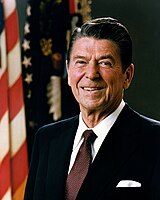
Ronald ReaganIn 1911, Ronald Wilson Reagan was born in Tampico, Illinois. and raised through the state of Illinois well before his life in California began in 1937, when after traveling with the cubs he took a screen test and signed a seven year contract with Warner Brother Studios.

During the late 1930s and early 1940s the young Reagan acted in many secondary roles and in the so-called B-movies, earning him some fame although not the celebrity other stars of the time enjoyed. Memorable roles from this time include the one of George 'The Gipper' Gipp in Knute Rockne, all American, which earned him the nickname 'The Gipper', as well as the ones in Bedtime for Bonzo and Kings Row.
 -
But Reagan's lucky break would not come until 1945, when he was given what others would later call the chance of a lifetime, when he was given the role of George Bailey in a movie Frank Capra and Liberty Films were producing and directing, a film called 'It's a wonderful life.'

Ronald Reagan was perfect for the role, and the role was perfect for him. The moving and inspiring film would nevertheless not be a hit right away, being actually considered a failure at the beginning, but with time the film would be regarded as a classic and as a staple of Christmas TV around the world. Not only would the film eventually become a classic, but it would also be the true beginning of Ronald Reagan's acting career, giving his first nomination for the academy awards as best Actor, which he would not win that year.

Liberty Pictures' following Christmas story would feature Reagan as well, this time as Ebenezer Scrooge in the adaptation of Dickens' novel: A Christmas Carol, which would make Reagan an even more famous and likeable actor.

It was also during this time that Reagan would meet and become friends with one of the biggest and most important figures of the Hollywood of the 1940s, Orson Welles.

Although Reagan's friendship with Orson Welles would be short-lived, it was nevertheless quite beneficial for Ron Reagan's career, as it gave him the chance to star in Welles' 1946 motion picture, the Stranger, in which the Gipper played an agent of the United Nations War Crime Commission hunting down a Nazi fugitive played by Welles himself.

The period would also see Reagan's entry into the political world. As head of the Screen Actors Guild for several occasions in the mid and late 1940s, he'd nearly come to blows with Senator Joe McCarthy and the House Committee of Un-American Activities, especially during the Hollywood Ten crisis and the Blacklisting of 1947.

A known anti-communist, Reagan came to fiercely condemn McCarthy's Witch-hunting and his accusations of a communist infiltration in Hollywood, Reagan accusing McCarthy of being a demagogue and a fear-monger, later giving a famous speech in 1947: As a citizen, I would hesitate to see any political party outlawed on the basis of its political ideology. However, if it is proven that an organization is an agent of foreign power, or in any way not a legitimate political party-and I think the government is capable of proving that-then that is another matter. [...] but at the same time I never as a citizen want to see our country become urged, by either fear or resentment of this group, that we ever compromise with any of our democratic principles through that fear or resentment.

Reagan's confrontation with McCarthy and the Senator's subsequent accusations and attacks against the President of the SAG would later be considered to have been part of the chain of events that led to McCarthy's downfall in 1953.

In 1949, Ronald and his wife Jane Wyman had a fourth son, John Reagan, named after one of the Gipper's closest friends and collaborators: John Wayne.

Wayne and Reagan had met in the 1940s, and had an incredible amount of things in common: they were both staunchly anti-communist and conservative, they both enjoyed the same kind of cigarettes and the same kind of movies, and that helped Reagan's career, acting in several westerns in during the 1950s, while at the same time acting sometimes in television series as a guest, a tendency that he would continue in the 1960s.

In 1960, while campaigning for Jack Kennedy, Dutch Reagan met Frank Sinatra, who would also become a close friend over the years, especially due to their political likeness. When Sinatra began campaigning for the Republican Party, it is said that it had more to do with Reagan than with JFK, his policies or his death.

This friendship would also give Reagan the opportunity to expand his acting career, this time in the role of Sergeant Raymond Shaw in the 1962 thriller, the Manchurian Candidate, in which Sinatra starred as Major Bennett Marco. This role gave Reagan a new nomination for the academy awards, as best supporting actor.

On the political stage, Reagan would continue to support the Republican Party, campaigning for the Republican candidate for Governor in 1966, San Francisco Mayor George Christopher, who would defeat incumbent Pat Brown in November of that year. It is sometimes rumored that some Republican activists had wanted Reagan himself to run, while there are other rumors about him trying to persuade his good friend John Wayne to run for governor that year, although he would eventually decline.

Later he would play one of his most memorable roles, as the neurotic, neat-freak news -writer Felix Ungar in the old classic, the Odd Couple (1968), which would come to be one of the great comedy classics of the time and Reagan's favorite role, to the point in which a re-make was almost made in 1993, before Dutch Reagan was diagnosed with Alzheimer.

Television roles would also be part of Reagan's career in the 1950s and 1960s, including appearances in the Twilight Show in the 1959 episode 'Time Enough at last', in which Ronald plays a bank-teller who loves books but is nevertheless surrounded by people that prevent him from reading them, the story of a man who seeks salvation in the rubble of a ruined world', according to Rod Serling himself.

Other appearances would include the series Bewitched and Get Smart, the latter in which he played a CHAOS agent impersonating the new boss of CONTROL, remembered for Reagan's famous and old reply: 'There you go again, 86'

His vocal support for the Republican Party and Richard Nixon in 1972 would cost Reagan dearly during the Watergate years, and this combined with Jane Wyman's death in a car accident in 1974 would force him into an early retirement on December of 1974.

He would nevertheless continue to act in movies in the 1970s, and politically he'd support the candidacies of Gerald Ford in 1976 and George H. Bush in 1980, although only the later would win, defeating incumbent Jimmy Carter by a comfortable margin.

1978 would see Ronald Reagan in one of his last and most memorable cameos, as the mysterious Mr. Jordan in the film 'Heaven can wait', a remake of the 1943 classic of the same name.

The 1980s Reagan would spend with his friends and family, although with Jane's death in 1974 and John Wayne's own death in 1979, Reagan would find the early 1980s depressing. Of course, it was a depressing decade. The economy was barely recovering; President Bush was in the middle of an international conflict with the Eastern Bloc and an even worse partisan war with the democrats and the conservative wing of the Republican Party, which would end with a democratic majority in both Houses by 1986 and the beginning of the 1986 Impeachment Crisis over the Iran-Contra affair, that led to Bush's resignation and Bob Dole's defeat to Texas Senator Lloyd Bentsen in the elections of 1988.

In 1994 Ronald Reagan was diagnosed with Alzheimer, a condition that prevented him from reassuming his acting career as he had intended ever since the early 1990s. He would nevertheless continue to make public appearances and to act in cameo roles, including small ones in Back to the Future in 1984 and The Godfather III in 1990.

On October 11th of 2003, Ronald Wilson Reagan died on his sleep, being buried back at his ranch in California, and his funeral attended by thousands of fans, friends and fellow actors.
.
In 1966, Comrade President Gus Hall meets with North Chilean leader Salvador Allende on a visit through South America. 'We are determined to help prevent aggression,' Comrade Hall said of his government's support of North Chile against the southern rebels. In addressing the poverty in South Chile that was helping spawn so many rebels, he said, 'We are determined to win not only military victory but victory over hunger, disease, and despair.

In 1904, in a desperate escape attempt, the Congress of Nations crew recapture their ship and beat a hasty retreat from the Mlosh system. In their rush to escape, they leave behind Ambassador Li'Kanto'Mk, who tells them to go on without him when he is taken captive by Q'B'Ton'ra.


TIAH Editor says we'd like to move you off the blog, if you're browsing the archives - and most people are - more than half of them are already on the new site. We need to be sure the new web site accomodates your archive browsing needs because we don't want to lose any readers. Please supply any feedback or comments by email to the Editor and please note the blogger site is shutting on December 1st.